
Gloria Vanderbilt: The Girl Who Was Never Allowed to Just Be a Girl
Quick Bio
| Detail | Info |
| Full Name | Gloria Laura Vanderbilt |
| Birth Date | February 20, 1924 |
| Nationality | American |
| Main Profession | Artist, fashion designer, actress, author |
| Biggest Achievements | Launched one of the first celebrity designer jean brands in the late 1970s, generating hundreds of millions in sales; built a respected career as a visual artist; wrote multiple memoirs and novels; survived a childhood custody battle so sensational it was called “the trial of the century” |
| Key Fact 1 | She was the heir to a Vanderbilt fortune but was largely cut off from it during her childhood and spent much of her adult life essentially self-made |
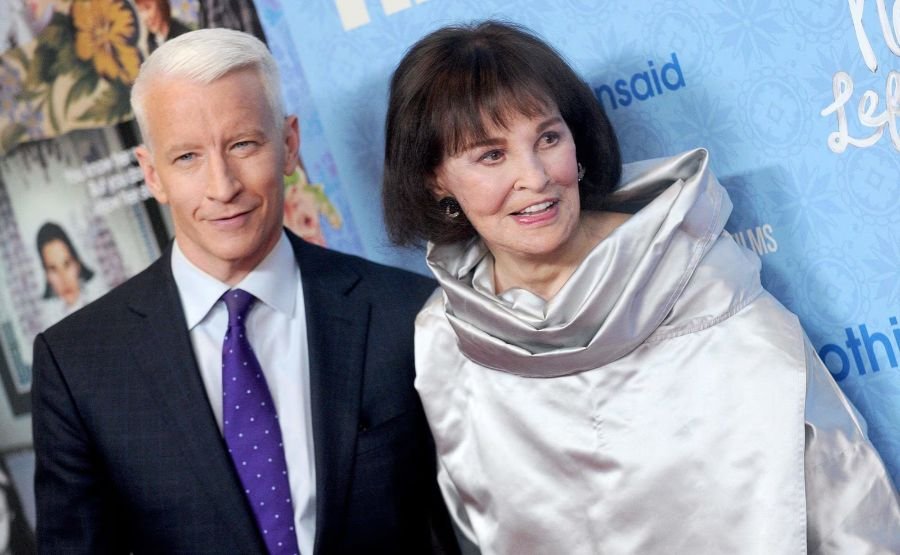
| Key Fact 2 | She was married four times and had four sons, one of whom is CNN anchor Anderson Cooper |
| Key Fact 3 | She died in June 2019 at age ninety-five, having worked as an artist and creator almost until the very end |
She Was More Than a Name
When most people hear “Gloria Vanderbilt,” they probably think of two things: designer jeans with a swan logo, and Anderson Cooper’s mother. Which is fair enough, but it leaves out about ninety percent of what made her interesting.
Gloria Vanderbilt was, genuinely, one of the more remarkable lives of the twentieth century — and not just because of the famous last name or the famous son. She survived a childhood that reads like a gothic novel. She underwent several self-reinventions over several decades. She made real art. She built real businesses. She fell in love badly and then better and then badly again. She kept going.
She also had a quality that’s harder to quantify but that everyone who met her seemed to notice: she was intensely, almost defiantly alive. Right up until the end. Still painting, still writing, still curious about everything. At ninety-five.
That’s worth knowing about.
See also “Candy Montgomery: The Ordinary Woman at the Center of an Extraordinary Story“
Born Into a World That Saw Her as Property
Gloria was born in February 1924 into the kind of wealth that most people can’t really conceptualize. The Vanderbilt family had been one of America’s great dynasties since Cornelius Vanderbilt built his railroad empire in the nineteenth century. By Gloria’s generation, the money had dispersed considerably across a large family, but the name still carried enormous weight — social, financial, symbolic.
Her father, Reginald Vanderbilt, was charming and dissolute and not particularly well-suited to adulthood. He drank heavily and spent extravagantly, and he died of cirrhosis when Gloria was just fifteen months old. So from the very beginning, she was the Vanderbilt heir — a tiny girl sitting at the center of enormous expectations and legal complications — without having any say in the matter at all.
Her mother, also named Gloria — Gloria Morgan Vanderbilt — was a young, beautiful socialite who was not especially interested in the rigors of motherhood. She liked Paris. She liked parties. She liked the company of glamorous, interesting people. A toddler in a nursery did not fit smoothly into that life, and so baby Gloria was largely raised by nurses and household staff while her mother moved between Manhattan and Europe with her set.
This is the world Gloria Vanderbilt came into: extraordinary privilege, almost complete emotional neglect, and the constant awareness that she was valuable to everyone around her primarily as a symbol or an asset rather than as a person.
The Custody Trial That Defined a Generation
When Gloria was around nine or ten years old, things got dramatically worse before they got better — or at least, more complicated.
Gertrude Vanderbilt Whitney, her paternal aunt, was a strong woman who, intriguingly, was also a serious sculptor and the creator of the Whitney Museum of American Art. decided that little Gloria’s mother was unfit to raise her. Gertrude filed for custody. What followed was a court battle so public and so lurid that newspapers covered it the way they’d cover a royal scandal today. It ran for weeks. Private details of the mother’s social life were aired in open court. Servants testified. Photographers camped outside.
Little Gloria was ten years old, sitting at the center of it all.
The court awarded custody to Aunt Gertrude, and Gloria went to live at Gertrude’s estate in Old Westbury, Long Island. Her mother was granted limited visitation. The arrangement was not particularly warm or nurturing — Gertrude Whitney was not a maternal figure in any soft sense of the word — but it was stable, and it was away from the chaos.
What the whole episode did to Gloria psychologically is something she spent decades writing and talking about. The central wound, as she described it, wasn’t just the instability or the public humiliation. It was the feeling of being fought over, displayed, evaluated — without anyone particularly asking what she wanted or how she felt. She was a prize, not a child.
Everything that followed was influenced by the sense of being seen through rather than seen.
Learning to Make Things
Gloria didn’t take a conventional path through education. She attended some schools, moved around, had tutors — the kind of patchwork upbringing that wealthy but unstable childhoods tend to produce. What she was doing, underneath all of it, was teaching herself to make things.
She drew. She painted. She sewed. She created elaborate collages and dreamlike canvases that drew on her rich, complicated interior life. Making things was, pretty clearly, the way she processed a childhood that gave her a great deal of beauty and very little safety.
She studied at the Art Students League in New York as a young woman, and she took her artistic development seriously — not as a hobby or a socialite’s affectation, but as a genuine vocation. She was a working artist before she was anything else, and she never really stopped.
This matters because a lot of what came later — the fashion line, the licensing deals, the public persona — gets discussed as if it were the whole story. It wasn’t. The art was always the real thing for her, the thing she kept coming back to when everything else settled down.
Four Marriages and What They Were Really About
Gloria Vanderbilt married for the first time at seventeen. He was a Hollywood agent by the name of Pasquale Di Cicco, and he had a tough personality. The marriage was brief and unhappy, and she later described it in terms that suggested she’d been looking for rescue and found something considerably less comforting.
Her second marriage, in 1945, was to the conductor Leopold Stokowski, who was forty-two years older than she was. Stokowski was brilliant and formidable and, apparently, exactly what a young woman who’d grown up without a father and with very few reliable adults in her life might reach for. They had two sons together — Leopold Jr. and Christopher — and the marriage lasted about a decade before dissolving.
Then came director Sidney Lumet, whom she married in 1956. That marriage also produced no children and ended in divorce after a few years.
Her fourth and final marriage, in 1963, was to writer Wyatt Cooper, and by most accounts this was the one that was real in the way the others hadn’t quite been. Wyatt was warm, intellectually serious, deeply devoted to Gloria and to family life. They had two sons together — Carter and Anderson. The family they built was, by all accounts, genuinely happy — the kind of grounded, loving home that Gloria had never had as a child and had been, in various ways, searching for through her first three marriages.
In 1978, Wyatt Cooper passed away while undergoing open heart surgery. He was fifty years old. Gloria described his death as the defining loss of her adult life.

The Jeans and the Business Empire
Here’s something that surprises people: the Gloria Vanderbilt designer jeans weren’t a vanity project or a licensing deal where she lent her name to someone else’s product. She was genuinely involved in building the brand, and the timing of it — the late 1970s, when designer denim was just becoming a thing — was shrewdly right.
The jeans launched in 1978 and became an almost immediate cultural phenomenon. The swan logo on the back pocket became one of the most recognized fashion symbols of the era. Sales were staggering — hundreds of millions of dollars in the first few years. Gloria Vanderbilt was suddenly not just a socialite or an artist or a survivor of a famous custody trial. She had a good career in business.
What made the brand work was that it had genuine identity. The clothes weren’t generic — they had a point of view, a certain glamorous-but-accessible quality that fit the moment perfectly. Gloria understood branding intuitively in a way that a lot of people with more business training didn’t.
The fashion line eventually expanded into other products and licensing arrangements, and while the business went through various iterations and ownership changes over the decades, at its peak it was generating serious revenue and establishing Gloria Vanderbilt as a pioneer of the celebrity designer model that everyone from Ralph Lauren to Donna Karan would later refine.
The Art, the Writing, and the Inner Life
Throughout all of it — the marriages, the business, the public life — Gloria kept making art and kept writing. She published memoirs that were remarkably candid for their time, including Once Upon a Time and later The Rainbow Comes and Goes, which she wrote in correspondence with Anderson Cooper. She wrote novels. She wrote poetry. She painted constantly.
Her visual art — dreamlike, collage-influenced, deeply personal — was exhibited seriously and reviewed seriously. She wasn’t playing at being an artist. She had a genuine aesthetic sensibility and a body of work that stands on its own, separate from everything else she was known for.
The writing was perhaps even more personally important. At her core, Gloria Vanderbilt was a person attempting to make sense of her own life, including her unusual, glamorous, and traumatized upbringing, the pattern of her marriages, her losses, and her tenacity. to develop almost despite herself. Writing was how she made sense of it. She was honest on the page in ways that could be startling, and readers responded to that honesty for decades.
The Losses That Accumulated
Gloria’s life held more than its share of grief. Wyatt Cooper’s death in 1978 was devastating. Then, in 1988, her son Carter — the older of her two sons with Wyatt — died by suicide, jumping from the terrace of her New York apartment while she was present. He was twenty-three years old.
The loss of Carter was something Gloria carried visibly for the rest of her life. Anderson Cooper has spoken about it, and written about it, with enormous tenderness and sadness. Gloria herself addressed it in her writing and interviews — not obsessively, but honestly, the way she addressed everything. It happened. It was real. She survived it because there was nothing else to do.
The accumulated losses of her life — the father she never knew, the mother who was essentially absent, the custody battle, Wyatt, Carter — would have broken a lot of people. Gloria Vanderbilt had a quality of resilience that seemed rooted not in toughness exactly, but in an insistence on continuing to find things worth making, things worth saying, things worth feeling.
What the Money Actually Looked Like
Here is where Gloria Vanderbilt’s story gets genuinely interesting from a financial perspective, because it confounds the obvious assumption. You hear “Vanderbilt heir” and you assume she was set for life from birth. She wasn’t, really.
By the time the Vanderbilt money reached Gloria’s father Reginald, it had been significantly reduced by several generations of expenditure, and he left behind relatively little holdings by dynasty standards. The trust she inherited as a child was real but not limitless, and it was managed by others during her childhood and young adulthood in ways that didn’t always serve her interests.
She made her own money — seriously and substantially — through the jeans business and various other ventures. At her peak, her net worth was estimated in the range of tens of millions of dollars. In her later years, various financial decisions reduced that considerably, and Anderson Cooper has been candid about the fact that when she died, he did not inherit a large amount — partly because the money had been spent, and partly because Gloria believed in people making their own way.
By the time of her death in 2019, her estate was valued at somewhere around two million dollars — a figure that surprises people who assume a Vanderbilt must die extraordinarily wealthy. It’s a number that actually says something interesting about how she lived: spending on what she loved, supporting the people she cared about, not hoarding.
The Final Chapter, Painted in Her Own Colors
Gloria Vanderbilt spent her last years still working, still curious, still making things. She painted well into her nineties. She corresponded with Anderson in the form that became their joint book. With her paintings, collections, color, and individuality, she kept her residence in New York as a sort of living artwork.
She was diagnosed with advanced stomach cancer in the spring of 2019 and died in June of that year, at ninety-five. Anderson Cooper announced her death on CNN in a tribute that was deeply personal and visibly emotional, describing his mother as someone who had turned suffering into beauty for her entire life.
That’s about as good a summary as anyone could write.
Final Words
What’s remarkable about Gloria Vanderbilt isn’t the famous name or the famous son or even the famous jeans. It’s the arc of it — a child who was never allowed to simply be a child, who was fought over and displayed and discussed by adults with agendas of their own, who could have spent her whole life defined by that wound, and who instead built something genuinely her own.
She was an artist. A businesswoman. A mother. A writer. A survivor of losses that would have silenced most people. She kept creating, kept showing up, kept being interested in life, for ninety-five years.
The girl who was treated as a prize eventually decided to just be a person. It took a while. But she got there.
FAQs
1. What connection does Gloria Vanderbilt have to the original Vanderbilt family?
She was the great-great-granddaughter of Cornelius Vanderbilt, the railroad and shipping magnate who founded the dynasty in the nineteenth century. By her generation, the family was large and the fortune dispersed, but the name remained one of the most recognizable in American society.
2. Who is Anderson Cooper and what was his relationship with Gloria?
Anderson Cooper is Gloria’s younger son from her marriage to writer Wyatt Cooper. He became a prominent journalist and CNN anchor. He and Gloria were famously close, and they co-wrote a book together — The Rainbow Comes and Goes — based on a correspondence they had about her life and history.
3. Did Gloria Vanderbilt actually inherit a large fortune?
Less than most people assume. Her father died when she was a toddler and left limited assets. The trust from her father’s estate provided some income but was not the enormous windfall the Vanderbilt name implies. She made most of her significant money herself, primarily through the designer jeans business.
4. What happened to her son Carter?
Carter Cooper, Gloria’s older son with Wyatt Cooper, died by suicide in 1988 at age twenty-three. He jumped from the terrace of Gloria’s New York apartment. His death was one of the most devastating events of her life and is something Anderson Cooper has spoken about extensively and movingly.
5. How did the designer jeans business start?
In 1978, Gloria and Mohan Murjani co-founded the Gloria Vanderbilt jeans brand. The timing coincided perfectly with the emerging designer denim trend, and the brand became enormously successful within a very short period — one of the first major celebrity-branded fashion lines.
6. Was Gloria Vanderbilt a serious artist or just a hobbyist?
She was a serious artist with a significant body of work. She studied at the Art Students League in New York and exhibited her paintings throughout her adult life. Her style was dreamlike and collage-influenced. Critics took her work seriously, and she continued painting into her nineties.
7. What was the custody trial about?
After Gloria’s father died, her mother — also named Gloria — had legal custody but spent most of her time traveling in Europe with her social set. Gertrude Vanderbilt Whitney, Gloria’s paternal aunt, filed a custody lawsuit alleging neglect. The 1934 trial was covered obsessively by the press and awarded custody to Gertrude. Gloria was ten years old.
8. How many times was Gloria Vanderbilt married?
Four times. Her husbands were Pasquale Di Cicco (married 1941), conductor Leopold Stokowski (married 1945), director Sidney Lumet (married 1956), and writer Wyatt Cooper (married 1963). The marriage to Wyatt Cooper was widely considered the most genuinely happy and lasted until his death in 1978.
9. What books did Gloria Vanderbilt write?
She wrote several memoirs, including Once Upon a Time, Black Knight, White Knight, and It Seemed Important at the Time. She also co-wrote The Rainbow Comes and Goes with Anderson Cooper, and wrote fiction and poetry throughout her life.
10. How did she die?
Gloria Vanderbilt was diagnosed with advanced stomach cancer in spring 2019 and died on June 17, 2019, at age ninety-five. Anderson Cooper announced her death on CNN in a tribute that was widely praised for its honesty and tenderness.
11. What is the Gloria Vanderbilt swan logo?
The swan was the signature motif of her fashion brand — an embroidered swan on the back pocket of her jeans that became one of the most recognized fashion symbols of the late 1970s and early 1980s. It was distinctive enough to make the jeans immediately identifiable from across a room.
12. Did she leave a large estate when she died?
No — her estate at the time of her death was estimated at around two million dollars, which surprised people given the Vanderbilt name. A combination of spending, financial decisions over the years, and a philosophy of not accumulating for its own sake meant she died considerably less wealthy than her reputation suggested. Anderson Cooper has spoken openly about this.
Read stories that climb higher than expectation with The Madrid Magazine.






One Comment