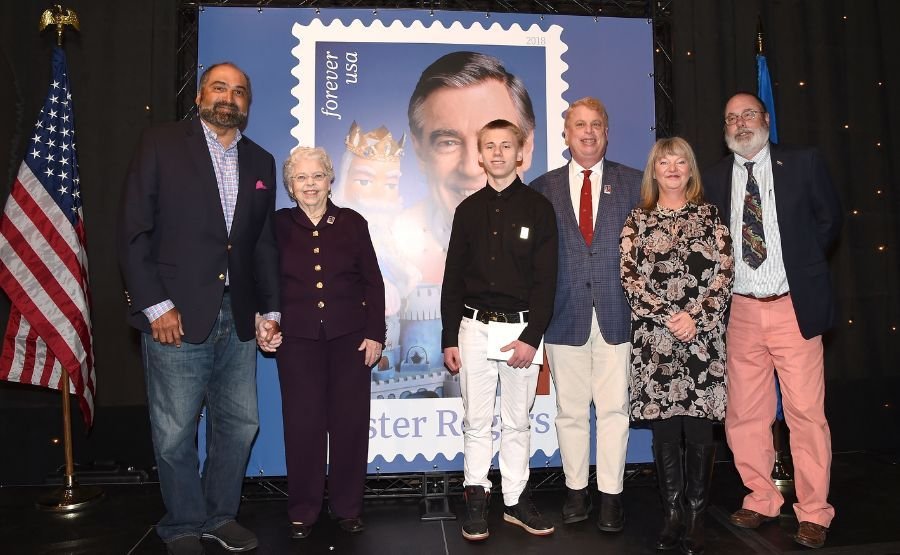
James Byrd Rogers: Growing Up in the Neighborhood — and Finding His Own Way Out
Quick Bio
| Detail | Info |
| Full Name | James Byrd Rogers |
| Also Known As | Jim Rogers |
| Born | Around 1959, Pittsburgh, Pennsylvania, USA |
| Nationality | American |
| Main Identity | Eldest son of Fred Rogers, creator and host of Mister Rogers’ Neighborhood |
| Biggest Achievement | Navigated a complex, very public father-son dynamic with grace; appeared on his father’s show with his own son Alexander; raised a family largely outside the spotlight |
| Extra Facts | Middle name “Byrd” comes from his mother Joanne’s maiden name; attended Rollins College in Florida, the same school where his parents met; has kept a deliberately private life for decades |
Why People Still Want to Know About Him
Here’s the honest truth: most people searching for James Byrd Rogers aren’t doing it because of anything he personally accomplished. They’re curious because of who his father was — and because the story of being Fred Rogers’ son turns out to be more complicated and more human than you might expect.
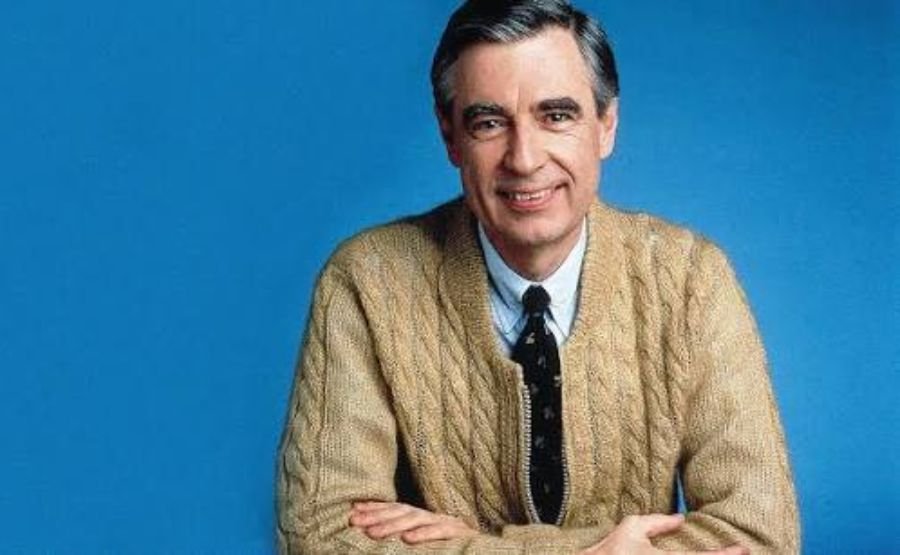
Fred Rogers was, for millions of Americans, the gentlest presence in their childhood. The man who looked you right in the eye through the television screen and told you that you were special, exactly as you were. He was patient and kind and deliberate in a way that felt almost impossible to sustain. Which makes the real-world story of parenting his own teenage son — and the messy, relatable distance that grew between them for a time — genuinely fascinating.
James Byrd Rogers matters today because his story is a quiet reminder that even the most loving homes can produce a kid who needs to find himself on his own terms. And that reconciliation, when it comes, can be tender and real. He also matters because he represents something valuable: the choice to live a full, private life when you could easily have traded on your surname.
See also “Tommy Andrews: The Kid from Newtown Who Played for Australia“
Born Into a Very Special Neighborhood
James Byrd Rogers arrived in 1959, the first child of Fred McFeely Rogers and his wife Sara Joanne Rogers. The middle name tells you something important right away. Byrd was Joanne’s maiden name — she had been Sara Joanne Byrd before she married Fred at Rollins College in Florida back in 1952. Naming their firstborn after her family was a quiet, affectionate gesture, the kind of thing that speaks to how much the Rogers marriage was a genuine partnership from the very beginning.
Pittsburgh was home. Fred’s career was just starting to find its shape in those years — he’d been working in television since the early fifties, initially at NBC in New York, then returning to Pittsburgh in 1953 to work at WQED, one of the first public television stations in the country. By the time James was a toddler, his father was already becoming the person America would come to love. The show that would make Fred Rogers a household name was still years away, but the values it would carry — patience, empathy, the belief that children’s feelings mattered and deserved to be taken seriously — were already deeply embedded in the Rogers household.
Two years after James arrived, a younger brother named John was born. So the family was complete: Fred the Presbyterian minister turned television host, Joanne the accomplished concert pianist, and two boys growing up in a Pittsburgh home that took childhood feelings seriously, perhaps more seriously than most.

Growing Up with Mister Rogers as Your Dad
Imagine what that was like for a minute. Your father is warm and gentle and endlessly patient on television, always speaking directly to children about loving themselves and handling big feelings. And then you come home from school in a bad mood or you talk back or you just want to be a regular kid for a while without everything being a teachable moment. That’s a particular kind of pressure.
James appeared on Mister Rogers’ Neighborhood as a young child, as did his brother John. The show reflected real family life in small ways — Fred brought the people he loved into the Neighborhood, and his sons were no exception. But growing up with a father who was essentially a national symbol of gentle parenting is genuinely complicated. You can’t simply have a lousy day. You can’t just be ordinary.
The family lived in Pittsburgh, which grounded things somewhat. Joanne Rogers was a force in her own right — a serious musician who performed professionally in a piano duo with her friend Jeannine Morrison, the two of them known as the Rogers-Morrison piano duo. She was no quiet, sideline figure. The boys grew up in a household where two strong, talented people both had serious work and serious lives.
School went fine, by all accounts. James eventually headed to Florida to attend Rollins College, which carried its own particular resonance — it was the same school where his parents had met. Whether that made it feel familiar or whether it was simply a good fit is hard to say. Either way, he landed there.
The Break — and What It Really Meant
Here’s the part of the story that people find most surprising. In 1978, People magazine ran a profile that touched on Fred Rogers’ family life. James was around eighteen at the time, freshly at college, and he had gone quiet. He’d stopped returning his parents’ calls. He wasn’t writing home. The article captured what was, by any honest measure, a normal thing for a teenager who needed space to become someone separate from his parents — but it landed differently because the parent in question was Fred Rogers.
People noticed. How could the man who understood children and feelings so well be struggling to reach his own kid? It felt almost paradoxical.
But the situation wasn’t a crisis — it was just a young person doing what plenty of young people do: pulling away to figure out who they are when they’re not someone’s son. Fred and Joanne, to their genuine credit, handled it the way the best parents handle it. They kept the door open. Fred kept the house welcoming. They didn’t chase or pressure. They just stayed available.
Years later, when James was asked about that People article, he said he wasn’t exactly thrilled with how it was portrayed. And honestly, that’s fair. The story of a teenager needing space from his famous father got dressed up in a way that probably felt more dramatic than the reality. The distance wasn’t a rupture — it was a passage.
Coming Back: The Neighborhood Welcomes Jim Home
The reconciliation wasn’t announced with fanfare. There was no dramatic public statement, no interview where father and son talked through their feelings while a camera rolled. It happened the way real family reconciliations happen — gradually, privately, through time and patience and the accumulation of ordinary moments.
By 1989, something meaningful had shifted. James — who by then went by Jim — appeared on Mister Rogers’ Neighborhood. And he didn’t come alone. He brought his young son Alexander. So the grandfather and the father and the child were all together in the Neighborhood, three generations of Rogers men on the set that had been the backdrop of Fred’s life for more than two decades.
The following year, Jim appeared again, this time for the “Fathers and Music” episode. The theme fit naturally — music ran through the Rogers family like a current. Joanne at the piano. Fred composing and playing. And now Jim, on the show, in the context of fatherhood and the things we pass down to the next generation.
Those appearances weren’t just television moments. They were a public signal of something real: that Jim had found his way back, that he’d sorted out who he was, and that he was now a father himself, navigating the same terrain his own dad had once navigated.
The Private World He Built
Jim has one son named Alexander. Beyond that, the details of his family life are genuinely not public. He’s been consistent and deliberate about privacy in a way that feels intentional rather than evasive. He doesn’t have public social media accounts. He doesn’t do interviews. He turned down the kind of celebrity-by-association that could easily have been available to him.
He lived near his mother, Joanne, in the Pittsburgh area. That proximity meant something — the family stayed close in a geographic sense even as Jim carved out his own private existence separate from the Rogers public brand. Joanne, who was not just Fred’s widow but also chairperson of Fred Rogers Productions and an active voice in preserving her husband’s legacy, was a formidable presence in Pittsburgh until her death in January 2021 at the age of ninety-two.
When Joanne died, the notices confirmed that she was survived by her two sons, James and John, and their grandchildren. So the Rogers family, quietly, carries on.
The Particular Challenge of Being Fred Rogers’ Son
It’s worth sitting with this for a moment, because it’s genuinely unusual. Fred Rogers didn’t just have a famous job. He had a famous soul, or at least that’s how it felt to the millions of people who grew up with him. He was held up as an example of how to be good, how to be patient, how to treat children with dignity. People cried when they talked about him. Still do.
What does that mean for his son? John Rogers, the younger brother, once said in a documentary that it was genuinely hard to have a father with that kind of saintly reputation. Because any normal human failure — any argument, any disappointment, any moment of ordinary family friction — exists in sharp contrast to the image. You can’t just be a complicated family. You have to be the family of Mister Rogers.
Jim has never said this publicly in those terms, as far as the record shows. But the choices he’s made — the withdrawal at eighteen, the years of quiet distance, the eventual return on his own timetable, and then the decades of deliberate privacy afterward — all of it looks like the behavior of someone who decided very early that he needed to figure out who he was separate from that enormous shadow.
And he did. By all available indication, he built a life he’s comfortable in, raised a son, stayed close to his mother, and watched from a quiet distance as the world continued to love his father.
The Money Picture
There’s not much to say here that can be said with confidence. James Byrd Rogers has never held a publicly documented professional role. He hasn’t published books, run a visible business, or been connected to Fred Rogers Productions in any official capacity — that was his mother Joanne’s domain. His brother John has been more associated with the Fred Rogers Center and preservation efforts.
Jim’s net worth is genuinely unknown. He inherited no reported public wealth and has earned nothing publicly. Whatever he has comes from a private life lived outside the spotlight, which is exactly how he seems to want it.
Where He Is Now
As of 2026, James Byrd Rogers is in his mid-sixties, living privately and quietly. There’s no public record of where exactly he is or what he does day to day. His son Alexander has presumably grown up by now. His parents are both gone — Fred since 2003, Joanne since 2021.
What we can say is that the Neighborhood continues without him needing to be part of it. Mister Rogers’ Neighborhood still airs on PBS stations. Won’t You Be My Neighbor, a documentary? came out in 2018 and moved millions of people. Tom Hanks played Fred in A Beautiful Day in the Neighborhood in 2019. The legacy is enormous and ongoing, and Jim watches it from a comfortable distance, by choice.
That feels right, actually. Not everyone who comes from greatness needs to carry it forward publicly. Sometimes the most honest thing you can do with a famous father’s memory is simply to live well and let other people handle the tributes.
Final Words
James Byrd Rogers is a genuinely interesting figure not because of what he accomplished in public — there’s very little of that — but because of what his existence reveals about the private lives of public figures. He grew up with one of the most beloved men in American television, pulled away during his teenage years in a very human and relatable way, and then came back on his own terms, eventually bringing his own son to meet his grandfather’s cameras.
He made a choice, sustained over decades, to live outside the noise. In a culture that generally rewards the children of famous people for capitalizing on that connection, he declined. He built something private and kept it that way.
What makes him different is exactly that ordinariness — the fact that the son of Fred Rogers turned out to be a regular person, with all the complications that entails, rather than an extension of a brand. In a strange way, that’s perhaps the most Fred Rogers thing imaginable: honoring the wholeness of a real human being, even when that human being is your kid.
FAQs
1. Who is James Byrd Rogers?
He is the eldest son of Fred Rogers, the beloved creator and host of Mister Rogers’ Neighborhood, and his wife Joanne Rogers. He goes by Jim.
2. When was James Byrd Rogers born?
Around 1959, based on a 1978 People magazine article that described him as eighteen at the time. There is no published record of his precise birthdate.
3. Where does his middle name “Byrd” come from?
From his mother. Joanne Rogers was born Sara Joanne Byrd, and James’s middle name honours her maiden name.
4. Did he appear on Mister Rogers’ Neighborhood?
Yes, twice in adult life. He appeared around 1989 and again in approximately 1990 for the “Fathers and Music” episode, bringing his own son Alexander on that second appearance.
5. What was the story about him running away from home?
In 1978, a People magazine article noted that around age eighteen, Jim had stopped returning his parents’ calls and writing home. It was a period of teenage distance rather than a dramatic rupture. Fred and Joanne kept the door open, and the relationship was eventually restored.
6. How did Jim feel about that People article?
He wasn’t particularly happy with how it was framed. He later indicated in a Los Angeles Times interview that the portrayal of his teenage years didn’t sit entirely well with him — understandably, since it packaged a fairly ordinary phase of growing up into something more dramatic.
7. Does James Byrd Rogers have children?
Yes. He has one known son named Alexander.
8. Where did he go to college?
He attended Rollins College in Winter Park, Florida — the same school where his parents Fred and Joanne first met and fell in love.
9. What does James Byrd Rogers do for a living?
This is genuinely unknown. He has maintained such a private life that no professional role has ever been publicly documented.
10. What happened to his parents?
Fred Rogers died on February 27, 2003, from stomach cancer, at age seventy-four. Joanne Rogers died in January 2021 in Pittsburgh at age ninety-two.
11. Is James Byrd Rogers on social media?
No. He has no known public social media presence and has consistently avoided the spotlight throughout his adult life.
12. Does James Byrd Rogers have a relationship with the Fred Rogers Center or Fred Rogers Productions?
He has not been publicly identified as having a formal role with either organisation. His mother Joanne was the family’s primary representative of Fred’s legacy after his death, and his brother John has been more connected to preservation efforts.
Read stories that climb higher than expectation with The Madrid Magazine.



One Comment