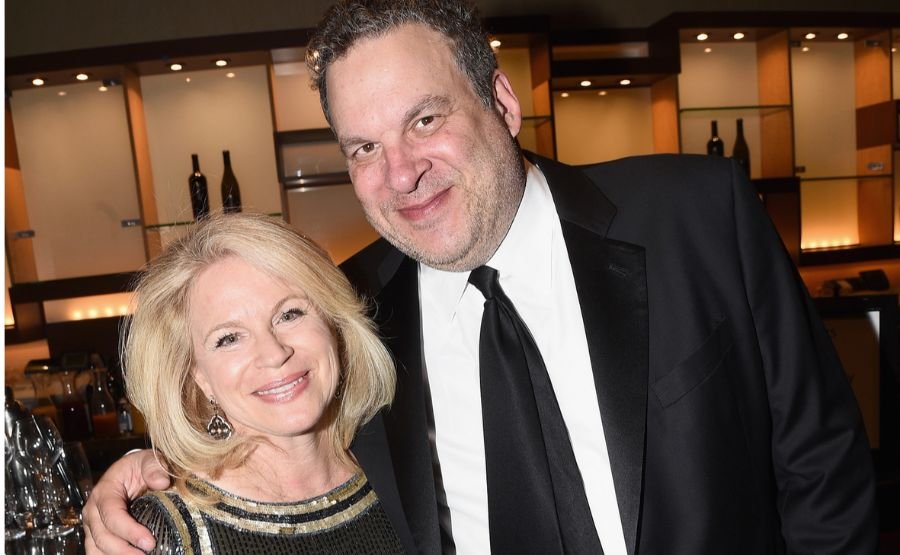
Marla Garlin: The Casting Eye Behind Some of Hollywood’s Funniest Moments
Quick Bio
| Detail | Info |
| Full Name | Marla Beth Cahan Garlin |
| Born | April 13, 1962 — United States (Midwest) |
| Nationality | American |
| Professions | Casting director, former theatrical talent agent, actress |
| Key Credits | Curb Your Enthusiasm, The 40-Year-Old Virgin (2005), Arlington Road (1999), You People (2023), Bombshell (2019) |
| Major Award | 2003 Primetime Creative Arts Emmy nomination — Outstanding Casting for a Comedy Series (Curb Your Enthusiasm) |
| Education | Interlochen Arts Academy; Drake University; Eugene O’Neill National Theatre Institute |
| Children | Two sons — James Garlin and Duke Garlin |
| Ex-Husband | Jeff Garlin — married July 24, 1994; separated 2017; divorce filed 2018 |
| Board Work | LACHSA Foundation (Los Angeles County High School for the Arts) |
| Siblings | Sister Mindy Cahn; brother Michael Cahn |
Why Marla Garlin Is Worth Knowing Beyond the Headlines
If you’ve searched Marla Garlin’s name recently, there’s a decent chance you landed there through Jeff Garlin — her ex-husband, the comedian and actor best known for Curb Your Enthusiasm and The Goldbergs. Their divorce, which became a slow-moving public story starting in 2018, generated its share of coverage, including court documents revealing significant spousal support terms.
But here’s what often gets buried underneath all that: Marla Garlin is genuinely accomplished in her own right. She spent years building a career in the notoriously competitive world of Hollywood casting, earned an Emmy nomination for one of the best comedies of its era, and has quietly racked up credits that any working professional in the industry would be proud to claim.
She came up through the theatre, started in talent representation, found her way to Los Angeles, and built a casting practice that spans some of the most beloved comedies and dramas of the past three decades. That story — the Midwest arts kid who turned genuine skill into a real Hollywood career — is the one worth telling. The divorce stuff is part of it too, but it’s not the whole thing, and it’s not even close to the most interesting part.
See also “Frank Lucas Wife: The Untold Story of His Marriage, Family, and Personal Life“
A Midwest Kid Who Fell Hard for the Arts
Marla was born on April 13, 1962, somewhere in the American Midwest — the details of exactly which city she grew up in aren’t something she’s made a point of publicizing, which is consistent with the kind of quietly private professional she’s been throughout her career. What she has shared is that her love for the performing arts started early, and it started in the Midwest in the way that passionate, artistically inclined kids in the interior of the country often find it: through training programs, summer institutes, the kind of immersive experiences designed to take seriously talented young people and give them real tools.
She studied at Interlochen — the renowned arts academy in Michigan that has produced an extraordinary range of American artists across music, dance, theatre, and visual arts. Getting into Interlochen isn’t casual. It’s a competitive institution that attracts serious young artists from across the country, and training there signals both genuine talent and a level of commitment that most teenagers don’t sustain. Marla was there studying dance, voice, and acting — a triple discipline that pushed her in multiple creative directions simultaneously.
From there she went on to Drake University and then to the Eugene O’Neill National Theatre Institute, which is one of the country’s most distinguished theatre training programs, offering intensive conservatory experience rooted in serious theatrical tradition. Three different training institutions across her formative years — Interlochen, Drake, and the O’Neill — tell you something about how seriously she took the craft and how broadly she wanted to understand it.
She didn’t come to Hollywood through the back door. She came through a front door that required considerable academic and artistic discipline to open.

New York, Then Chicago: Building a Career in Representation
After her education, Marla didn’t immediately pivot to casting or performing. She went into talent representation — starting out as a theatrical agent in New York, which is exactly where you’d expect someone with her training and orientation toward theatre to begin. Working as a theatrical agent in New York requires a combination of relationship skills, taste, and persistence that are genuinely hard to develop and easy to underestimate.
She was good at it. Good enough that she eventually moved her practice to Chicago, which in the 1980s and into the 1990s had a genuinely vibrant comedy scene — Second City was producing major talent, stand-up comedy was flourishing, and the city’s entertainment ecosystem was generating names that would go on to define American comedy for decades. Representing comedians and actors in that environment meant being at the center of something that was happening before it happened everywhere else.
It was in that Chicago context that she met Jeff Garlin.
Jeff was a comedian — funny, ambitious, a Second City veteran who was building toward something larger. He was one of Marla’s clients. She was representing him as his agent, which means she was genuinely invested in his career, fielding opportunities, negotiating deals, advocating for him in rooms he wasn’t in. She knew the business from the inside, and she knew him from the inside of that business.
Their relationship developed from there. The professional to personal transition isn’t unusual in the entertainment industry, but it does create a particular dynamic — one where both people understand the business they’re in, the pressures it creates, and what it takes to navigate it. Marla was not an outsider to Jeff’s world. She was, in a very real sense, someone who had helped build it.
She has noted, with the kind of dry self-awareness that tends to come from years in show business, that after marrying Jeff she was now getting more than the standard agent’s ten percent from the relationship.
The Pivot to Casting: Finding the Right Chair
At some point after marrying Jeff and moving their lives to Los Angeles, Marla made the transition from talent representation to casting direction. It’s a shift that makes intuitive sense — the skills overlap considerably. A talent agent knows what talent looks like, knows how performers think and what they need, knows how to read a room and a role and match the two intelligently. A casting director does all of that from the other side of the table, working with directors and producers to find the right people for the right parts.
For someone with Marla’s training — the actor’s perspective from her years studying dance, voice, and performance — casting brought a particularly informed eye. She understood what it actually takes to do what actors do. She wasn’t just looking at headshots and reels; she was evaluating performers with the instincts of someone who had studied the craft from the inside.
She built her casting practice across film and television, and within about twenty years had assembled a body of work that represents real range and real taste.
The Credits That Define Her Career
Arlington Road in 1999 was one of her early significant casting credits — a tightly wound political thriller starring Jeff Bridges and Tim Robbins that holds up well as a piece of filmmaking. Getting the right performers into a thriller that depends on escalating tension requires specific judgment about who can sustain that kind of work over a full arc.
The 40-Year-Old Virgin in 2005 was a different kind of project entirely — Judd Apatow’s breakthrough comedy, a film that launched multiple careers and established a particular template for mainstream comedy in the mid-2000s. Casting a film like that requires finding people who can work within an improvisational framework, who have genuine comedic timing, and who can sustain that energy across what tends to be very long shooting days with a lot of latitude in the material. Marla found the right ensemble for that project, and the film’s success is partly a testament to the quality of the casting choices.
Bombshell in 2019 — the dramatization of the sexual harassment scandal at Fox News that earned Charlize Theron an Academy Award nomination — required a different kind of casting intelligence. The challenge there was partly about physical likeness (several characters were based on real people viewers would recognize) and partly about finding actors capable of carrying a serious dramatic weight in a politically charged story.
You People in 2023, the Netflix comedy written by and starring Jonah Hill and Kenya Barris, added another recent major credit to her work.
And then there’s Curb Your Enthusiasm — the Larry David comedy that ran for twelve seasons on HBO and became one of the defining comedies of its era. Marla worked on the show’s casting in its early years, and her work there earned her a 2003 Primetime Creative Arts Emmy nomination for Outstanding Casting for a Comedy Series. An Emmy nomination is not a participation trophy. It means the industry recognized the specific contribution she was making to one of the best shows on television at the time.
She’s also appeared in front of the camera herself, taking acting roles in projects including Bombshell, The Comeback, episodes of Arrested Development, and You People. The performer’s training never entirely leaves, and apparently she’s found ways to use it alongside the casting work.
Marriage, Family, and the Life They Built Together
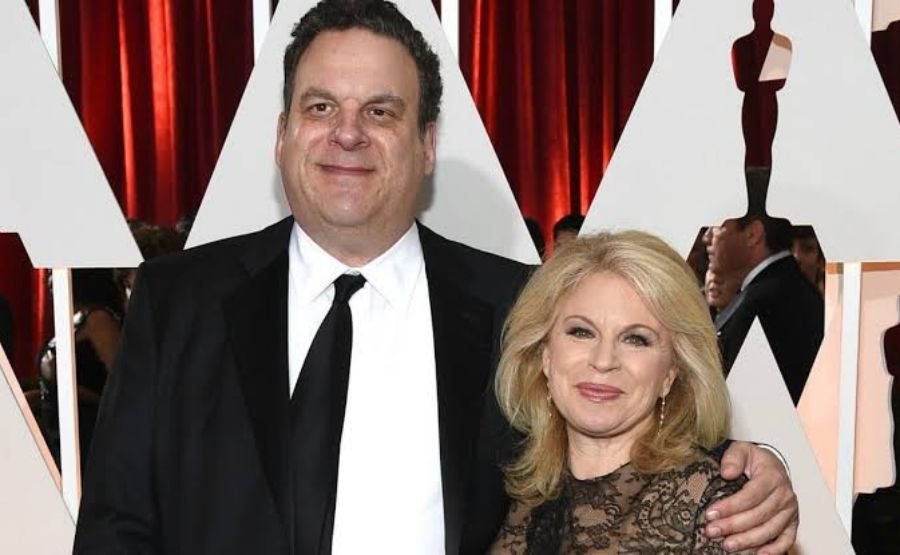
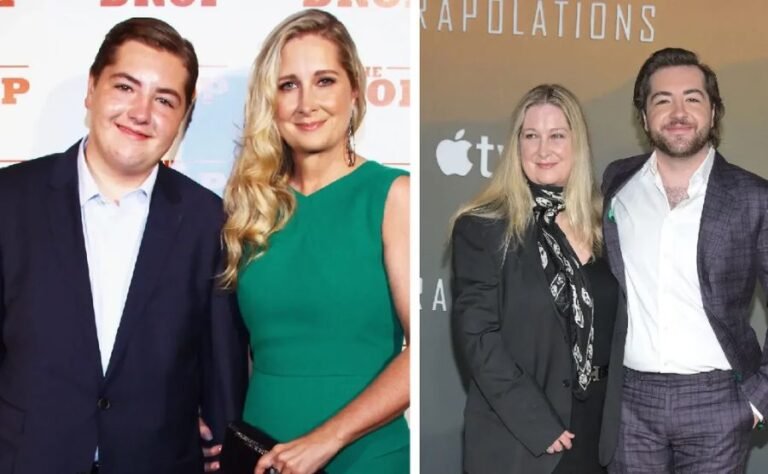
Marla and Jeff Garlin married on July 24, 1994. They raised two sons together — James and Duke Garlin — in the Los Angeles area. While Jeff’s career became increasingly public over the years, with Curb Your Enthusiasm running for over a decade and The Goldbergs keeping him on network television for years, Marla maintained a lower profile. Her work was industry work — visible to the people in the business who paid attention to casting credits, less visible to general audiences who are more likely to remember actors’ faces than the people who put them in their roles.
She was also involved in arts education advocacy during this period, serving as a board member of the LACHSA Foundation — the foundation supporting the Los Angeles County High School for the Arts. That work connected her love for performing arts education, which dated back to her own Interlochen years, with the opportunity to support young people in Los Angeles going through their own early artistic formation.
For the better part of two decades, the picture was that of two entertainment industry professionals building parallel careers in LA while raising their kids.
The Divorce and What the Court Documents Revealed
The marriage began to unravel in 2017. Marla and Jeff separated on July 25, 2017. Jeff filed for divorce on September 4, 2018, citing irreconcilable differences — the standard California legal language for a marriage that has simply stopped working in ways neither party wants to detail publicly.
The financial dimensions of the divorce became a matter of public record through court filings. According to documents reported in early 2024, Jeff was ordered to pay Marla $80,000 per month in spousal support. That figure was set to decrease to $35,000 per month after Curb Your Enthusiasm concluded — which it did in 2024, wrapping its twelfth and final season. The settlement was also structured to drop immediately if production stopped due to COVID-19 or another unforeseeable event.
Those spousal support numbers generated their own headlines, partly because $80,000 per month is an eye-catching figure by any standard, and partly because it illustrated something about what 24 years of shared financial life looks like when it ends. Marla had built her own career throughout the marriage, but she had also, according to her own history, begun as Jeff’s agent — someone who had invested professional energy in his success before they were married.
Whatever the specific legal reasoning behind the terms, the settlement reflects a court’s assessment of the financial reality of the marriage and its dissolution.
Marla’s public conduct throughout the divorce process has been consistent with her overall approach to her professional life: she has not given interviews about it, has not commented publicly, and has not allowed the proceedings to become a media performance. She was once quoted in the New York Times in 2007 about her past work as Jeff’s agent, but that’s essentially the extent of her recorded public commentary about their relationship across all the years it lasted.
What the Money Picture Looks Like
Marla’s financial situation is genuinely not something she’s publicized. What the court documents established is that the divorce settlement involves substantial ongoing spousal support — $80,000 per month dropping to $35,000 per month — which reflects a combination of the length of the marriage, Jeff’s income level during his most productive years on major productions, and presumably whatever Marla’s own financial position looks like relative to that.
Her own career earnings as a casting director across more than twenty years of LA work, including credits on major studio films and significant television productions, would represent a real professional income. Casting directors work on project-by-project deals, so there’s natural variability, but someone with Marla’s track record would command meaningful fees for her work.
Overall net worth estimates for her personally tend to cluster in the range of several hundred thousand to a couple of million dollars, though these figures aren’t confirmed anywhere and are essentially educated guesses based on the kind of career she’s built.
What She Focuses on Now
As of 2026, Marla Garlin is 64 years old and has maintained the quiet, industry-focused profile that has characterized her entire professional life. She continues to work in casting, building on a practice that spans nearly thirty years in Hollywood. Her most recent major credit, You People in 2023, suggests she’s remained active and current rather than coasting on older work.
She is not someone who has turned the divorce or the celebrity-adjacent aspects of her biography into a public platform. She doesn’t have a significant social media footprint. She doesn’t appear to be pursuing any kind of celebrity profile on the back of the Jeff Garlin connection.
What she does appear to be pursuing is the career she built before any of the noise — the casting work, the occasional acting role, the commitment to arts education that dates back to her own formation as a performer.
That’s a choice that takes more discipline than it might appear. When you’re attached to someone famous and the marriage ends in a way that generates coverage, there’s always pressure — external and probably internal — to take advantage of the visibility. She seems to have chosen not to.
Final Words
Marla Garlin is a genuinely interesting Hollywood professional whose career deserves more attention than the “Jeff Garlin’s ex-wife” frame tends to allow. She started in the Midwest with serious arts training, built a practice as a theatrical agent, made a smart pivot to casting, and earned industry recognition for her work on some of the most significant film and television projects of the past thirty years.
She helped put together the ensemble of The 40-Year-Old Virgin. She cast major productions from Arlington Road through Bombshell and You People. She earned an Emmy nomination for Curb Your Enthusiasm in its early seasons. She sat on the board of an arts education foundation because the training she received as a kid in the Midwest mattered enough to her that she wanted to give it back.
The divorce is part of her story. But it’s a chapter, not the book.
FAQs
1. Who is Marla Garlin?
She’s an American casting director, former theatrical talent agent, and actress. She’s built a 30-year career in Hollywood and is also known as the ex-wife of comedian and actor Jeff Garlin.
2. When was she born?
April 13, 1962, in the United States.
3. Where did she grow up and what was her early training?
She grew up in the Midwest and trained seriously in performing arts from a young age. She attended Interlochen Arts Academy in Michigan, Drake University, and the Eugene O’Neill National Theatre Institute, studying dance, voice, and acting.
4. What is she most famous for professionally?
Her Emmy nomination in 2003 for Outstanding Casting for a Comedy Series, for her work on Curb Your Enthusiasm. Her other major casting credits include The 40-Year-Old Virgin (2005), Arlington Road (1999), Bombshell (2019), and You People (2023).
5. How did she meet Jeff Garlin?
While working as a theatrical talent agent in Chicago, she represented comedians and actors — including Jeff Garlin. Their professional relationship eventually became romantic.
6. When did they marry?
July 24, 1994.
7. Do they have children?
Yes — two sons, James Garlin and Duke Garlin.
8. When did the marriage end?
They separated on July 25, 2017. Jeff filed for divorce on September 4, 2018, citing irreconcilable differences.
9. What were the financial terms of the divorce?
Court documents reported in 2024 established that Jeff was ordered to pay Marla $80,000 per month in spousal support, dropping to $35,000 per month after Curb Your Enthusiasm finished its run (which it did in 2024).
10. Has Marla spoken publicly about the divorce?
No. She has maintained consistent privacy throughout the proceedings and has not given interviews or made public statements about the marriage or its end.
11. Does Marla Garlin act as well as cast?
Yes — she has appeared in front of the camera in projects including Bombshell (2019), You People (2023), The Comeback, and Arrested Development, among others.
12. What is she doing now?
She continues to work as a casting director in Los Angeles, with her most recent major credit being You People (2023). She remains active in the industry and has maintained her private, professionally focused life since the divorce was finalized.
Read stories that climb higher than expectation with The Madrid Magazine.





One Comment