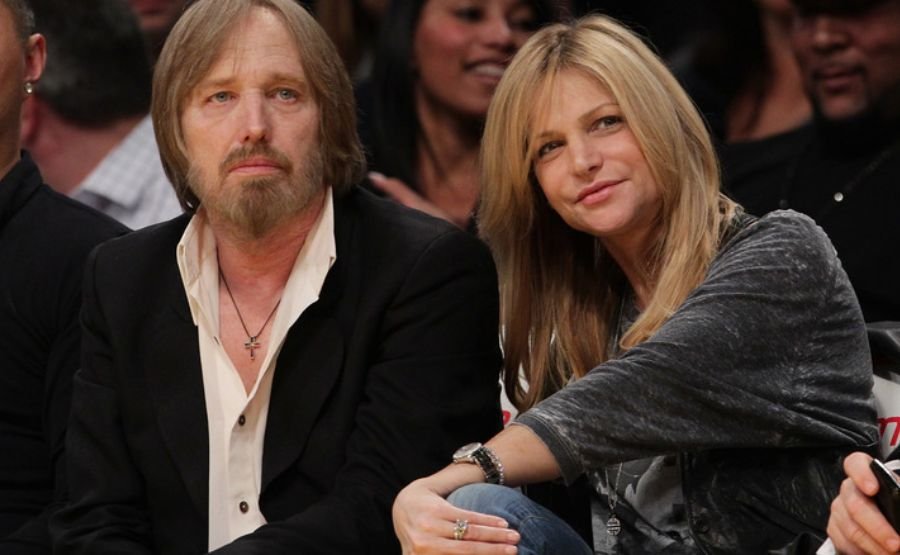
Annakim Petty: Everything You Need to Know About Her Life, Background, and Personal Story
Quick Bio
| Detail | Info |
| Full Name | Kimberly Violette Petty |
| Preferred Name | AnnaKim Violette |
| Born | 1982, Los Angeles, California, USA |
| Nationality | American |
| Main Profession | Artist, designer, creative consultant |
| Biggest Achievement | Building a distinctive independent art and fashion career while guarding her father’s legacy; co-plaintiff in a landmark $5 million estate lawsuit that led to a 2019 settlement |
| Key Fact 1 | Youngest daughter of rock icon Tom Petty and his first wife Jane Benyo |
| Key Fact 2 | Described by LA Weekly as a fashion icon for her avant-garde, costume-driven personal style |
| Key Fact 3 | Her Instagram became one of the most emotionally raw and public tributes when Tom Petty died in October 2017 |
Why AnnaKim Violette Still Matters
Here’s the thing about being born into one of rock and roll’s biggest families — it can either swallow you whole or push you to carve out something completely your own. AnnaKim Violette Petty went the second route, and she did it in a way that’s genuinely interesting to watch.
She’s not trying to be her father. She’s not trading on the name in the obvious ways. She makes visual art, she plays with fashion and textiles and aesthetics in a way that feels closer to a 1970s bohemian commune than a Hollywood celebrity’s social media strategy. She keeps a low profile compared to most people connected to major rock legacies. And yet, when the moment came — when her father passed and when his estate became a legal battlefield — she was anything but invisible.
She matters today because she represents a quietly fascinating tension: the artist who insists on her own identity while also fighting, publicly and fiercely, to protect someone else’s. It’s not a simple story, and that’s exactly what makes it worth telling.
See also “Justin Sholly: The Volunteer Firefighter Who Set the Fires He Helped Fight“
Growing Up in Tom Petty’s World
AnnaKim was born in 1982 in Los Angeles, California — the city where her father had already replanted himself from his Florida roots and was well into building what would become one of the most enduring careers in American rock. Her mother was Jane Benyo, Tom’s first wife, the woman he’d known since his teenage years in Gainesville, Florida, and married in 1974.
Tom and Jane had two daughters. Adria came first, born around 1975, nearly a decade before AnnaKim arrived. So in some ways AnnaKim grew up almost like an only child in terms of day-to-day sibling closeness — there was a significant gap between her and her older sister.
What we know about AnnaKim’s childhood paints a picture of a home where creativity wasn’t just encouraged — it was essentially the weather. Tom Petty was not exactly a traditional nine-to-five dad, but by his own account and his daughter’s later reflections, the bond between them was real and deep and built on genuine shared wavelengths. He talked publicly about wanting his kids to pursue what they loved, to go after their passions with the same recklessness he’d thrown himself at music. That message apparently landed.
AnnaKim has been openly reflective about her father’s own early life — the poverty, the difficult family environment he came from, the way he carried those wounds even after achieving enormous success. “It was hard for him to carry that type of horrific pain, coming from a very impoverished, very ignorant family,” she told one publication after his death. That kind of statement — empathetic but unflinching — tells you a lot about how she processed growing up in his orbit. She saw him clearly, not as a myth but as a person.
Tom and Jane’s marriage didn’t survive the pressures of rock stardom and the complicated life that comes with it. By the time AnnaKim was in her early teenage years, Tom and Jane had separated — a split that apparently had been building for years before the divorce was finalized in 1996. Tom later married Dana York, who brought her own son Dylan into the blended family picture. For AnnaKim and Adria, this introduced the new dynamic of a stepmother and step-sibling — a complication that would echo in very public ways decades later.

School Days and the Making of a Creative Sensibility
AnnaKim’s formative years were spent in Los Angeles, a city that’s simultaneously one of the most image-saturated places on earth and, paradoxically, one of the best places to disappear into genuine creative subcultures that have nothing to do with Hollywood’s machinery.
She gravitated toward the visual rather than the musical — which feels like its own kind of quiet rebellion when your father is one of the greatest rock guitarists and songwriters of his generation. There were no attempts to be a singer-songwriter, no reaching for the obvious connection. She went sideways from the family tradition and found her own entrance point into the arts through color, texture, costume, and self-expression.
She developed an aesthetic that people who eventually encountered her would describe as bohemian, eclectic, anti-mainstream — the kind of style vocabulary that sounds vague until you actually see it in practice. She wore things that most people would describe as costumes rather than clothes. She loved vintage. She played with garments as though they were sculptures. She didn’t follow trends. She invented her own private visual language and wore it on her body every day.
She wrote a blog called “Glass Net” at some point — a detail that fits neatly with the picture of someone who processes the world through creative output rather than through conventional channels.
Finding Her Voice as an Artist
AnnaKim Violette built her creative identity primarily as a visual artist and designer, working in ways that resist easy categorization. The word “bohemian” gets used a lot around her work, which on one hand undersells it and on the other hand actually captures something true — she operates outside the organized art world’s formal structures, exhibiting work and participating in gallery shows but maintaining an independent, non-institutional energy.
She gained visibility in Los Angeles’s alternative creative scene — that world where art, fashion, music, and performance all bleed together and nobody is particularly interested in keeping the boundaries clean. Her Instagram became one of her primary galleries, a place where she shared her artwork, her personal style, and her inner life in a way that was genuinely engaging rather than performative.
LA Weekly called her a fashion icon — not because she was working with major brands or walking runways, but because her personal style was so completely her own that it had a kind of gravitational field around it. “Unapologetically, I love costumes,” she said in one interview. “But I hate the fashion industry. I don’t have a standard.” That tension — loving the visual language of clothing while rejecting the system that manufactures and monetizes it — is very much at the core of who she is as a creative person.
In another interview she offered what might be her best self-description: “I’ve lived an eccentric life and I’m a boring person, so I don’t have to defend it.” It’s a line that takes a few seconds to fully appreciate, but once it lands, it perfectly captures the energy of someone who has built an interesting life by simply doing what they want without needing external validation for it.
She also appeared in creative projects alongside other artists — including a photographic editorial alongside actress Nina Ljeti — described as an exploration of solitude, femininity, and strength. These weren’t mainstream publicity efforts. They were genuine artistic collaborations with people operating in the same creative spirit.
Her artist name “AnnaKim Violette” — derived from her legal name Kimberly Violette Petty — itself represents the creative act of self-definition. She took her middle name, her own given name rearranged, and built an identity that connects to but doesn’t simply replicate the Petty name.
The Loss That Changed Everything
October 2, 2017. Tom Petty was found in cardiac arrest at his Malibu home. He was placed on life support, but there was no brain activity. The family made the devastating decision to let him go. He died at 66 years old, just one week after finishing what would turn out to be his final concert tour.
AnnaKim was 35 years old when she lost her father. And the way she responded was, in retrospect, deeply characteristic — she went straight to the tool she’d always used to process the world. She turned her Instagram into a memorial, flooding it with photographs, personal memories, intimate moments, and deep love. It was raw and real and deeply moving to anyone who saw it.
She also had one sharp, brief moment of public sharp-elbowing during the chaotic hours after the news broke. Rolling Stone had initially, inaccurately, reported her father’s death before it was confirmed, and AnnaKim called them out on Instagram in real time — a protective instinct, a refusal to let her father’s death be mishandled by the machinery of media while her family was still in the middle of living it.
In one NPR segment recorded after her father’s passing, she spoke about what his music had meant to people: “Anyone that’s ever sang that came out of a really dark place into a brighter one — it gave them strength.” Short, true, and carrying the full weight of a daughter who understood exactly what her father had meant to the world.

The Estate Fight: Standing Up in Public
About a year and a half after Tom Petty’s death, the quiet tensions that had been building within the family’s arrangements over his estate became anything but quiet.
Tom’s trust had designated his widow Dana York Petty as the sole directing trustee. But Tom’s daughters — AnnaKim and Adria — believed their father had intended something more collaborative, that all three women were supposed to have equal say in how his music and legacy were handled. When Dana allegedly moved to establish a separate LLC called Tom Petty Legacy, redirecting assets in ways the daughters felt cut them out of the picture, the situation broke into open legal warfare.
In spring 2019, Adria and AnnaKim filed a $5 million lawsuit against Dana, accusing her of self-dealing, theft, and gross mismanagement of the estate. They alleged that decisions were being made — including around the planned 25th anniversary release of Tom’s beloved 1994 album Wildflowers — without their input or agreement. “Tom Petty wanted his music and his legacy to be controlled equally by his daughters, Adria and Annakim, and his wife, Dana,” their attorney stated.
Dana’s lawyer responded bluntly, calling the suit “destructive nonsense” and asserting that Tom had deliberately designated Dana as sole trustee precisely to prevent this kind of conflict.
The legal maneuvering went back and forth through most of 2019 — cross-filings, counter-accusations, descriptions of the daughters’ behavior as “erratic.” It was, by any measure, an ugly and painful dispute playing out in the public eye during a period of grief that was still very fresh.
By December 2019, it was over. All three parties — Dana, Adria, and AnnaKim — reached a settlement. The specific terms were never made public, but the fact of the resolution allowed the Wildflowers anniversary release to eventually move forward. Whatever compromises were made in that room, the most visible outcome was that the fighting stopped and Tom Petty’s music could continue to find its audience.
The Private Person Behind the Public Moments
AnnaKim Violette keeps her personal life genuinely private in a way that most people connected to major celebrity families simply don’t. There’s no documented relationship history that’s been made public, no children confirmed in any reporting, no domestic arrangements she’s chosen to share. For someone who expresses herself so visibly through her art and her fashion, this level of privacy about her personal world is actually quite striking.
What comes through clearly, from every interview fragment and public statement she’s ever given, is that she has a deep capacity for loyalty and love — particularly toward her father, toward the idea of his music as something sacred and worth protecting. The Instagram memorial she built after his death wasn’t performative grief. It was real and overwhelming and entirely consistent with someone who had built her whole creative identity around a philosophy of genuine expression over pretense.
Her relationship with her older sister Adria seems to have been genuinely close and collaborative — the two went into the estate battle together, as a unit, and emerged from it together. That solidarity counts for something.
Money, Honestly Speaking
AnnaKim’s finances aren’t publicly disclosed and there’s no verified net worth figure that any reliable source has confirmed. What we can say is that she has built her creative career as an independent artist and designer, operating outside the major commercial art market’s structures. That’s typically not a path that generates enormous wealth.
Her father’s estate — worth an estimated $95 million at his death — was the subject of that highly publicized dispute. The settlement reached in 2019 presumably established some framework for how she and Adria participate in estate revenue, but the specific terms weren’t disclosed publicly. Whatever financial arrangements exist, AnnaKim’s public orientation suggests someone who isn’t primarily motivated by wealth accumulation but rather by the ability to keep making work and living by her own aesthetic code.
Life Now: Art, Legacy, and Being Entirely Herself
AnnaKim Violette in her mid-forties is essentially what she’s always been — a visual artist and designer operating outside the mainstream, sharing her work primarily through social media, maintaining connections to the creative community in Los Angeles, and carrying the weight and privilege of being Tom Petty’s daughter with as much grace as that complicated inheritance allows.
The estate dispute is behind her. The Wildflowers anniversary releases moved forward. Tom Petty’s catalog is being carefully managed. Her own work continues — gallery shows, creative projects, the ongoing daily practice of an artist who makes things because that’s simply what she does.
She still maintains an Instagram presence under her artist name, using it as the living gallery it’s always been — art, personal expression, and occasional windows into the world she inhabits.
Somewhere in all of this, she’s also the keeper of a particular kind of knowledge: what it was like to be Tom Petty’s kid, to hear the music before it was famous, to know the person behind the legend. That knowledge lives in her quietly, expressing itself sideways through her art rather than directly through memoir or public interviews.
Final Words
There’s something genuinely compelling about a person who grows up in the absolute center of American rock royalty and responds by going completely sideways — not toward music, not toward the obvious celebrity path, but toward vintage costumes and visual art and a blog called “Glass Net” and the conviction that clothing should be the opposite of anxiety.
AnnaKim Violette is not what Tom Petty’s daughter was supposed to look like from the outside. She didn’t follow the formula. She built something eccentric and real and entirely her own, while also, when the moment required it, standing up in a courtroom and fighting for the music that defined her childhood.
What makes her different is that the two things — the independent artist and the fierce defender of her father’s legacy — aren’t in contradiction. They’re the same person, expressing the same set of values through different tools. Tom Petty spent his whole career refusing to do what other people expected him to do. His youngest daughter, it turns out, was paying attention.
FAQs
1. Who is AnnaKim Violette Petty?
She is the younger of Tom Petty’s two daughters, born in 1982 in Los Angeles to Tom Petty and his first wife Jane Benyo. Her legal name is Kimberly Violette Petty; she goes professionally by AnnaKim Violette. She is a visual artist, designer, and creative consultant based in Los Angeles.
2. What is her relationship to Tom Petty?
She is his youngest biological daughter, from his first marriage to Jane Benyo. She was 35 when Tom died in October 2017. By her own account and that of people who knew the family, she was very close to her father and has spoken about him with deep love and clear-eyed understanding in multiple interviews.
3. What kind of art does she make?
She works across visual art, fashion, and design — described most often as bohemian, avant-garde, and fiercely non-mainstream. She uses color, texture, costume, and self-expression as her primary tools. Her Instagram has served as one of her primary gallery spaces, and she has also shown work in gallery exhibitions.
4. Why was she called a fashion icon by LA Weekly?
Not because she participated in the conventional fashion industry — she’s publicly said she dislikes the fashion industry — but because her personal style was so completely individual and striking. She loved elaborate, costume-like outfits, vintage clothing, and visual extravagance. The LA Weekly recognized her as someone whose aesthetic had its own force of personality.
5. Who is her older sister?
Adria Petty, born around 1975, is Tom Petty’s older daughter. Adria went into film and music video direction, working with major artists including Beyoncé, Regina Spektor, Rihanna, and Coldplay. She and AnnaKim are from the same mother, Jane Benyo.
6. What was the Tom Petty estate dispute about?
After Tom Petty died in October 2017, his widow Dana York Petty was named the sole directing trustee of his estate. Tom’s daughters, Adria and AnnaKim, believed their father had intended them to have equal participation in managing his legacy. When Dana allegedly established a separate LLC — Tom Petty Legacy — to handle estate assets in ways the daughters felt excluded them, they filed a $5 million lawsuit against her in spring 2019.
7. How did the estate dispute end?
All three parties — Dana York Petty, Adria Petty, and AnnaKim Violette — reached a settlement in December 2019. The specific terms were never publicly disclosed. The resolution allowed previously stalled projects, including anniversary releases of Tom Petty’s 1994 album Wildflowers, to move forward.
8. How did AnnaKim respond to her father’s death publicly?
She turned her Instagram into an extended memorial — flooding it with personal photographs, intimate memories, and messages that gave the public a window into the genuine depth of their relationship. She also publicly called out Rolling Stone magazine for initially reporting Tom’s death inaccurately before it was confirmed, while her family was still in the middle of the crisis.
9. What does her name “AnnaKim Violette” come from?
It’s a rearrangement and artistic version of her legal name, Kimberly Violette Petty. She took “Kim” from Kimberly, combined it with a variation of “Anna,” and used her middle name Violette as her surname. It’s essentially a self-constructed artistic identity that connects to but distinguishes itself from the Petty name.
10. Is AnnaKim Violette married and does she have children?
No confirmed information about her personal relationships or children has ever been made public. She keeps her private life genuinely private, which is relatively unusual for someone with her level of public adjacency.
11. What was her blog “Glass Net”?
It was a personal blog AnnaKim maintained as part of her creative output, consistent with her practice of using writing and visual expression as ways of processing and sharing her inner world. Specific contents of the blog haven’t been widely documented, but its existence fits the picture of an artist who expresses herself across multiple formats.
12. What is AnnaKim Violette’s estimated net worth?
No verified figure has been publicly confirmed. As an independent artist and designer operating outside major commercial markets, her personal income from her own work is presumed to be modest rather than substantial. Her participation in Tom Petty’s estate following the 2019 settlement presumably provides some financial security, but specific amounts are not public knowledge.
Read stories that climb higher than expectation with The Madrid Magazine.





One Comment