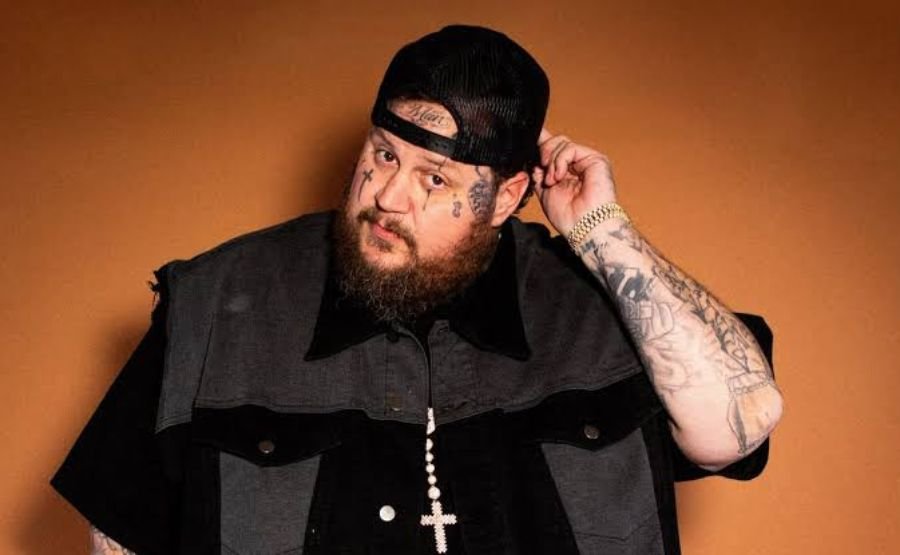
Who Is Jelly Roll? His Real Name, Age, Net Worth, Wife, and Life Story
Quick Bio
Detail Info
| Full Name | Jason Bradley DeFord |
| Stage Name | Jelly Roll |
| Date of Birth | December 4, 1984 |
| Place of Birth | Antioch, Tennessee (outside Nashville) |
| Nationality | American |
| Main Profession | Singer, rapper, songwriter |
| Biggest Achievements | CMA New Artist of the Year (2023); CMT Music Award winner for “Son of a Sinner”; sold out Nashville’s Bridgestone Arena (15,000 fans); Grammy nomination for Best New Artist; first musical guest of SNL’s 50th season |
| Key Fact 1 | Spent ages 13 to 25 in and out of jail; most serious charge was aggravated robbery at age 16 |
| Key Fact 2 | Married Bunnie XO (Alisa DeFord) in 2016; has daughter Bailee Ann and stepson Noah |
| Key Fact 3 | Testified before the U.S. Senate in 2024 about the fentanyl crisis |
Why Jelly Roll Still Matters — Maybe More Than Ever
You know what’s rare in music right now? Somebody who sounds like they’ve actually lived what they’re singing about. Not performed it, not been workshopped into an authentic-seeming persona by a label’s marketing team. Actually lived it. That’s Jelly Roll.
The guy spent the better part of his teens and early twenties bouncing in and out of correctional facilities in Tennessee. He dealt drugs. He went through real addiction. He had a daughter while he was still largely in chaos. And then — slowly, messily, incompletely — he found his way into music, rebuilt his life, and became one of the most genuinely surprising success stories in recent American music.
What makes him matter is that he doesn’t pretend the dark parts didn’t happen. His whole public persona is built on radical honesty about where he came from. His songs are essentially confessions set to melody. And it turns out millions of people are desperate to hear that — people who feel like mainstream music has forgotten that life can be genuinely hard, that recovery is real, that redemption isn’t a cliché when somebody actually earns it.
See also “Alexis Rodman Height: How Tall Is Dennis Rodman’s Daughter?“
Growing Up in Antioch: The Place That Made Him
Antioch sits about twelve to fifteen miles south of downtown Nashville, depending on which way you go. It’s not the Nashville of the Grand Ole Opry, the honky-tonks on Lower Broadway, or the neon-lit tourism machine the city has become. Antioch is strip malls and apartment complexes and mobile home parks and a population that works hard for not quite enough money. It’s a neighborhood where the American Dream feels more like something that happens to other people.
Jason DeFord was born there on December 4, 1984. His mother Donna gave him his love of music — she had a real feel for it, and that transferred to her son, even as her own struggles with mental illness and addiction made the household unstable in ways that would shape his entire early life. His father was a meat salesman who also worked as a bookie on the side — a kind of dual-economy working-class hustle that tells you something about the economic reality of that household.
Jason was surrounded by people who were struggling. That’s the honest framing. The neighborhood had problems with drugs, the family had problems with addiction, and by the time he was a young teenager, that environment was pressing in on him from every side.
He got his love of music young — he was writing raps by nine or ten years old. By eighth grade he was making mixtapes and sharing them around. Music was always there, running alongside everything else that was happening in his life, even when everything else was going badly.

The School-to-Jail Pipeline That Almost Swallowed Him
Here’s the uncomfortable truth that Jelly Roll doesn’t shy away from: school didn’t save him. The system didn’t save him. By the time he was thirteen, he was making choices that were landing him in juvenile detention. He’s described his adolescence as a period of genuine criminal activity — selling drugs, getting arrested repeatedly, living in the orbit of people for whom that was just how things went.
His most serious charge came at sixteen. He was arrested for aggravated robbery — he’d tried to steal marijuana while armed with a gun. That’s a serious felony, and it set the trajectory for a stretch of young adulthood that he’s described as bouncing in and out of jails and correctional facilities essentially continuously from his early teens until he was about twenty-five.
He has spoken about feeling like the system was designed to keep him locked in that cycle. The juvenile facilities, the adult jails, the specific way that a criminal record makes legal employment nearly impossible, which then makes returning to illegal activity feel like the only viable option — it’s a feedback loop that grinds people down. He went through it repeatedly.
What’s crucial to understand is that none of this erases his own responsibility for his choices. In interviews, he has been rather explicit about that. He’s not primarily blaming the system. He’s acknowledging the choices he made within a context that made other choices harder to see. That nuance matters.
Music as the Way Out — The Long, Slow Version
Here’s where most redemption narratives skip ahead to the moment everything clicked. With Jelly Roll, there wasn’t a moment. It was a long, grinding process that took years.
He was making music throughout the jail years — writing in his cell, working on material during whatever stretches of freedom he had. His sound in those early years was deeply rooted in underground Southern rap, the same tradition that produced artists like Lil Wyte out of Memphis. It was street music, mixtape music, the kind of thing that circulates through specific communities without ever reaching mainstream radio.
His early break came from the internet rather than from any industry gatekeeping. A video went viral — relatively speaking, by the standards of that era and that genre — and it reached Lil Wyte in Memphis. Lil Wyte was building his own label operation and wanted to collaborate. That 2010 collaboration, a track called “Pop Another Pill,” found its audience. Over six million YouTube views, which for underground Southern rap at that point was real traction.
That partnership produced the hip-hop group SNO, with Jelly Roll joining Lil Wyte and another rapper called BPZ. It was the first time his music was reaching people he’d never met, people outside his neighborhood, people who were connecting with what he was putting into the songs.
He also collaborated with Nashville rapper Haystak during this period — their album together cracked the Billboard R&B/Hip-Hop charts in 2011, modest but real, the kind of foothold that shows you something is working.
The pivot toward country was gradual rather than calculated. He’d grown up hearing country music — it was in the air in Tennessee whether you sought it out or not — and something about that emotional directness, the storytelling tradition, the willingness to sit with grief and difficulty, matched what his own music was trying to do. By the time he started weaving country sounds into his hip-hop foundation, he wasn’t abandoning his identity. He was expanding it.
Bridgestone Arena and the CMA: The Breakthrough Everyone Saw Coming — Except Maybe Him
The acceleration of Jelly Roll’s mainstream breakthrough happened fast once it started. His song “Save Me” became a genuine moment — raw, emotionally unguarded, the kind of song that people hear in their darkest moments and feel like it was written specifically for them. Then “Need a Favor” reached country radio in a way that his earlier music never had, and “Son of a Sinner” put him on CMT’s radar in a serious way.
December 9, 2022. Nashville’s Bridgestone Arena. Fifteen thousand people. He sold the place out — packed it with fans who knew every word, who’d found his music through some algorithm or some friend’s recommendation or some particularly difficult night when they needed exactly what his songs provided. He brought out a stacked supporting cast: Chris Young, Sam Hunt, Riley Green, Shinedown, and several of his underground rap collaborators including Tech N9ne and Struggle Jennings, bridging both worlds of his career on the same stage.
The CMA Awards in 2023 gave him New Artist of the Year — which is both remarkable and not, once you understand how completely he’d connected with country music’s core audience. The CMTs gave him awards too. He was nominated for Best New Artist at the Grammys. For the 50th season of Saturday Night Live in September 2024, they made him the first musical guest — a position of significant cultural visibility that the show doesn’t hand out casually.
He also testified before the U.S. Senate in 2024, speaking about the fentanyl crisis and addiction from personal experience. That testimony — a former repeat offender sitting before the United States Congress and talking honestly about addiction and the criminal justice system — was its own kind of statement.

Bunnie XO, Bailee, Noah, and the Family He Built
His daughter Bailee Ann arrived in 2008, when Jason was twenty-three and his life was still largely in chaos. He’s said that her birth was one of the things that made him genuinely want to change — not an instant transformation, but a real shift in what he was working toward. She gave him something to be working toward.
He met his wife Bunnie XO — born Alisa — and they married in 2016. Bunnie is a personality in her own right: she has a hugely successful podcast and social media presence, and she’s not a background figure in anyone’s story. The two of them present as genuinely matched — she’s as direct and unfiltered as he is, and their public dynamic has a warmth and humor to it that feels real rather than performed.
She brought her son Noah into the family, and Jelly Roll has been a stepfather to him. The blended family they’ve built — which also expanded to include Bailee growing through her teenage years into her own person — is a central part of who he is now. He’s been openly emotional about fatherhood in interviews and in his music.
Their vow renewal in 2023 was a moment that generated a lot of attention — an acknowledgment of the life they’d built together, done publicly and with evident feeling.
The Struggles He Talks About Openly
The addiction thread runs through Jelly Roll’s story from beginning to end. His mother’s addiction was part of his childhood. His own substance use was part of his young adulthood. His songs are full of people in the grip of things they can’t control, reaching for something better, falling short, trying again.
He’s spoken about his weight and his health with the same directness he brings to everything else. He made a public commitment to getting healthier after a pilot of a small aircraft told him he was too heavy to safely fly as a passenger — a moment he’s shared publicly with self-deprecating humor and genuine seriousness. He started running. He changed his eating habits. He ran a half marathon. These aren’t small things for someone in their late thirties with his history.
The criminal record is part of him too. He’s been open about the specific charges, the specific years, the specific ways that history shaped him. He doesn’t hide it, and he doesn’t use it as a performance of authenticity either. He just tells the truth about it and lets that speak.
Money, Simply
Jelly Roll’s net worth is estimated at around $5 million, with that figure growing as his mainstream profile has expanded — touring revenue, streaming income from his back catalog, and the kind of deals that come with CMAs and Grammy nominations. He’s signed to BMG, which is a serious major-adjacent label deal. He’s not flying private for the sake of appearance, but he’s also genuinely comfortable in a way that his Antioch upbringing gave no indication he’d ever be.
Life Now: Running Races and Raising His Voice
Jelly Roll is 40 years old as of late 2024. He lives around Nashville — still, after everything. He has described himself as a proud Nashville kid even at his biggest moments. He runs — genuinely, literally runs, something that would have been unimaginable to the young Jason DeFord. He does fatherhood intentionally, visibly, as a corrective to the father absences in his own story.
He advocates. He shows up at the Senate. He talks about addiction and criminal justice and what it costs to try to get out of a cycle the system isn’t designed to help you exit. He does it from a position of personal authority that most spokespeople don’t have.
The music keeps coming. Each record is another layer of the same story — a man trying to make sense of where he’s been and what it means for where he’s going.
Final Words
There’s a word that gets applied to Jelly Roll constantly — “authentic” — and it’s become almost meaningless through overuse. But with him it actually applies in a specific, concrete way. His authenticity isn’t a brand strategy. It’s the fact that everything he sings about actually happened, and he’s found a way to metabolize it into music that other people can use to metabolize their own hard things.
He came from a place and a situation where the statistical outcome was more prison, more poverty, early death, or some combination of those. He became the opening act of Saturday Night Live’s fiftieth season. He stood before the United States Senate and talked about addiction from the inside. He fills arenas named after credit card companies.
What makes him different isn’t the rags-to-riches structure — plenty of musicians have that. It’s that the rags are still visible in everything he does. He never got a renovation job on his past. He just kept building on it.
FAQs
1. Who is Jelly Roll?
Jelly Roll is the stage name of Jason Bradley DeFord, an American rapper, singer, and songwriter born on December 4, 1984, in Antioch, Tennessee. He blends hip-hop, country, and rock into music built around themes of addiction, struggle, redemption, and working-class life. He rose to mainstream prominence with songs like “Need a Favor,” “Save Me,” and “Son of a Sinner.”
2. Where is Jelly Roll from?
He grew up in Antioch, Tennessee — a working-class suburb about twelve to fifteen miles south of downtown Nashville. The neighborhood was significantly different from the polished country music industry Nashville represents publicly, and that contrast runs throughout his biography and his music.
3. What is Jelly Roll’s real name?
His legal name is Jason Bradley DeFord. He’s been going by the stage name Jelly Roll since his early mixtape days in Antioch.
4. How did Jelly Roll get into music?
He was drawn to rap as a child — writing his first lyrics around nine or ten years old and sharing mixtapes by middle school. His mother Donna passed her love of music to him. Even during his periods in jail, he continued writing and working on music. His early breakthrough came from underground Southern rap collaborations, particularly with Memphis rapper Lil Wyte, before he gradually incorporated country elements.
5. How much time did Jelly Roll spend in jail?
He has described himself as being in and out of jail from age thirteen to approximately twenty-five. His most serious charge was aggravated robbery at sixteen, when he attempted to steal marijuana while carrying a gun. He used the experience of incarceration and its aftermath as central material in his music and advocacy.
6. Who is Jelly Roll’s wife?
He is married to Alisa DeFord, known publicly as Bunnie XO — a podcaster and social media personality with her own substantial platform. They reaffirmed their vows in 2023 after getting married in 2016. She is a significant public figure in her own right, known for being direct and unfiltered, and the couple presents as genuinely well-matched.
7. Does Jelly Roll have children?
Yes. His daughter Bailee Ann was born in 2008 — she arrived when his life was still significantly chaotic, and her birth is cited as one of the meaningful turning points that pushed him toward wanting to change his life. Through his marriage to Bunnie XO, he is also stepfather to her son Noah.
8. What are Jelly Roll’s biggest songs?
His most significant mainstream tracks include “Need a Favor” — his first country number one — “Save Me,” “Son of a Sinner” (which won three CMT Music Awards in 2023), “I Am Not Okay,” and “Liar.” His sound blends country storytelling with hip-hop delivery and rock-influenced production.
9. What awards has Jelly Roll won?
He won New Artist of the Year at the 2023 CMA Awards, took home multiple CMT Music Awards for “Son of a Sinner,” received a Grammy nomination for Best New Artist, and was honored with the Billboard Country Live Breakthrough Artist of the Year Award in 2023.
10. Did Jelly Roll testify before Congress?
Yes. In 2024, Jelly Roll testified before the United States Senate about the fentanyl crisis and its impact on communities like the one he grew up in. The testimony drew on his personal experience with addiction and the criminal justice system and attracted significant attention.
11. What is Jelly Roll’s estimated net worth?
His net worth is estimated at approximately $5 million as of 2024-2025, generated from touring, streaming and digital sales, record deals with BMG, and the mainstream commercial success of his recent country crossover work. That figure is expected to continue growing with his increasing profile.
12. Is Jelly Roll country, rap, or rock?
Genuinely all three, and that’s part of what makes him interesting. His roots are in underground Southern rap. He incorporated country’s storytelling tradition and emotional directness into his work gradually. His biggest records have country production and reach country radio while retaining his rap delivery and rock-influenced energy. He’s often described as genre-blending or country-rap, though he resists simple categories.
Read stories that climb higher than expectation with The Madrid Magazine.



One Comment