
Anne de Zogheb: The Woman Who Did It All on Her Own Terms
Quick Bio
| Detail | Info |
| Full Name | Anne Alison de Zogheb (later Anne Anka) |
| Born | October 2, 1942 — Alexandria, Egypt |
| Died | March 29, 2017 — Hollywood, California, aged 74 |
| Nationality | Egyptian-born; Lebanese-English heritage; American by residence |
| Professions | Fashion model, art collector |
| Biggest Achievements | One of the top Ford Models of the early 1960s; described as a supermodel by Glamour in 1968; built one of the most serious private contemporary art collections in Los Angeles |
| Heritage | English, Lebanese, French, Dutch, and Greek descent |
| Family | Five daughters with Paul Anka: Alexandra, Amanda, Alicia, Anthea, and Amelia |
| Notable Connections | Daughter-in-law connection to actor Jason Bateman (through Amanda); daughter Anthea Anka pursued a music career |
Why Anne de Zogheb Still Deserves Her Own Story
Most of the time when you search for Anne de Zogheb, you get pointed toward Paul Anka. Which is understandable — he’s one of the most recognized pop figures of the 20th century, a songwriter who wrote songs for Sinatra and filled arenas from the fifties onward. It makes sense that people know him.
But here’s what often gets lost: Anne was remarkable entirely on her own. She was a refugee child turned convent school student turned Paris fashion model turned New York cover girl turned mother of five turned serious, deeply knowledgeable art collector. That’s a life with real texture and real range. She didn’t just orbit someone else’s fame. She built her own world, piece by piece — and in the end, quite literally, she chose art over a house.
That choice deserves a closer look.
See also “Walton Goggins & Leanne Knight: A Story of Craft, Loss, and Coming Home to Yourself“
Alexandria, Egypt — and the World She Was Born Into
Anne came into the world on October 2, 1942, in Alexandria — one of history’s most cosmopolitan cities, a Mediterranean port where cultures had been layering on top of each other for centuries. She was born with a twin sister, into a family that was itself a study in layered identity.
Her father, Charles de Zogheb, came from one of Alexandria’s distinguished Levantine families — Lebanese by lineage, with a background that carried European and Mediterranean threads running through it for generations. He became a Lebanese diplomat, a figure of real social standing. Some sources refer to him as Count Charles de Zogheb, which gives you a sense of the family’s pedigree. He passed away in 2006.
Her mother was English.
Between the two of them, Anne ended up with a heritage that combined English, Lebanese, French, Dutch, and Greek strands — a genuinely remarkable mix that probably made perfect sense in a city like Alexandria, where that kind of layered background was practically the local tradition. She grew up fluent in multiple languages, which would serve her beautifully in the decades ahead.
For a while, it must have seemed like a charmed beginning. An elegant city, a distinguished family, a cosmopolitan childhood that gave her access to both European culture and the particular Mediterranean richness of Egypt.
But then history intervened.
Revolution, Exile, and the Convent School
In 1952, Egypt’s revolution changed everything. King Farouk was deposed, and the social and political environment shifted dramatically for the city’s Levantine elite. Many of Alexandria’s prominent foreign families began to leave.
The de Zogheb family was among them. Anne’s family fled to England — and with that, the sunny, layered world of Alexandria became something she’d carry only in memory.
She was around ten years old.
She was placed in a convent school in England, which is exactly as structured and disciplined as it sounds. There were strict rules, a religious framework, clear expectations. Anne later recalled that some elements of popular culture were restricted — certain music was simply not permitted. It’s a telling detail, because it means she encountered Paul Anka’s music through a kind of filter: she knew his songs before she knew him because his music was among what was allowed.
After the convent school came a finishing school — the kind of institution that European families of a certain standing sent their daughters to in those years, designed to round out a young woman’s education with languages, poise, and practical cultural knowledge. Anne was already multilingual, already accustomed to navigating different cultural settings. The finishing school added polish to what was already a naturally sophisticated foundation.
But university was out of reach. According to accounts Anne herself gave in later interviews, by the time she graduated, there simply wasn’t enough money for a university education. It was a financial reality that redirected her path — not toward closure, but toward Paris.
Paris, a Fashion House, and the Career That Found Her
Anne moved to Paris in her late teens and took a job at a small fashion house. It was entry-level, practical, connected to the world of style and design in the city that was arguably the center of the fashion universe. She was doing the work, learning the industry, figuring out where she fit.
And then she was spotted.
Paris Match — the prestigious French magazine — discovered her. This wasn’t a casual compliment. Paris Match in those years was a major cultural publication with enormous reach and credibility. Being noticed by them meant something.
From that point, the trajectory changed quickly. Eileen Ford — the legendary American modeling agent whose Ford Models agency was setting the standard for international fashion modeling — took Anne under her wing. Ford had an eye for it, and what she saw in Anne was someone whose bone structure, bearing, and natural elegance belonged on the pages of the top fashion magazines.
Ford brought her to New York. Anne arrived in 1959 and, in her early days there, she stayed with the Ford family — a practice Eileen Ford was known for with her international models, providing a safe landing in a new city. It was an immersive, close-knit introduction to the American modeling world.
What followed was rapid and dazzling.
New York, the Covers, and What It Actually Meant to Be a Ford Model
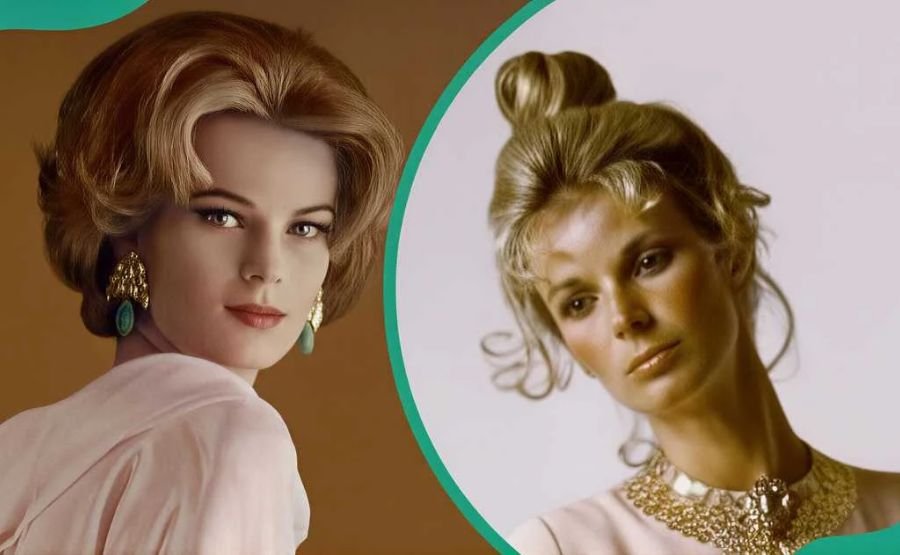
In New York, Anne de Zogheb became exactly what Eileen Ford had seen she could be. Her face appeared on the covers of major fashion magazines. She was photographed by the best photographers working in the industry — names like Karen Radkai and Bert Stern shot her for Vogue, among others. By the early 1960s, she was one of the most recognizable faces in American fashion.
The word that got attached to her — and it’s worth pausing on this — was supermodel. That phrase was used to characterize her in Glamor magazine in 1968. That was before the word became the cultural wallpaper it is today, before it was shorthand for anyone who modeled professionally. In 1968, it actually meant something specific: a model who had crossed from being a beautiful face in a photograph into being a recognized figure, someone whose image carried currency.
Anne was that. She worked hard for it, and she never let anyone forget that it was work. In interviews later in her life, she said simply: “I worked hard.” No mystique about it, no romanticizing the glamour. She showed up, she did the job, she was excellent at it.
She graced the covers and editorial pages of publications that defined taste in those years. She wore Pierre Balmain and Howard Wolf and other designers whose names were the labels of serious fashion. She traveled, she worked with major creative teams, and she was thoroughly embedded in the world of 1960s New York and its fashion industry.
And somewhere in the middle of all of this, she started noticing art.
Puerto Rico, 1962: Where Everything Changed
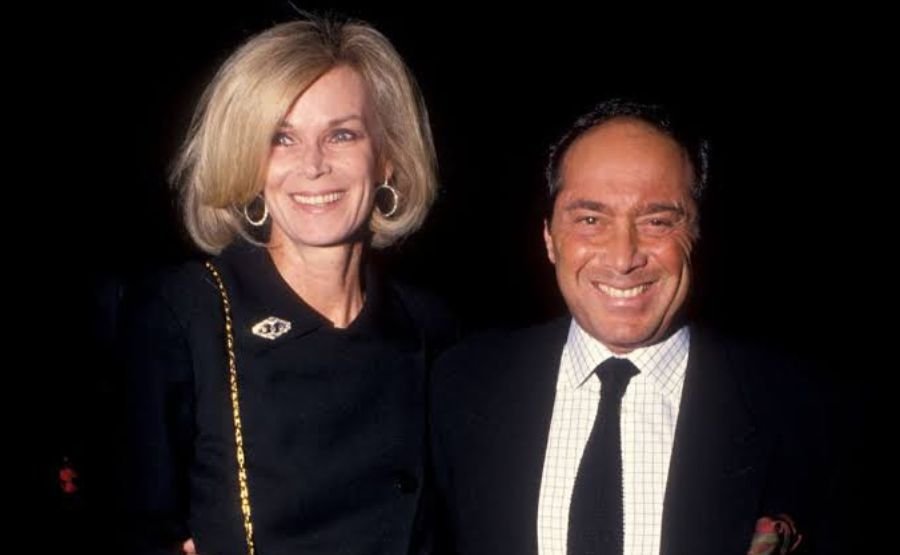
Anne was on assignment with the Eileen Ford Agency in San Juan, Puerto Rico when she met a young Canadian singer named Paul Anka.
Paul Anka in 1962 was already famous — enormously, internationally famous. He’d written “Diana” at sixteen and watched it become a global phenomenon. He’d written “Put Your Head on My Shoulder” and “Lonely Boy” and songs that seemed to come pouring out of him naturally. He’d also written “My Way” for Frank Sinatra, a song that became one of the most covered pieces of music in history.
He was twenty years old, and very famous.
Anne was very beautiful, very cultured, and completely at ease in the world. Her upbringing had given her that — the languages, the poise, the ability to move between different social registers without losing her center.
She already knew his songs, even before meeting him. The convent school had forbidden a lot of music, but Paul Anka’s music had been permitted. So she knew the voice, the songs, the melody, before she knew the man.
They met. He was taken immediately.
Marriage, Five Daughters, and Stepping Away from the Runway
Anne de Zogheb and Paul Anka married on February 16, 1963, in a ceremony at Paris-Orly Airport. It had an elegantly transient quality to it — a Paris airport, two people in the middle of lives that moved constantly, making it official before they moved on to the next thing.
She became Anne Anka.
The couple settled into a life shaped by Paul’s extraordinary career demands and Anne’s own evolving sense of what she wanted from her years. They had five daughters: Alexandra, Amanda, Alicia, Anthea, and Amelia. Each of them grew into her own person, and the family’s trajectory — from New York to eventually Los Angeles — traced the arc of Paul’s career and Anne’s quiet transformation from runway model to art world devotee.
After their second daughter was born, Anne stepped away from modeling. She was done. She’d had a remarkable run, and she walked away from it cleanly. No lingering attempt to hold onto the career, no slow fade. She had other things to build.
Amanda, one of her daughters, later married actor Jason Bateman. Anthea went into music. The girls, as a group, dispersed to different corners of the world — Geneva, Monte Carlo, London among them — each building her own life while staying connected to the family Anne had created.
The Art Collection: Her Real Life’s Work
Here’s where Anne’s story becomes genuinely interesting for people who care about more than celebrity marriages.
She started collecting art while she was in New York, initially without any formal training in the field. She bought what she loved. That was the whole philosophy. She didn’t hire people to tell her what was valuable or prestigious. She walked into galleries, looked at work, and responded to what moved her. Then she bought it.
That instinct turned out to be excellent.
Over the decades — and we’re talking about a collecting practice that spanned fifty years — Anne built a collection of contemporary art that would make serious museum curators pay attention. The names in her collection are a roll call of significant modern and contemporary art: Cy Twombly, Robert Rauschenberg, Christopher Wool, Gerhard Richter, Albert Oehlen, Edward Ruscha, Sol LeWitt, Lynda Benglis, Glenn Ligon, Rudolf Stingel, Mark di Suvero, Joel Shapiro — and dozens of others.
These were not vanity purchases. She understood what she was buying. She had developed, over time, a genuine connoisseurship — the ability to look at work by emerging artists and sense something before the wider market had confirmed it. She collected artists she found interesting, not just names that had already been validated.
She also built the collection, took it apart, and built it again. That’s a mark of serious engagement rather than passive accumulation. A pure status collector holds and holds. Anne was responsive, evolving, willing to let pieces go when they needed to go.
When she and Paul divorced — the separation came around 1994, the official divorce was finalized in 2000 — Paul took the house. Anne took the art. She later described this arrangement with characteristic directness: “Fine, fine.” She knew exactly what she was choosing.
After the divorce, she began working with Lisa Schiff, a New York art adviser who happened to have been a college classmate of one of the Anka daughters. The relationship sharpened what Anne was already doing instinctively. Schiff’s first task was to place a painting from the collection into a European collection — the kind of careful, strategic work that serious collectors do when they’re thinking about how their pieces live in the world.
Anne’s West Hollywood home became something of an informal gallery. Large canvases anchored the rooms. Work by artists she knew personally sat alongside pieces by painters already in major museum collections.
W Magazine profiled her and her collection, describing it as astonishing. The piece was called “She Did It Her Way” — a nod to the song her ex-husband had made famous, but also an accurate statement about how Anne had approached her post-marriage decades. Quietly, without seeking attention, she had assembled something genuinely significant.
The Private Life She Preferred
Anne de Zogheb was not a woman who chased the spotlight. For thirty-seven years of marriage to one of the most famous entertainers in the world, she maintained a private identity. She raised five daughters. She collected art. She spoke multiple languages. Rather than becoming Paul Anka’s wife, she developed connections in the art world based on her own competence.
There were no public feuds, no tabloid dramas, no memoir full of grievances. The divorce was cordial, according to her and Paul Anka. They had five daughters together; keeping things functional made sense.
She loved languages. She loved her grandchildren. She loved art — buying it, living with it, thinking about it. These were the pillars of her private world.
The End of a Remarkable Life
On March 29, 2017, Anne de Zogheb passed away in Hollywood, California. She was 74 years old.
Her father, Count Charles de Zogheb, had preceded her in death in 2006. She was survived by her five daughters — the family she’d built through thirty-seven years of marriage and through the long decades of collecting, traveling, and living with genuine curiosity about the world.
The cause of her death has not been made public. She was not a figure who sought coverage, so her passing was noted in the art world and among those who had followed her story, but it didn’t generate the kind of industry-wide reaction that might greet a more self-promotional figure.
In financial terms, Anne’s estate was most notably shaped by the art collection she’d spent a lifetime building. The works she owned — including pieces by Twombly, Richter, Rauschenberg, and Ruscha — carry significant market value. In the strictest meaning of the word, she had transformed a passion into a significant asset. How that collection was divided or handled among her daughters and estate isn’t public record, but what’s clear is that she left behind something of genuine worth and rarity.
Final Words
What strikes you about Anne de Zogheb, when you trace the whole arc, is the consistency of her self-possession. At eight years old, she was a refugee; by eleven, she was a convent schoolgirl; by her late teens, she was a Paris model; by her early twenties, she was a New York cover star; by her thirties and forties, she was a wife and mother; and for nearly the remainder of her life, she was an avid collector.
At each transition, she made active choices. She didn’t drift. She decided. When modeling was finished, she finished it. When the marriage ended, she didn’t cling. When the divorce settlement offered her a choice between property and art, she chose art — because she knew what the art was worth, in every sense of the word.
She’s rarely talked about without Paul Anka being mentioned in the same breath. However, she would have recognized it and probably thought it was kind of funny. She had her own life. She built her own collection. She knew her own mind.
That’s legacy enough.
FAQs
1. Who was Anne de Zogheb?
She was an Egyptian-born fashion model of Lebanese-English heritage who became one of the top Ford Models of the early 1960s, and later spent decades building a significant private collection of contemporary art. Additionally, she was singer Paul Anka’s first wife.
2. When and where was she born?
October 2, 1942, in Alexandria, Egypt. She and her twin sister were born together.
3. What was her background?
Her father, Charles de Zogheb, was a Lebanese diplomat from a prominent Levantine family in Alexandria. Her mother was English. Her mixed heritage included Lebanese, English, French, Dutch, and Greek lineage.
4. Why did her family leave Egypt?
Egypt’s 1952 revolution destabilized the country’s Levantine elite communities, and the family fled to England.
5. How did her modeling career start?
After moving to Paris, she was discovered by Paris Match magazine. Legendary agent Eileen Ford then brought her to New York in 1959, where she quickly rose to become one of the most photographed models of the era.
6. How did she meet Paul Anka?
She was on a modeling assignment with the Ford Agency in San Juan, Puerto Rico in 1962 when she encountered him. The next year, they tied the knot at Paris’s Orly Airport.
7. How long were they married?
Thirty-seven years. They separated around 1994 and divorced officially in 2000.
8. Do they have children together?
Yes — five daughters: Alexandra, Amanda, Alicia, Anthea, and Amelia. Amanda Anka later married actor Jason Bateman; Anthea puIn 1968, Glamour magazine used that term to describe her. rsued a singing career.
9. What happened to her art collection after the divorce?
When the marriage ended, Paul took their house and Anne took the art collection — a choice she described simply as “Fine, fine.” She continued building the collection afterward, working with art adviser Lisa Schiff.
10. Who are some of the artists in her collection?
Her collection included works by Cy Twombly, Robert Rauschenberg, Gerhard Richter, Christopher Wool, Edward Ruscha, Glenn Ligon, Sol LeWitt, Lynda Benglis, Albert Oehlen, Rudolf Stingel, and many others.
11. Was she ever called a supermodel?
Yes — Glamour magazine used the term in 1968 to describe her, back when the word carried a specific and meaningful weight in the fashion industry.
12. When did Anne de Zogheb die?
March 29, 2017, in Hollywood, California, at age 74. She was survived by her five daughters and grandchildren.
Read stories that climb higher than expectation with The Madrid Magazine.





One Comment