
Jane Fonda’s Daughters: Vanessa Vadim and Mary Luana Williams — Two Very Different Lives Shaped by One Extraordinary Woman
Quick Bio
| Detail | Info |
| Full Name | Vanessa Vadim |
| Birth Date | September 28, 1968 |
| Birthplace | Boulogne-Billancourt, near Paris, France |
| Nationality | French-American |
| Main Profession | Filmmaker, cinematographer, director, environmental columnist |
| Biggest Achievements | Documentary work including The Quilts of Gee’s Bend; syndicated environmental writing; decades of behind-the-camera filmmaking; environmental advocacy |
| Key Facts | Studied literature and society at Brown University and later earned a master’s in English and creative writing from NYU; married Paul Waggoner in 2010; has two children, Malcolm (born 1999) and Viva (born 2002); half-siblings include Troy Garity, Christian Vadim, Nathalie Vadim, and Vania Vadim |
Why These Two Women Matter Beyond Their Mother’s Name
Here’s the thing about being Jane Fonda’s daughter. Jane Fonda is not a quiet presence in any room, literal or metaphorical. She’s an Oscar-winning actress. A fitness icon whose aerobics tapes defined a decade. A Vietnam War protester who earned the nickname “Hanoi Jane” and has spent decades in political turbulence around it. An environmental activist arrested at demonstrations well into her eighties. She is, by any measure, one of the most larger-than-life figures in American cultural history.
So what does it mean to grow up in that shadow? Or — in Mary’s case — to choose to enter it as a teenager?
What’s remarkable about Vanessa and Mary is that they both found genuinely their own answers to that question. Neither became an actress. Neither tried to compete with Jane’s cultural footprint or ride it professionally. They went in completely different directions and did genuinely meaningful things in those directions.
Vanessa built a quiet, creative life behind cameras and in environmental writing. Mary built a life of humanitarian service that took her from the streets of East Oakland to Africa and back. Two daughters, two completely distinct paths, both shaped by — and in some ways running alongside — a mother who changed American culture.
See also “Andrew Silverman: The Man Who Built His Own Story After Someone Else Tried to Write It for Him“
Vanessa: Born in Paris Into Two Worlds That Wouldn’t Stay Together
Vanessa Vadim arrived on September 28, 1968, in Boulogne-Billancourt, a suburb of Paris, at a moment when her parents represented one of the more glamorous cultural collisions imaginable. Her mother Jane was the daughter of Henry Fonda — one of the great Hollywood actors of the twentieth century — and was rapidly becoming a major star in her own right. Her father Roger Vadim was a celebrated French filmmaker, the man who directed Barbarella and And God Created Woman, known for his visual style and for a string of relationships with remarkable women.
The world they inhabited when Vanessa was born was the Paris of the late 1960s — intellectually electric, politically charged, caught in the aftermath of the student revolutions of May 1968. It was, in short, about as far from an ordinary childhood as you can get.
The marriage didn’t hold. Jane and Roger divorced in 1973, when Vanessa was just five years old. And Jane, by her own admission in later interviews and writings, struggled to connect with her daughter as a mother in those early years. She has spoken openly about experiencing postpartum depression after Vanessa’s birth and about entrusting the baby’s primary care to a nanny and to Roger rather than being the fully present mother she later wished she had been.
That complicated beginning — the beautiful but unstable parental world, the high-glamour environment, the mother who was physically or emotionally absent for stretches — is the bedrock of who Vanessa became. You don’t grow up the way Vanessa grew up and turn out ordinary.
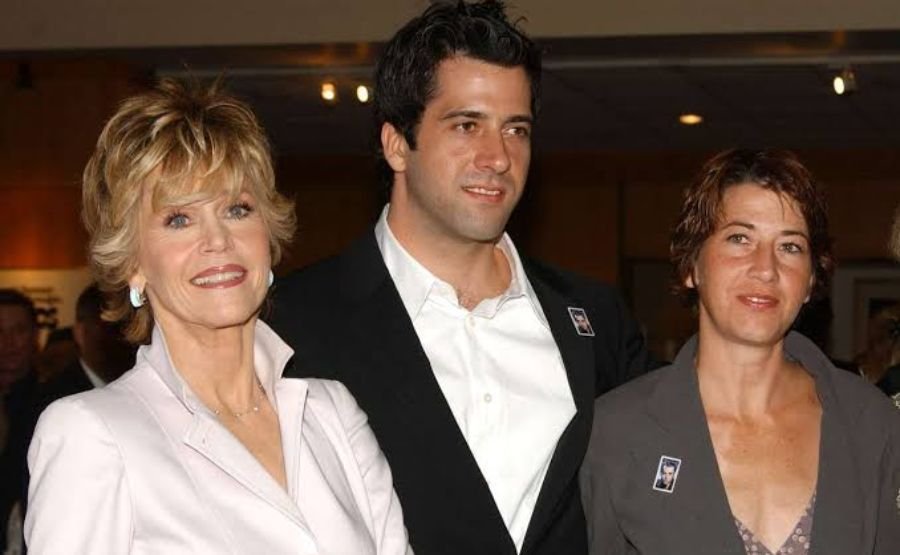
Vanessa’s School Years and the Intellectual Path She Chose
Vanessa grew up largely in the United States as her mother’s career centered there, but the French influence from her father’s side never entirely disappeared. She carried the dual cultural identity of a French-American childhood — raised with one foot in Hollywood and one foot in Parisian cinema, with a grandfather who was an American legend and a father who was a European auteur.
She chose Brown University for her undergraduate studies, which tells you something about who she was developing into. Brown in the 1980s was known for its intellectual independence, its emphasis on self-directed learning, and its progressive culture. Vanessa studied literature and society — not film, not acting, but the structural stuff that underlies how stories work and what they mean in context.
She didn’t stop there. She went on to earn a master’s degree in English and creative writing from NYU. The combination of a Brown education in literature and society followed by a graduate degree in creative writing at one of the country’s premier urban universities suggests someone who was serious about the word and the image as tools for meaning-making, not just entertainment.
Vanessa’s Career: The Camera as Her Voice
Vanessa Vadim chose filmmaking, but specifically the kind that Hollywood barely notices — documentary work, cinematography, editing, producing. She worked behind the camera in a sustained, committed way, not as a celebrity experimenting with directing but as someone genuinely building a craft.
Her most recognized project is her work on The Quilts of Gee’s Bend — a documentary about the African-American quilting women of the Gee’s Bend community in Alabama, whose abstract, geometrically striking quilts became recognized as a major American art form. The project combined cultural history, visual art, and community storytelling in a way that reflects Vanessa’s particular sensibility: she is drawn to subjects that are overlooked, that exist outside mainstream attention, and that reward sustained, careful looking.
She also developed a parallel track as an environmental writer, contributing syndicated columns on environmental issues that reflect both her own advocacy and her mother’s long involvement in climate activism. Writing and filmmaking together — that combination of word and image — is the creative vocabulary she developed from her dual-degree background.
The activism piece matters too. She participated in pro-choice marches, helped build a school in Nicaragua, and has been connected to environmental causes in ways that show genuine personal commitment rather than celebrity endorsement.
Vanessa’s Personal Life: Marriage, Children, and Choosing Quiet
Vanessa’s personal life has been kept firmly private. She was in a relationship with a man named Matt Arnett before eventually marrying film producer Paul Waggoner on July 12, 2010 — a celebration that her mother announced on her blog with visible joy. They have two children together: a son named Malcolm and a daughter named Viva.
Jane Fonda has spoken about her relationship with Vanessa in her memoir and various interviews with a combination of pride and genuine remorse about the early years. By the time Vanessa was an adult, the two had worked through the complications of their early dynamic and built something real and close. They’re photographed together at events. Jane has explicitly named repairing that relationship as one of her most important achievements.
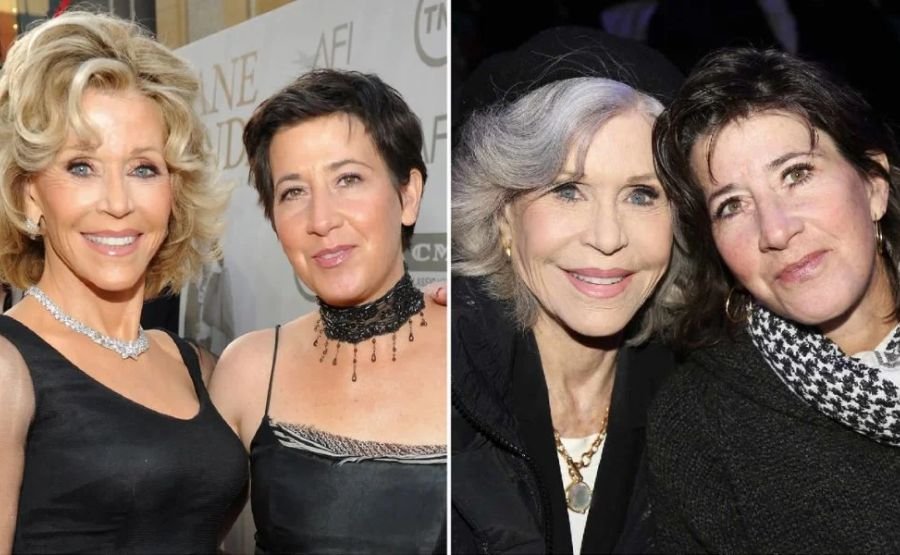
Mary: From East Oakland to One of America’s Most Unusual Family Stories
Mary Luana Williams’s path into the Fonda household is one of the most genuinely extraordinary biographical facts you’ll encounter. She was born on October 13, 1967, in East Oakland, California — a very different world from Paris in 1968, where Vanessa was arriving a year later.
Mary was the fifth daughter of Randy and Mary Williams, both active members of the Black Panther Party. Growing up in the Black Panther community in Oakland in the late 1960s and early 1970s meant growing up inside one of the most significant political movements in American history — a community defined by collective struggle, mutual aid, political consciousness, and also by the violence and persecution that the FBI’s COINTELPRO program brought down on the Party with devastating effect.
Her father was incarcerated. The community around her was under pressure from multiple directions. The environment, by her own description, was both inspiring — she was raised by people who believed deeply in justice and collective responsibility — and genuinely hard.
The Summer Camp That Changed Everything
Here is where the two daughters’ stories connect through the same woman. Jane Fonda, in her years with her second husband Tom Hayden, was deeply invested in political activism — not as a performance but as genuine engagement. Part of that work involved creating spaces for young people from difficult environments.
Mary Williams met Jane Fonda at one of those summer camps — a space Fonda had created or supported for at-risk youth. Mary was around fourteen years old. Something clicked between them. Fonda saw a bright, politically aware teenager who reminded her of everything she cared about in her activist work. Mary saw a woman who took her seriously.
Around 1982, Mary came to live with Jane Fonda and Tom Hayden in Santa Monica. The arrangement was described as a “de facto adoption” — not formal in the legal sense initially, though Fonda has referred to Mary as her adopted daughter, and Mary considers Fonda her mother. Jane herself has said that until she brought Mary into her family, something felt incomplete in her experience of motherhood.
Mary’s Life After the Fonda Household: Finding Her Own Mission
What Mary built after those years with Fonda is genuinely remarkable. She didn’t stay in Hollywood. She didn’t leverage the connection to a famous mother for a career in entertainment. She went out into the world and did work that was fundamentally about other people’s survival.
She worked with the International Rescue Committee. She worked with UNESCO. And in 2000, she founded the Lost Boys Foundation, an organization dedicated to supporting the Lost Boys of Sudan — the young Sudanese men who had been displaced by the devastating civil war in their country and who faced enormous challenges navigating life as refugees in the United States. The work was concrete, sustained, and driven by genuine human connection rather than abstract charity.
In 2013, she published The Lost Daughter: A Memoir — a book that traces her extraordinary journey from the Black Panther community in East Oakland through her years with Jane Fonda, and out into her own adult life and work. The memoir received strong reviews for its honesty and its refusal to sentimentalize any part of the story. It doesn’t make the Fonda household into a fairy tale rescue narrative. It’s a nuanced account of what it actually meant to navigate that transition — from one world defined by political struggle into another world defined by celebrity and wealth — as a Black teenager in America.
She later wrote Brothers in Hope, a children’s book about the Lost Boys, bringing her humanitarian work into a format that could reach younger readers.
She has served as a trustee of the Fonda Family Foundation, which shows that her relationship with Jane has remained real and ongoing long after the household years ended.
Two Daughters, Two Struggles
It would be a mistake to present Vanessa’s or Mary’s life as straightforwardly triumphant. Vanessa navigated a complicated early relationship with a mother who, by her own admission, wasn’t fully present. She also had a reported first relationship with Matt Arnett that didn’t lead to marriage before finding her way to Paul Waggoner.
Mary’s struggles were larger in scale — growing up in a community under active government suppression, losing her family’s stability to incarceration and poverty, and then navigating the cultural whiplash of moving from East Oakland into one of the most privileged households in California as a teenager. Her memoir doesn’t minimize how disorienting that was. She has also spoken about the complex work of building an identity that wasn’t primarily defined by either her birth family’s political world or her adoptive mother’s celebrity world.
Both women found their footing. But it took work, and honesty, and some willingness to sit with difficult truths about where they came from.
The Money Picture
Vanessa’s net worth is estimated at around $6 million, reflecting a career in film production and writing rather than the much larger sums that come from acting careers at her mother’s level. Mary’s net worth isn’t publicly documented — she has built a life around humanitarian service and writing rather than financial accumulation.
Both women are financially comfortable rather than spectacularly wealthy, which is, in both cases, a function of the choices they made about what to do with their lives.
What Their Lives Look Like Now
In 2026, Vanessa Vadim is 57 years old, living in the United States with her husband Paul Waggoner and their two children, continuing her environmental writing and filmmaking work with the same quiet consistency that has characterized her whole career.
Mary Luana Williams, now also in her late fifties, lives in Atlanta, Georgia. She continues her advocacy work, her writing, and her role as a trustee of the Fonda Family Foundation. Her connection to Jane Fonda remains genuine and active — not the relationship of an adopted child who drifted away, but one that has been maintained across decades through mutual commitment.
Final Words
What strikes you most about Vanessa Vadim and Mary Luana Williams is how thoroughly each of them refused to let their connection to Jane Fonda become the entirety of their identity. Vanessa is a filmmaker. Mary is a humanitarian. Both are writers. Both are advocates. And both came to those identities through genuinely personal paths, shaped by who they are rather than by who their mother is.
Jane Fonda has described her children as among her greatest sources of meaning. Looking at what Vanessa and Mary have built, it’s not hard to see why.
FAQs
1. How many daughters does Jane Fonda have?
Two: Vanessa Vadim, her biological daughter with first husband Roger Vadim, born in 1968; and Mary Luana Williams, her adopted daughter who came to live with Fonda and second husband Tom Hayden around 1982.
2. Who is Vanessa Vadim?
She is a French-American filmmaker, cinematographer, director, and environmental columnist born on September 28, 1968, in Paris. She is Jane Fonda’s biological daughter and has built a career in documentary filmmaking and sustainability writing entirely behind the camera.
3. Who is Mary Luana Williams?
She is an American social activist, author, and humanitarian born on October 13, 1967, in East Oakland, California, to Black Panther Party members. She met Jane Fonda at a summer camp around age 14 and was de facto adopted by Fonda and Tom Hayden. She is best known for founding the Lost Boys Foundation and writing the memoir The Lost Daughter.
4. Where did Vanessa Vadim go to school?
She studied literature and society at Brown University and earned a master’s degree in English and creative writing from NYU.
5. What is Vanessa Vadim’s most notable film work?
She is particularly associated with The Quilts of Gee’s Bend, a documentary about the celebrated quilting women of Gee’s Bend, Alabama. She has also worked as a cinematographer and editor on various documentary projects.
6. What is the Lost Boys Foundation?
It is a humanitarian organization Mary Luana Williams founded in 2000 dedicated to supporting the Lost Boys of Sudan — young Sudanese men displaced by civil war who resettled as refugees in the United States.
7. When was Mary Luana Williams’s memoir published?
The Lost Daughter: A Memoir was published in 2013. It traces her life from childhood in Oakland’s Black Panther community through her years with Jane Fonda to her adult humanitarian work.
8. Is Vanessa Vadim married?
Yes. She married film producer Paul Waggoner on July 12, 2010. She has two children: a son named Malcolm, born in 1999, and a daughter named Viva, born in 2002.
9. What is Vanessa Vadim’s estimated net worth?
Approximately $6 million, reflecting a career in film production and environmental writing rather than acting.
10. Did Jane Fonda formally adopt Mary Luana Williams?
The arrangement has been described as a “de facto adoption” — Mary came to live with Fonda and Tom Hayden when she was around fourteen, and Fonda has consistently referred to her as her adopted daughter. Mary considers Jane her mother. The formality of the legal arrangement varies by account.
11. Does Mary Luana Williams still have a relationship with Jane Fonda?
Yes — she serves as a trustee of the Fonda Family Foundation, and the relationship has clearly remained active and meaningful across decades.
12. What do Vanessa and Mary have in common despite their different backgrounds?
Both refused to leverage their connection to a famous mother for personal celebrity. Both built careers rooted in genuine purpose — filmmaking and environmental advocacy for Vanessa, humanitarian service and writing for Mary. And both have maintained real, ongoing relationships with Jane Fonda, despite the complexities of each origin story.
Read stories that climb higher than expectation with The Madrid Magazine.


One Comment