
Pablo Huston: The Boy From Jungapeo Who Became Hollywood Royalty
Quick Bio
| Detail | Info |
| Full Name | Pablo Albarran Huston |
| Birth Year | Approximately 1934–1935 (not officially documented) |
| Birthplace | Jungapeo, Michoacán, Mexico |
| Nationality | Mexican by birth; American by adoption |
| Main Identity | Adopted son of actress Evelyn Keyes and director John Huston; descended from the Huston family |
| Adopted | 1947, in the vicinity of Jungapeo, during filming The Treasure of the Sierra Madre |
| Adoptive Father | John Huston — Academy Award–winning director (The Maltese Falcon, The African Queen, The Treasure of the Sierra Madre) |
| Adoptive Mother | Actress Evelyn Keyes is well recognized for her role as Suellen O’Hara in Gone with the Wind. |
| Siblings | Screenwriter Tony Huston, Oscar-winning actress Anjelica Huston, director and actor Danny Huston, and novelist Allegra HustonThe Film Set That Changed His Life: The Treasure of the Sierra Madre |
| Adoptive Grandfather | Walter Huston — Oscar-winning actor, one of Hollywood’s great character players |
| Notable Fact | Evelyn Keyes didn’t know Pablo existed until she met him at the airport upon John Huston’s return from Mexico — a story John told in his autobiography An Open Book |
A Name That Hides an Extraordinary Story
Pablo Huston doesn’t have a Wikipedia page. You won’t find him in film credits or on a lecture circuit. There are no interviews, no memoir, no documentary about his life. For a person connected to one of the great dynasties of classical Hollywood — the son of one of its defining directors, the step-sibling of some of its most distinctive talents — he has vanished from the public record almost completely.
And yet his story is one of the more genuinely cinematic origin stories in all of Hollywood history. It begins in a small village in the mountains of Michoacán, in a Mexico that was still largely pre-modern in its rural corners, with a boy who had no family and no particular future. It ends — or rather, transforms — on a film set in 1947, when one of the most restless and unpredictable directors in American cinema decided, impulsively and without informing his wife, to bring that boy home.
What happened to Pablo after that is largely lost to history. But the beginning of his story is vivid and strange and worth telling in full.
See also “Kimberly Carton: The Woman Who Built Her Own Story When Everyone Else Wanted to Tell It for Her“
Jungapeo, Michoacán: Where He Started
The village of Jungapeo sits in the state of Michoacán in central Mexico — in the Sierra Madre Occidental, the mountain range that runs down the western spine of the country. It’s a region of dramatic landscape: deep ravines, dense forest, the kind of terrain that looks hostile and beautiful simultaneously. In the 1940s, Jungapeo was a small settlement in an area with limited infrastructure, modest means, and a community life built around agriculture and local trade.
A Modern Screen magazine profile from December 1947 — one of the few primary sources that actually names where Pablo came from — identifies Jungapeo as his hometown. The article places his origins in this specific corner of Michoacán during the period when John Huston was shooting location footage in the surrounding mountains.
Pablo’s exact birth date has never been officially documented. Based on accounts that describe him as around twelve years old at the time of his adoption in 1947, he was probably born somewhere around 1934 or 1935. His original surname was Albarran — in some sources he appears as Pablo Albarran, before the Huston name was added.
His parents are not named in any surviving account. What is consistently stated across all reliable sources — from John Huston’s own autobiography to Wikipedia’s Evelyn Keyes entry to the Encyclopedia of World Biography — is that Pablo was an orphan living without a stable home by the time the film crew arrived in his region.
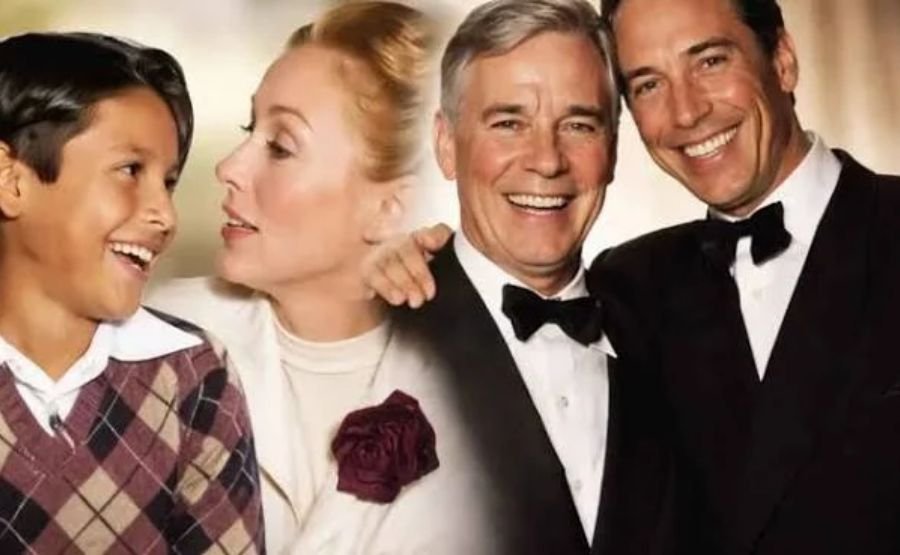
The Treasure of the Sierra Madre, the movie set that transformed his life
The story of how Pablo came to be part of the Huston family is inseparable from one of the great films of Hollywood’s golden age.
An exceptionally ambitious production for 1947 was The Treasure of the Sierra Madre. John Huston had convinced Warner Bros. to let him shoot on location in Mexico — a genuinely unusual request at the time, when most studios preferred the controlled environment of their back lots and soundstages. He was fresh from directing war documentaries for the Army Signal Corps, work that had given him a deep appreciation for the texture and authenticity that real locations provide. He wanted the mountains of Mexico to look like the mountains of Mexico, not like a painted backdrop in Burbank.
Huston’s location scout took him 8,000 miles through Mexican terrain before he settled on the area around Jungapeo — a mountainous, visually extraordinary region that gave the film its characteristic look. The production moved in with its full complement of cast and crew: Humphrey Bogart, Holt, and Walter Huston, John’s own father, who would win an Academy Award for Best supporting actor for his portrayal of Howard, an elderly prospector.
It was during this period — the months of filming in and around Jungapeo in 1947 — that John Huston came into contact with a local boy who had been hanging around the production. The accounts of exactly how they met vary in minor details, but the consistent core is this: a homeless Mexican orphan, about twelve years old, who spent a night at Huston’s hotel and whose circumstances moved the director deeply. By the time production wrapped and Huston was ready to return to the United States, he had made arrangements to take Pablo with him.
What those arrangements looked like legally, in the Mexico of 1947, is not fully documented. The word “adoption” is used consistently across all sources, but the formal process — paperwork, permissions, official filings — isn’t something Huston detailed in his autobiography, and no secondary sources have reconstructed it.
The Airport Revelation: Evelyn Keyes Meets Her New Son
The most striking detail of Pablo’s adoption story, and the one that every source repeats because John Huston himself told it, is what happened when the director arrived home in California.
Evelyn Keyes — John’s third wife, whom he had married in July 1946, and who was an established actress with a career going back nearly a decade — had no idea that her husband had decided to adopt a child. This was not a jointly made decision. Huston had acted entirely on his own.
He met her at the airport. Standing beside him, in clothes that were almost certainly wrong for California, was Pablo.
According to John Huston’s autobiography An Open Book, Keyes discovered she was a mother at the moment she encountered her new son in an airport arrivals area.
What Evelyn actually felt in that moment — the shock, the adjustment required, the complicated mix of emotions that any person would experience when their spouse introduces them to a child they just unilaterally adopted — is something she addressed in her own memoir, Scarlett O’Hara’s Younger Sister, published in 1977. She was not uncritical of John, whom she described in terms that reflect the complicated reality of being married to a man of his particular temperament. But the marriage had already been in difficulty, and it would end in divorce in February 1950 — just three years after Pablo came into the family.
What that transition meant for a twelve-year-old boy who had been brought from rural Michoacán to Hollywood — who now found himself in the middle of a marriage that was dissolving — isn’t something Pablo ever spoke about publicly.
Growing Up Huston: What That Actually Meant
John Huston is one of the defining figures of American cinema. His career spans from The Maltese Falcon in 1941 to The Dead in 1987, the year he died — four and a half decades of relentless creativity, restless physical movement, and projects that ranged from genre masterpieces to ambitious failures. He was, by multiple accounts, a man of enormous personal magnetism and equally enormous personal difficulty. He liked hunting, horses, gambling, drink, and adventure. He was not a steady domestic presence.
His marriage to Evelyn Keyes was his third out of five. He went on to marry ballet dancer Enrica “Ricki” Soma in 1950 — the same year the Keyes marriage ended — and it was with Ricki that he had Anjelica and Tony. He later had Danny with actress Zoe Sallis, and his fifth marriage, to Celeste Shane, produced no children. Allegra Huston was born from his relationship with Ricki Soma’s close friend, Zoë Sallis — the family history is genuinely complex in the way that Hollywood dynasties of that era often were.
Pablo was the first child in that family structure. He got there before Tony, Allegra, Danny, and Anjelica. He was part of the Huston household during the marriage to Evelyn Keyes, and what happened to him when that marriage ended in 1950 — where he lived, who he lived with, whether he maintained contact with John or with Evelyn — is not part of the documented record.
What we can say with confidence is that he had the experience of growing up, however briefly, inside one of Hollywood’s most creatively charged households. Walter Huston — his adoptive grandfather, the Oscar winner who had just finished one of the great performances of his career in The Treasure of the Sierra Madre — was part of that world. So was Humphrey Bogart, who visited frequently. So were the directors, writers, and performers who populated John Huston’s social circle.
That’s an extraordinary context to be dropped into as a twelve-year-old boy from a mountain village in Michoacán.

What Became of Him: The Honest Answer
Here is where every biography of Pablo Huston runs into the same wall, and where honesty matters most.
After the late 1940s and the period immediately following the adoption, Pablo Huston disappears from the public record almost entirely. He did not pursue an acting career. He is not associated with any film, television, or entertainment credits. His name does not appear in the documented accounts of his more famous siblings — Anjelica’s memoir, Danny’s interviews, Tony’s work. He is mentioned, when he is mentioned at all, as a footnote to the larger family narrative.
The Encyclopedia of World Biography identifies him as Pablo Albarran, notes the adoption, and says nothing about his later life. The Wikipedia entry for Evelyn Keyes confirms the adoption in one sentence and moves on. John Huston’s autobiography tells the airport story and doesn’t return to Pablo’s subsequent life in any documented way.
Whether Pablo remained in the United States, returned to Mexico, built a career in a field entirely unrelated to entertainment, married, had children, is still living — none of this is verifiable from the public record. He would be somewhere in his late eighties or early nineties if he is still alive as of 2026. His adoptive father John Huston died in 1987. His adoptive mother Evelyn Keyes died on July 4, 2008, in Montecito, California, at age 91.
The honest account of Pablo Huston ends here, in the gap between what can be confirmed and what cannot.
Why His Story Matters Anyway
There is something genuinely compelling about Pablo Huston’s story precisely because it resists the shape of a conventional biography. It begins like the opening of a novel — a boy in a mountain village, a film crew arriving from another world entirely, an impulsive act of compassion by a complicated and powerful man — and then it disappears into the ordinary privacy of a life that was never meant to be public.
He wasn’t adopted by John Huston in order to be famous. He wasn’t brought from Jungapeo to California to continue a dynasty or to contribute to Hollywood’s legacy. He was, as far as the evidence suggests, simply a child who was noticed by someone who had the means to do something about his situation, and who was then absorbed into one of the most dramatic families in American entertainment history.
The fact that he chose — or simply lived — a private life afterward, entirely outside the frame of his family’s public story, is its own kind of statement. The Hustons produced Oscar winners, acclaimed directors, celebrated writers, and distinctive performers across multiple generations. Pablo Huston produced, as far as anyone can tell, a life that was simply his own.
That’s worth something, even if we can’t document what it looked like.
Final Words
John Huston spent his career telling stories about men searching for things they couldn’t quite hold onto — gold in the mountains, the Maltese Falcon, something just out of reach. The most personal story he ever told, in some ways, was the one about a boy he found near Jungapeo and brought home to California. That story is real. It’s documented. It happened.
What Pablo Huston did with the life that followed is his story to know. The orphan from Michoacán who spent a night in a film director’s hotel and ended up in a Hollywood family — that beginning is extraordinary enough to deserve telling, even if the ending stays private.
FAQs
1. Who is Pablo Huston?
He is the Mexican-born adopted son of director John Huston and actress Evelyn Keyes, adopted in 1947 during filming of The Treasure of the Sierra Madre near Jungapeo, Michoacán, Mexico.
2. What was Pablo Huston’s original name?
Pablo Albarran, also written as Pablo Albarran Huston in some sources. The surname Huston came with the adoption.
3. Where was Pablo Huston born?
He came from Jungapeo, Michoacán, in the mountainous interior of Mexico — the same region where John Huston was filming The Treasure of the Sierra Madre on location in 1947.
4. How did John Huston meet Pablo?
During the location shoot near Jungapeo, Huston came into contact with Pablo, described consistently across sources as a homeless orphan of around twelve years old who had spent a night at the director’s hotel. Moved by his circumstances, Huston arranged to adopt him without informing his wife.
5. Did Evelyn Keyes know about the adoption beforehand?
No. According to John Huston’s autobiography An Open Book, she first learned of Pablo’s existence when John arrived at the airport with the boy and introduced him as their new son.
6. When was Pablo Huston born?
Not officially documented. Based on accounts describing him as around twelve at the time of his 1947 adoption, he was most likely born around 1934 or 1935.
7. Who are Pablo Huston’s siblings?
His adoptive siblings include Tony Huston (screenwriter, John’s son with Ricki Soma), Anjelica Huston (Oscar-winning actress), Danny Huston (actor and director), and Allegra Huston (author).
8. Who was Pablo Huston’s adoptive grandfather?
Walter Huston — the acclaimed stage and screen actor who won the Academy Award for Best Supporting Actor for his role as the old prospector Howard in The Treasure of the Sierra Madre, directed by his own son John.
9. Did Pablo Huston have a career in Hollywood?
No documented film, television, or entertainment career exists for Pablo Huston. Unlike his famous siblings, he did not pursue a public profession in the industry.
10. Is Pablo Huston still alive?
Unknown. He is not confirmed deceased in any public record, but no information about his current life or whereabouts is documented. If alive in 2026, he would be in his late eighties or early nineties.
11. What happened to Pablo after John and Evelyn divorced in 1950?
Not documented. The divorce happened when Pablo was around fifteen or sixteen. What happened to him subsequently — where he lived, who he maintained contact with, what direction his life took — is not part of the public record.
12. Why is there so little information about Pablo Huston?
He chose, or simply lived, a genuinely private life. No memoir, interview, or public statement from Pablo exists in any documented source. His biography begins in a dramatic and well-documented moment — the adoption — and then disappears into the ordinary privacy of a person who was never famous in their own right.
Read stories that climb higher than expectation with The Madrid Magazine.



One Comment