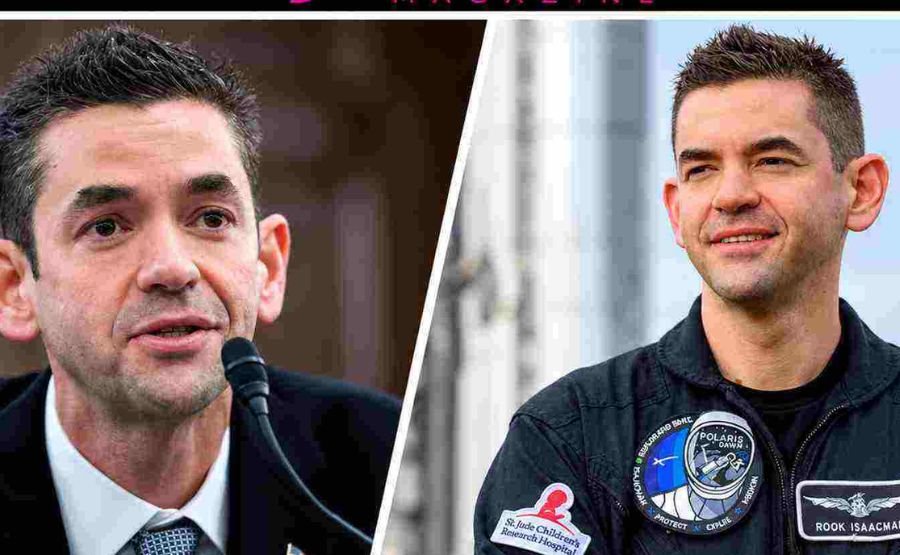
Jared Isaacman Harbortouch: The Entrepreneur Behind a Successful Payment Processing Business
Quick Bio
| Detail | Info |
| Full Name | Jared Isaacman |
| Birth Date | February 11, 1983 |
| Birthplace | Union, New Jersey (grew up in Westfield, NJ) |
| Nationality | American |
| Main Professions | Entrepreneur, Fintech CEO, Commercial Astronaut, Fighter Jet Pilot, NASA Administrator |
| Companies Founded | United Bank Card (renamed Harbortouch, then Shift4 Payments); Draken International |
| Biggest Achievements | Built Shift4 Payments into a multi-billion dollar fintech company, IPO on NYSE in June 2020; commanded Inspiration4 (2021) — first all-civilian orbital spaceflight in history; commanded Polaris Dawn (September 2024) — performed the first-ever private spacewalk; nominated by President Trump as NASA Administrator (December 2024); personally donated $125M to St. Jude Children’s Research Hospital; set around-the-world speed record in a light aircraft (2009); raised over $243 million total for St. Jude |
| Spouse | Monica Isaacman |
| Children | Two daughters: Mila and Liv |
| Net Worth | Approximately $2 billion (Forbes estimate) |
| Extra Key Facts | High school dropout who earned a GED; later earned a bachelor’s degree from Embry-Riddle Aeronautical University; attended Space Camp as a 12-year-old; has been a regular donor to Goodwill since his early twenties; signed the Giving Pledge with wife Monica |
Why Jared Isaacman Is One of the Most Interesting People Alive Right Now
Let me just say this up front: if you told the story of Jared Isaacman in a Hollywood pitch meeting, someone would send you home for making it too unbelievable.
High school dropout builds a credit card processing empire from his parents’ basement starting at age sixteen. Becomes a billionaire by thirty-seven. Teaches himself to fly fighter jets. Sets a world speed record flying a plane around the entire planet. Founds the world’s largest private air force. Then buys a seat on a SpaceX rocket, takes three strangers to orbit, raises a quarter billion dollars for a children’s cancer hospital in the process, and then three years later performs the first-ever private spacewalk while floating above Earth in a SpaceX capsule. Then gets tapped to run NASA.
All of those statements are accurate. And the through-line connecting all of them is a person who simply decided, repeatedly and without apology, to do exactly what he wanted to do — and then worked hard enough to make it happen.
He matters today because he represents a genuinely different kind of American success story. Not inherited. Not lucky. Not overnight. Built from a basement, one credit card terminal at a time.
See also “Don Saroyan: The Man Who Believed in Carol Burnett Before Anyone Else Did“
New Jersey Roots: A Kid Who Was Always Thinking Bigger
Jared Isaacman was born on February 11, 1983, in Union, New Jersey, and grew up in Westfield — a comfortable suburban town about twenty-five miles southwest of New York City. He was the youngest of four children born to Donald and Sandra Marie Isaacman. His parents were Sandra and Donald, a regular middle-class New Jersey family by all accounts.
The Westfield of the 1980s and early 1990s was the kind of place where kids rode bikes through quiet neighborhoods, attended solid public schools, and grew up in the comfortable American suburban rhythm that produces doctors and lawyers and accountants in predictable numbers.
Jared was not headed toward any of those things.
He was a space obsessive from almost before he could read. He called himself a “space geek since kindergarten,” and there’s nothing ironic or retrospective about that statement — the interest was real and early and consuming. His parents enrolled him in Space Camp in Huntsville, Alabama when he was twelve, and that experience clearly made a mark. The simulated fighter-jet pilot training programs, the exposure to NASA culture, the idea that human beings could actually go up there — it all clicked into something that never left him.
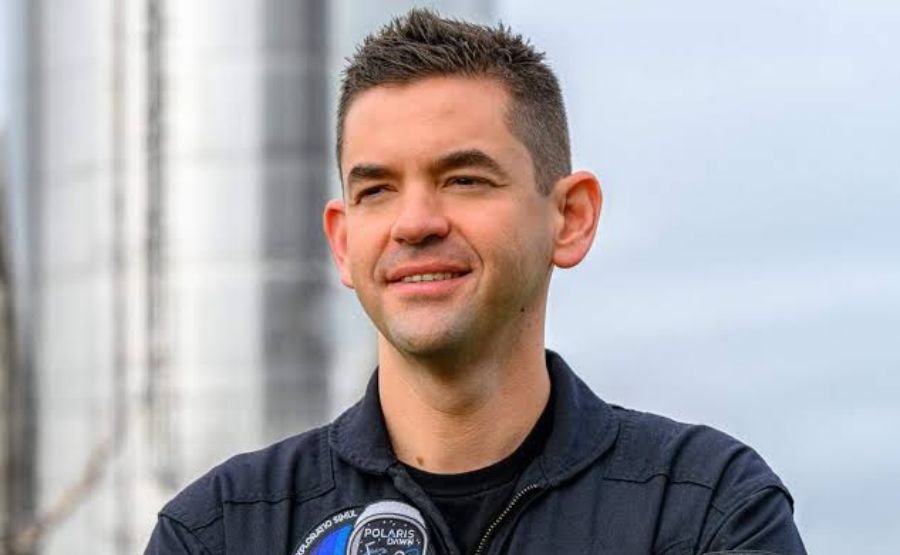
The School He Dropped Out Of and Why Nobody Regrets It
Jared attended Wilson Elementary, moved on to William Annin Middle School in Bernards Township, and eventually landed at Ridge High School in Basking Ridge. He was in what would have been the class of 2001.
He left in his junior year.
The reason he left is worth understanding. It wasn’t because he was failing or disengaged or in trouble. It was because someone offered him a real opportunity in the business world and he recognized immediately that staying in a high school classroom while that opportunity sat waiting would be the wrong call. He wasn’t walking away from something. He was running toward something else.
He got his GED — the general education development certificate — and got to work.
Years later, he went back to school in a different way: he enrolled at Embry-Riddle Aeronautical University, one of the most respected aviation universities in the world, and earned a bachelor’s degree in professional aeronautics in 2011. The education didn’t disappear. It just happened in the right order for him.
The Basement Where Everything Started
In 1999, at the age of sixteen, Jared Isaacman started a company. The business had a particular unglamorous name — United Bank Card — and an equally unglamorous focus: credit card payment processing. It was not the kind of company a teenager starts in movies. There was no app, no viral moment, no Silicon Valley garage mythology. Just a kid in his parents’ basement in New Jersey, figuring out how to help small businesses accept credit cards and doing it better and cheaper than the existing players.
He worked with a friend named Brendan Lauber, and the two of them built the thing one client at a time. Cold calls. Persistence. Learning by doing. At nineteen years old, the company already had a hundred employees. Let that land for a second — most people at nineteen are finishing their sophomore year of college.
By his early twenties, Jared admitted later, he was living in his parents’ basement and working around the clock and was close to burning himself out. The company was consuming every hour he had. He barely left the house. He barely interacted with people outside the business context until around 2004 or 2005, when he was already in his early twenties.
The company grew steadily. It rebranded as Harbortouch — a name with more retail polish to it — and pivoted into point-of-sale systems, offering free integrated touchscreen POS hardware that transformed the product line and attracted merchants in the hospitality and restaurant industries. Caesars Entertainment and the Mandarin Oriental Hotel Group were among the clients that came through the door as the company scaled.
The Year He Learned to Fly — and What It Unlocked
In 2004, at twenty-one years old and clearly feeling the weight of years of relentless work, Jared started taking flying lessons. He’s described that moment as a deliberate choice to find something that would force his mind to work differently — something demanding enough to crowd out the background noise of running a company 24/7.
It worked. And then it became its own obsession entirely.
He didn’t just learn to fly. He got certified as a flight instructor. He qualified on jet aircraft. He trained on experimental and ex-military planes. He became the kind of pilot who could fly things that most licensed pilots will never touch. He performed at airshows with a demonstration team called the Black Diamond Jet Team.
In 2009, five years after his first lesson, Jared set a world speed record for flying around the entire globe in a light aircraft. He did it while simultaneously raising tens of thousands of dollars for the Make-A-Wish Foundation — because apparently once you decide to do something, you might as well attach a charitable component to it.
That combination — extreme personal achievement paired with meaningful giving — became a defining feature of everything he did next.

Building the Air Force and Taking the Company Public
In 2012, Jared co-founded Draken International — a company that sounds either extremely cool or slightly alarming depending on your perspective, and is honestly a bit of both. Draken operates the largest fleet of privately owned former military tactical jet aircraft in the world, based out of Florida, and its business is training pilots for the United States Armed Forces and allied militaries.
Think about that for a second: the company trains military pilots. It has around seventy fighter jets. It is, functionally, a private air force. It was built and operated by Jared for more than ten years.
Meanwhile, the payment processing business kept growing. In 2020, Jared completed what was by then an entirely logical evolution: United Bank Card, renamed Harbortouch, renamed again as Shift4 Payments, went public on the New York Stock Exchange in June 2020. The IPO made Jared a billionaire at thirty-seven years old. The kid from the basement in New Jersey had built something that processes roughly $200 billion in payments annually for around sixty thousand merchants worldwide.
The moment the company hit the stock market, the story of Harbortouch — the scrappy point-of-sale hardware company that had grown from bedroom startup to fintech powerhouse — became the story of Shift4, and Jared Isaacman became one of the most visible fintech entrepreneurs in the country.
Traveling to Space and Bringing a Children’s Hospital Along
Since he was five years old, Jared had been fixated on space. He had traveled to Kazakhstan in 2008 just to watch a Russian Soyuz rocket carry a tourist into orbit. He had been present during one of the last Space Shuttle launches. For years, he had quietly expressed interest in private spaceflight. When SpaceX’s commercial capabilities reached the point where an all-civilian mission became plausible, Jared was the first person to raise his hand and buy the whole flight.
He paid for the Inspiration4 mission — a SpaceX Dragon capsule carrying four civilians to orbit in September 2021 — and structured it as a fundraising vehicle for St. Jude Children’s Research Hospital. His personal motivation for St. Jude had roots in a family vacation to Cancun when he was young, where he saw families and children living in poverty that struck him as profoundly unfair. The children’s cancer hospital — which never bills families for treatment — represented exactly the kind of place that deserved support.
He committed $100 million personally. He set a fundraising target of $200 million. To raise awareness of the initiative, he purchased a Super Bowl commercial. The Inspiration4 campaign ultimately raised over $243 million for St. Jude — with Elon Musk personally contributing $55 million after the flight — making it one of the largest single fundraising events in the hospital’s history. A new research facility at St. Jude is named the Inspiration4 Advanced Research Center.
The mission itself — three days orbiting Earth at an altitude higher than the International Space Station, with a crew of four people who weren’t professional astronauts — was historic. The first orbital spaceflight in human history to be entirely civilian. Jared commanded it.
The Polaris Dawn Spacewalk: A Historic Moment
If Inspiration4 was Jared testing the idea that civilians could go to orbit safely and meaningfully, Polaris Dawn was him pushing the envelope considerably further.
The Polaris Dawn mission launched in September 2024. It flew to a higher altitude than any human mission since the Apollo program — farther from Earth than anyone had traveled since the last Apollo crew came home in the early 1970s. The crew of four went through a radiation environment that professional astronauts rarely experience.
And then Jared Isaacman climbed out of the SpaceX Dragon capsule and performed a spacewalk — the first extravehicular activity ever conducted by a commercial astronaut. Not a NASA astronaut. Not a government mission. A private spacewalk. From outside the vehicle, with Earth visible below and the blackness of space all around, he said: “Back at home we all have a lot of work to do, but from here, Earth sure looks like a perfect world.”
That line, delivered during the first private spacewalk in human history, is the kind of thing you remember.
Monica, the Girls, and What Private Life Looks Like
Jared married Monica Isaacman — whose family is originally from Chile — and the two built a life together while he was building everything else. They have two daughters: Mila and Liv. The family lives in Washington Township, New Jersey.
Monica has been a genuine partner in the philanthropic dimension of Jared’s life. The couple signed the Giving Pledge — the commitment by billionaires to donate the majority of their wealth to charitable causes — and their giving includes not just the massive St. Jude campaign but earlier, quieter giving too. Even in his early twenties, when he wasn’t yet wealthy by any billionaire measure, Jared was making regular donations to the Goodwill Rescue Mission in Newark, not far from where he grew up.
Monica’s international background has also shaped the direction of their charitable work. She has been particularly engaged in ensuring that St. Jude’s cancer treatment research and resources reach developing countries, where pediatric cancer survival rates remain desperately low.
Their daughters, reportedly, told their teachers about the space mission before it was publicly announced — which their mother dismissed with “kids make things up,” only to discover her kids were entirely correct. That’s a very specific kind of parenting story that only a handful of families on Earth have ever experienced.
The Hard Parts: Burnout, the Weight of Public Expectations, and Real Risk
The version of Jared Isaacman’s story that gets told most often is the triumphant one. But there are real pressures and real risks woven into it.
The early burnout was genuine. He said himself that running a company around the clock in his early twenties nearly broke him. Flying became the release valve that kept him functional — but it also introduced new categories of risk. The aviation world he moved into is not safe in the way that riding an elevator is safe. Friends died. He gave $10 million to the National Naval Aviation Museum Foundation as a tribute to Dale Snodgrass, a celebrated former F-14 pilot and close personal friend who died in a plane crash in Idaho in 2021.
The spaceflight missions themselves involved real danger. Jared has been openly aware of what it would mean if something went wrong — noting before Inspiration4 that a serious failure would set back the ambitions of every person who wanted to become a commercial astronaut. That kind of awareness — going anyway, with clear eyes about the stakes — is a different kind of courage than the ignorant bravado that sometimes masquerades as it.
His nomination for NASA Administrator also came with serious questions about conflicts of interest — his close financial relationship with SpaceX, his friendship with Elon Musk, his own ongoing business interests at Shift4. Those are legitimate governance questions that he acknowledged would need to be addressed through the confirmation process. He committed to reducing his shareholder voting power and stepping down as CEO upon confirmation.
The Money Picture: From Basement to Billions
Let’s talk numbers plainly. Jared Isaacman’s net worth is estimated at around two billion dollars, according to Forbes and Celebrity Net Worth. The majority of that wealth is tied to his equity in Shift4 Payments, which he has held since founding the company at sixteen.
He paid less than $200 million for the Inspiration4 SpaceX flight — and then personally donated more than that to St. Jude. He gave another $10 million to Space Camp and $10 million to the Naval Aviation Museum. He and Monica signed the Giving Pledge. In total, the Isaacmans have directed over $243 million toward St. Jude alone.
For a self-made billionaire, the giving is not performative. It traces back to someone who was making regular donations to food missions in Newark in his early twenties, before the IPO and the space missions and the Forbes profiles. The scale changed. The impulse didn’t.
What Life Looks Like Now: The NASA Chapter
As of 2026, Jared Isaacman is the NASA Administrator. He stepped down as CEO of Shift4 Payments — the company he founded in his parents’ basement at sixteen, which he ran for twenty-six years — to take the job. He called it a once-in-a-lifetime opportunity, and given that the role involves overseeing a $25 billion agency navigating the most significant reconfiguration of the American space program since the Apollo era, that framing seems right.
He has been clear about his views: the Artemis program needs more efficiency, the current SLS rocket architecture is expensive, he thinks commercial partnerships should drive more of NASA’s work, and humanity should be moving toward Mars. Those positions put him in philosophical alignment with SpaceX — which will inevitably draw scrutiny — but they also reflect a coherent view of what the next era of space exploration should look like.
He is 43 years old. He has been to space twice. He walked in space once. He ran a company worth billions. He donated hundreds of millions to causes he cares about. He holds the record for the fastest civilian around-the-world flight. He commands a private fleet of former military jet aircraft. And now he runs the agency responsible for America’s journey to the moon and eventually Mars.
Final Words
What makes Jared Isaacman genuinely different from the standard portrait of a tech billionaire is the coherence of his story. This isn’t a person who stumbled into wealth and then looked around for something meaningful to do with it. The ambition, the discipline, the risk tolerance, and the desire to push into territory that hasn’t been explored yet — those things showed up at sixteen in a basement in New Jersey and never left.
Harbortouch was where it started. Shift4 is where it grew. Inspiration4 was where he showed what he believed success was actually for. Polaris Dawn was where he pushed the frontier personally. And NASA is where he’s going to try to push it for an entire country.
The kid who dropped out of Ridge High School to go work in his parents’ basement is now the person in charge of sending Americans to the moon and Mars. That’s not a story someone wrote. That’s a life someone lived.
FAQs
1. What is Harbortouch and how does it connect to Jared Isaacman?
Harbortouch was the name given to Jared Isaacman’s original payment processing company, United Bank Card, which he founded in 1999 at age sixteen from his parents’ basement in New Jersey. The company rebranded as Harbortouch and eventually became Shift4 Payments, which went public on the New York Stock Exchange in June 2020. Harbortouch was the version of the business that introduced free integrated point-of-sale touchscreen systems, which significantly expanded the company’s merchant base.
2. How old was Jared Isaacman when he founded United Bank Card?
He was sixteen years old. He started the company in 1999 while he was a junior at Ridge High School in New Jersey. He subsequently dropped out of high school, earned a GED, and ran the company full-time.
3. What does Shift4 Payments actually do?
Shift4 Payments is a financial technology company that processes payment transactions for businesses — primarily in the hospitality, restaurant, hotel, and retail sectors. The company processes approximately $200 billion in payments annually across around sixty thousand merchant locations. It provides both the software and hardware that businesses use to accept credit card and other digital payments.
4. When did Shift4 Payments go public?
Shift4 went public on the New York Stock Exchange in June 2020. The IPO made Jared Isaacman a billionaire at age thirty-seven.
5. What is Draken International?
Draken International is a defense aerospace company co-founded by Jared Isaacman in 2012. It operates what is considered the world’s largest privately owned fleet of former military tactical jet aircraft — approximately seventy aircraft — and its primary business is training pilots for the United States Armed Forces and allied military services. It is, functionally, a private air force.
6. What was the Inspiration4 mission
Inspiration4 was a SpaceX Dragon mission that launched in September 2021 and carried four civilians — none of them professional government astronauts — into orbit for three days. It was the first all-civilian crewed orbital spaceflight in human history. Jared Isaacman funded and commanded the mission. The launch was structured around a fundraising campaign for St. Jude Children’s Research Hospital, ultimately raising over $243 million.
7. What was the Polaris Dawn mission?
Polaris Dawn was the second SpaceX mission led by Jared Isaacman, launching in September 2024. The mission traveled to a higher altitude than any human mission since the Apollo era. During the mission, Isaacman conducted the first-ever spacewalk performed by a private commercial astronaut — emerging from the SpaceX Dragon capsule while orbiting Earth.
8. Why did Jared Isaacman choose St. Jude Children’s Research Hospital for the Inspiration4 fundraising?
Isaacman has spoken about a childhood vacation to Cancun where he encountered families living in severe poverty, which left a lasting impression on him about the unfairness of circumstance. St. Jude — which never bills families of patients for treatment — represented a direct response to that sense of injustice. He personally donated $125 million and the campaign raised $243 million total, including $55 million from Elon Musk.
9. What is Jared Isaacman’s connection to NASA?
In December 2024, President-elect Donald Trump nominated Jared Isaacman to serve as NASA Administrator — the head of the agency that manages the United States space program. He subsequently stepped down as CEO of Shift4 Payments to accept the role. If confirmed, he oversees NASA’s approximately $25 billion annual budget and is responsible for the Artemis lunar program, commercial partnerships, and long-term Mars exploration planning.
10. What is Jared Isaacman’s net worth?
His net worth is estimated at approximately two billion dollars, primarily derived from his equity stake in Shift4 Payments. He and his wife Monica have signed the Giving Pledge, committing to donate the majority of their wealth to charitable causes during their lifetimes.
11. Who is Monica Isaacman?
Monica Isaacman is Jared’s wife, whom he married around 2012. Her family has roots in Chile, and she has been particularly involved in the international dimension of their charitable work — specifically ensuring that St. Jude’s cancer research and treatment resources are made available to developing countries where pediatric cancer survival rates remain low. Together they have two daughters, Mila and Liv.
12. Did Jared Isaacman ever go back to school after dropping out?
Yes. Years after earning his GED, he enrolled at Embry-Riddle Aeronautical University — one of the world’s leading aviation and aerospace universities — and earned a bachelor’s degree in professional aeronautics in 2011. The degree aligned with the aviation career he had been building through his Draken International and personal flying work.
Read stories that climb higher than expectation with The Madrid Magazine.






One Comment