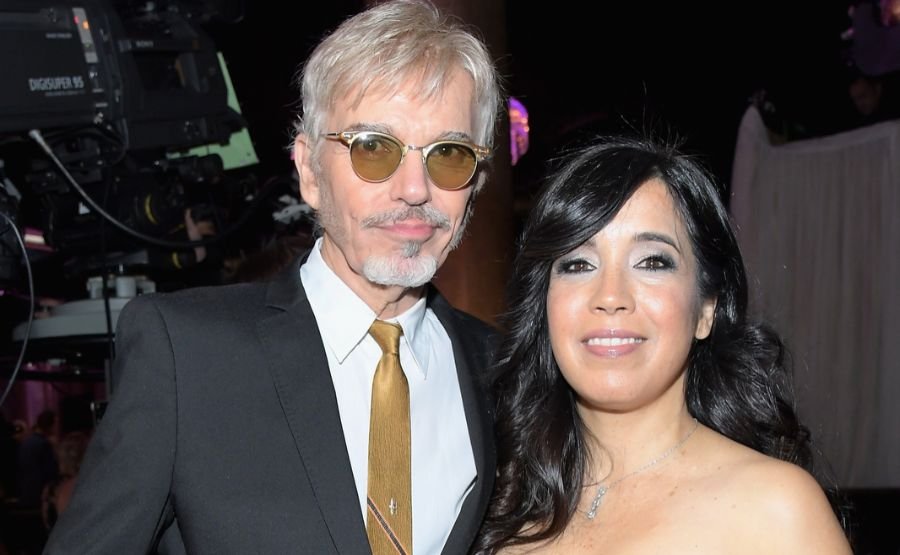
Connie Angland Biography: Age, Career, Husband Billy Bob Thornton, Family, and Personal Life
Quick Bio
| Detail | Info |
| Full Name | Constance I. Angland |
| Birth Date | October 22, 1964 |
| Birthplace | Los Angeles, California, USA |
| Nationality | American |
| Main Profession | Special effects artist, animatronic engineer, puppeteer |
| Biggest Achievements | Credited special effects work on Men in Black (1997), Men in Black II (2002), and Planet of the Apes (2001); first major credit as animatronic engineer on the cult horror film Arachnophobia (1990); head puppeteer on blockbuster productions |
| Key Facts | Daughter of legendary Oscar-winning film editor and sound designer Walter Murch; sister of Carrie Angland, also a makeup artist; married to actor Billy Bob Thornton since October 22, 2014; mother of daughter Bella Thornton (born September 22, 2004) |
Why Connie Angland Is More Interesting Than the Headlines Suggest
Every time Billy Bob Thornton does something that gets people talking — a new season of Landman, a Boxmasters album, a Golden Globes appearance — Connie Angland’s name comes up right behind it. And almost every article starts the same way: “Billy Bob Thornton’s wife.” That framing isn’t wrong, exactly, but it misses something genuinely fascinating about who she actually is.
Connie spent over a decade working deep in the engine room of some of Hollywood’s biggest productions. She was the one who engineered the mechanical guts of on-screen animals, made alien heads move convincingly, and spent long days on set ensuring that every tentacle, every insectoid leg, every prosthetic application looked terrifyingly real. She did this work across multiple major blockbusters at a time when special effects artistry was evolving at astonishing speed.
And she comes from filmmaking royalty — though not the kind most people would immediately recognize. Her father isn’t an actor or a director. He’s the man many critics consider the greatest film editor alive, the person who essentially invented the job of sound designer. Growing up in that household gave Connie a relationship with cinema that was deeply technical and deeply personal long before she ever picked up a makeup brush or bent wire into an animatronic limb.
See also “Christine Harrell: The Woman Who Built Something Real Behind the Curtain“
A Childhood Shaped by the Craft of Storytelling
Connie was born on October 22, 1964, in Los Angeles — which means, interestingly, she shares a birthday with the day she and Billy Bob Thornton would later choose to get married. Probably not a coincidence.
Her father is Walter Murch. You are familiar with that name if you are familiar with movies. Walter Murch is the genius behind the sound and editing of Apocalypse Now, The Godfather Part II, The Conversation, and dozens of other films that fundamentally shaped how movies feel. Roger Ebert once called him the most respected film editor and sound designer in modern cinema. He won multiple Academy Awards. He wrote a foundational book on film editing. He is, by any measure, one of the most important technical artists the film industry has ever produced.
Growing up as Walter Murch’s daughter means you didn’t sit around watching movies the way most kids did. You understood them differently. You knew why a cut landed a certain way. You understood what sound design was doing to your nervous system before you had the vocabulary to explain it. The dinner table conversations in that house were probably like a film school masterclass on a Tuesday night.
Connie grew up alongside her sister Carrie Angland — who would also go into the film industry as a makeup artist, which turns out to be a crucial detail in how Billy Bob Thornton’s life and Connie’s eventually came together. The family also included half-siblings Walter Slater Murch and Beatrice Murch.

Following the Craft in Her Own Direction
What’s interesting about Connie’s trajectory is that she took the deep love for filmmaking she inherited from her father and channeled it into something completely different from his specialty. Walter Murch worked with sound and editing — invisible, post-production arts that shape a film after it’s been shot. Connie went in the opposite direction: she worked on the physical, tactile, tangible side of filmmaking. She built things. She engineered moving parts. She made inanimate objects come to terrifyingly believable life on screen.
The technical skills she developed — animatronics, special effects makeup, silicone prosthetic work, puppeteering — are a very specific and demanding set of crafts. They sit at the intersection of sculpture, engineering, performance, and chemistry. Getting a fake spider to move convincingly isn’t about CGI; it’s about understanding mechanics, weight, material properties, and how light hits different surfaces. It takes years of hands-on learning.
The details of her formal training aren’t extensively documented publicly. What the record shows is that by 1990, she was on set with professional credits behind her name — which means she had done the work to get there, however that education unfolded.
The First Big Break: Arachnophobia
Connie’s first significant Hollywood credit came on Arachnophobia in 1990. The film, directed by Frank Marshall, was a horror-comedy about a lethal Venezuelan spider species invading a small American town. It starred Jeff Daniels and John Goodman, and it was exactly the kind of production that required serious creature effects work.
Connie was credited as an animatronic engineer. That job title tells you a lot — she wasn’t just applying makeup or adjusting costumes. She was engineering the mechanical systems that made the creatures function on camera. That’s precision work, requiring a very specific kind of problem-solving brain.
Arachnophobia became a cult classic, the kind of film people who saw it as kids still remember vividly. The spider effects held up precisely because the people building them knew what they were doing. Connie was part of the team that made that happen.
The Men in Black Years and the Peak of Her Career
After Arachnophobia, Connie continued building her resume across several productions throughout the 1990s. Her credits span films like Big Momma’s House, various fantasy and creature features, and work that honed her skills across multiple techniques.
But the projects that represent the real peak of her professional visibility are the ones that put her in some of the most watched blockbusters of the decade. The Will Smith and Tommy Lee Jones movie Men in Black (1997), which transformed the summer blockbuster and introduced an entire generation to the visual language of extraterrestrial creature design. The aliens in that film are extraordinary: bizarre, funny, unsettling, and technically impressive. Connie worked on that film’s effects.
She came back for Men in Black II (2002), where she served as head puppeteer. Head puppeteer on a franchise film of that scale is a significant role — it means you’re running the puppetry department, coordinating the performance of multiple creatures, and making sure the practical effects work seamlessly alongside what the visual effects team is doing in post.
In between, she worked on Tim Burton’s reimagining of Planet of the Apes (2001) — a production legendary for the complexity and ambition of its prosthetics and creature work. Rick Baker, one of the all-time masters of makeup and creature effects, oversaw that film’s transformations. Being a member of a team working at the very edge of practical effects artistry was part of the experience of working on that production.
Men in Black II turned out to be Connie’s last credited project. She stepped back from active film work around that time, which coincided with significant changes in her personal life.

How She Met Billy Bob Thornton (Her Sister Played Matchmaker)
Here’s the part of Connie’s story that has genuine charm to it. She met Billy Bob Thornton in 2003, on the set of Bad Santa — but not because she was working on the film herself. Her sister Carrie Angland was working on that production as a makeup artist, and Billy Bob apparently struck up enough of a rapport with Carrie that Carrie mentioned her sister should come visit the set.
So it was a sibling setup, essentially. Carrie played matchmaker, Connie showed up, and something clicked between her and Billy Bob that would last more than two decades and counting.
This was shortly after Billy Bob’s famously tumultuous split from Angelina Jolie — his fifth wife — which had played out with considerable public spectacle. Meeting Connie represented a pivot toward something completely different: a relationship with a woman from his own industry world but entirely outside the celebrity spotlight, someone private, skilled, and grounded.
They didn’t rush anything. They dated for over a year before Connie became pregnant. Bella was born on September 22, 2004 — Billy Bob’s fourth child, and Connie’s first and only.
The Marriage: Ten Years in the Making
Here’s something people don’t always register about this couple: they were together for over ten years before they got married. Bella was nine years old before her parents formally tied the knot.
The wedding happened on October 22, 2014 — Connie’s fiftieth birthday, which also meant the date held a double significance. It was a private ceremony at their home in Los Angeles. No photographers. No guest-list leaks. Apparently they even arranged the paperwork in a way that kept the official details out of the public record, which is a level of privacy management that takes real effort.
Billy Bob has talked about this in interviews. He’s said he initially resisted formalizing the marriage specifically because he wanted to protect Connie from the kind of media scrutiny that comes with being an actor’s official spouse. After five previous marriages — including one to Angelina Jolie at the absolute peak of her global stardom — Billy Bob understood exactly what a public relationship with him could cost someone who wasn’t seeking that attention. He waited until he felt the formal commitment could happen on their own terms.
He’s also said they eventually married largely for their daughter — to give Bella the clarity and security of knowing her parents were formally committed to each other and to their family.
Life in the Background of a Very Public Husband
One of the genuinely interesting tensions in Connie’s story is what it must be like to be the private, craft-focused, behind-the-scenes person married to one of the most openly eccentric and publicly analyzed actors in Hollywood. Billy Bob Thornton is not a man who blends into a room. He’s won an Oscar. He’s directed films. He famously wore a vial of Angelina Jolie’s blood around his neck. He’s had a rock band for years. He’s given interviews that became legendary for their weirdness. He’s now the lead of a major Paramount drama.
Connie, by contrast, doesn’t have public social media accounts. She rarely speaks publicly. She’s known for being a homebody who values domestic quiet over public visibility. When she does appear at events — Billy Bob brought her to the Golden Globes in 2025 — it makes news precisely because it’s rare.
She had a brief, uncredited on-screen appearance in Billy Bob’s 2012 film Jayne Mansfield’s Car, which he wrote, directed, and starred in. That small crossover into in-front-of-camera territory was almost certainly a personal gesture rather than a professional pivot.
The picture that emerges is of two people who are deeply different in their public-facing personalities but appear to have found something genuinely stable in their private life together. Billy Bob has been remarkably consistent in talking about how important their relationship is, noting that he’s been with Connie longer than all five of his previous marriages combined. That’s not nothing.
The Walter Murch Connection: More Than a Fun Fact
It’s worth circling back to Connie’s father, because the Walter Murch connection isn’t just a biographical trivia point — it genuinely contextualizes who Connie is.
Walter Murch is the man who invented the concept of the sound designer as a credited creative role in filmmaking. He created some of the most immersive sonic environments in cinema history. He approaches editing as a psychological and emotional science. He’s written about it, taught it, and embodied it across decades of iconic work.
His daughter went on to create the physical realities that cameras must record, such as silicone prostheses, extraterrestrial puppets, and mechanical spiders. Different craft, same essential quality: both are about making audiences believe something that isn’t real. Despite working from different ends of the production schedule, the father and daughter both devoted their professional careers to the technical skill of cinematic illusion.
The Money Picture
Connie’s personal financial picture is a bit murky, as is typical for behind-the-scenes craftspeople who aren’t famous in their own right. Her independent career earnings from special effects and puppetry work over more than a decade would be substantial — these are specialized, in-demand skills, and union rates for effects work on major studio films are meaningful — though not celebrity-level money.
Some estimates online put her independent net worth at around $500,000. Others speculate higher, up to around $3 million when you factor in her share of the household that she and Billy Bob have built together. Billy Bob Thornton’s own net worth has been estimated in the range of $35 to $45 million, reflecting a long career in major productions. As his wife and co-parent, Connie’s financial security is obviously situated within that broader picture.
Where She Is Now and What Matters to Her
As of 2026, Connie Angland lives quietly in Los Angeles with Billy Bob. Their daughter Bella is now in her early twenties, growing up with a rather extraordinary family background — an Oscar-winning actor for a father and a special effects artist descended from filmmaking royalty for a mother.
Connie doesn’t appear to be pursuing new film credits or building a public profile. She and Billy Bob are self-described homebodies who prefer time at home to the Hollywood social circuit. The occasional red-carpet appearance happens, but it’s the exception.
She seems to have found peace in exactly the life she built deliberately: a private one, shaped by craft, family, and a relationship that actually lasted.
Final Words
There’s something quietly radical about Connie Angland’s existence in Hollywood. She grew up at the center of filmmaking legend, developed real technical expertise that contributed to some of the most watched films of her era, and then stepped back — not out of failure or lack of talent, but apparently by choice.
She married a man who could not be more public if he tried, and has managed to remain genuinely private within that relationship. She built creatures that millions of people watched and marveled at without ever knowing her name. She is, in the most literal sense, a behind-the-scenes person — and appears entirely comfortable being exactly that.
In an industry built on the hunger for visibility, that’s its own kind of achievement.
FAQs
1. Who is Connie Angland?
She’s an American special effects artist, animatronic engineer, and puppeteer who worked on major Hollywood films through the 1990s and early 2000s. She’s also the wife of actor Billy Bob Thornton and the daughter of legendary film editor and sound designer Walter Murch.
2. When was Connie Angland born?
She was born on October 22, 1964, in Los Angeles, California. She and Billy Bob Thornton later chose that same date — her birthday — for their wedding day in 2014.
3. What films did she work on?
Her most notable credits include Arachnophobia (1990) as an animatronic engineer, Men in Black (1997), Planet of the Apes (2001), and Men in Black II (2002), where she served as head puppeteer. She also worked on films including Big Momma’s House and several others throughout the 1990s.
4. What exactly does a head puppeteer do on a film?
A head puppeteer runs the puppetry department on a production — coordinating the physical performance of puppet or animatronic characters, directing the puppeteers who operate various creature components, and ensuring that practical effects work cohesively alongside the larger production. It’s both a technical and a creative leadership role.
5. Who is her father?
Her father is Walter Murch, widely regarded as one of the greatest film editors and sound designers in cinema history. He won multiple Academy Awards for his work on films like Apocalypse Now and The English Patient, and he essentially invented the concept of the “sound designer” as a formal credited role in filmmaking.
6. How did she meet Billy Bob Thornton?
Through her sister Carrie Angland, who was working as a makeup artist on Bad Santa in 2003. Carrie and Billy Bob developed a professional rapport on set, and Carrie suggested he should meet her sister when Connie came to visit. It worked.
7. When did they get married?
On October 22, 2014 — Connie’s 50th birthday — in a private ceremony at their home in Los Angeles. They had been together for over a decade before formally marrying.
8. Why did they wait so long to get married?
Billy Bob has talked about this publicly. He initially resisted marriage to protect Connie from media scrutiny, knowing from experience how much exposure comes with being officially linked to him. He’s said they eventually married primarily for their daughter, Bella.
9. Do they have children together?
One daughter: Bella Thornton, born September 22, 2004. She is Connie’s only child and Billy Bob’s fourth.
10. Is Connie Angland still working in the film industry?
Men in Black II (2002) was her last credited project. She stepped away from active film work around the time her relationship with Billy Bob became serious and she became pregnant with Bella. She has not pursued new professional credits since.
11. What is her estimated net worth?
Estimates vary widely and aren’t officially confirmed. Some sources place her independent career earnings at around $500,000; others speculate the figure could be higher when considering her household’s combined assets. Billy Bob Thornton’s estimated net worth of between $35 and $45 million offers significant financial context for the family’s overall situation.
12. Is she on social media?
No — Connie does not maintain any meaningful public social media presence, which is entirely consistent with how she’s conducted her entire life. She has always prioritized privacy, even while working on some of the most publicly visible film productions of the 1990s.
Read stories that climb higher than expectation with The Madrid Magazine.






One Comment