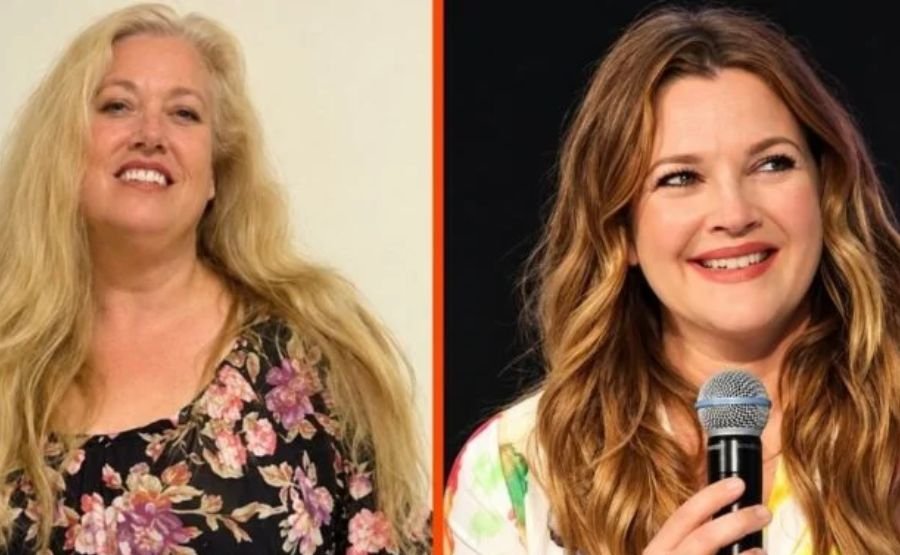
Brahma Jessica Blyth Barrymore: The Woman Behind the Famous Name Who Lived and Struggled on Her Own Terms
Quick Bio
| Detail | Info |
| Full Name | Brahma Jessica Blyth Barrymore |
| Known As | Jessica Barrymore |
| Birth Date | July 31, 1966 |
| Birthplace | Los Angeles, California, USA |
| Nationality | American |
| Died | July 29, 2014 (age 47), National City, California — two days before her 48th birthday |
| Cause of Death | Accidental drug and alcohol intoxication (ruled by San Diego County Medical Examiner) |
| Father | John Drew Barrymore — actor, son of the legendary John Barrymore |
| Mother | Nina Wayne — television actress, known for Camp Runamuck and other 1960s TV roles; sister of actress Carol Wayne |
| Notable Half-Sibling | Drew Barrymore — actress and media personality |
| Other Half-Siblings | John Blyth Barrymore III (son of John Drew and Cara Williams); Blyth Dolores Barrymore (with Gabriella Palazzoli) |
| Education | San Diego School of Creative and Performing Arts |
| Extra Key Facts | Carried one of American entertainment’s most storied surnames while choosing to live privately; became publicly known primarily after her death; the Barrymore dynasty spans four generations of performers |
Why Jessica Barrymore’s Story Still Deserves to Be Told
Most people who search for Jessica Barrymore’s name do so because of how her story ended — found in a car on a quiet street near San Diego, two days before her forty-eighth birthday. The news cycle covered it briefly, mentioned the famous half-sister, and moved on.
That’s not a story. That’s a headline.
The actual story of Brahma Jessica Blyth Barrymore is the one underneath — a woman born into one of Hollywood’s most mythologized and most troubled family trees, who grew up mostly out of the spotlight, who attended an arts school in San Diego, who wrestled with the particular kind of difficulty that seems to follow the Barrymore name across generations. A woman who didn’t become an actress, didn’t build a public brand, didn’t capitalize on the famous name she carried, and died before most people even knew she existed.
She deserves more than a footnote. She deserves the full story told plainly, with warmth and without sensationalism.
See also “Jackson Foo Wong: The Boy Who Defied Every Odd Before He Could Even Breathe on His Own“
The Family She Was Born Into: Dynasty and Dysfunction
To understand Jessica, you really do have to start with the Barrymores, because that name isn’t just a surname — it’s an institution, a weight, and a complicated inheritance all at once.
Her grandfather was John Barrymore — the legendary “Great Profile,” one of the most acclaimed stage and screen actors of the early twentieth century, a Shakespearean force of nature whose Hamlet was the definitive theatrical event of his era. He was also a devastating alcoholic whose personal life was a wreck of marriages, infidelities, and public collapses. He died in 1942, but the legacy — and honestly, the pattern — didn’t.
His son, John Drew Barrymore — Jessica’s father — inherited both the talent and the turmoil. John Drew had genuine ability as an actor, appearing in films through the 1950s and 1960s, but alcoholism and substance abuse hollowed out what could have been a substantial career. He was famously erratic. He married four times. He had four children by four different women, and by most accounts was not a reliably present father to any of them. His youngest and most famous child, Drew Barrymore, wrote about him in her early memoir with raw clarity — describing an absent, chaotic, at times frightening figure who couldn’t be the father his children needed.
Jessica was the fourth child John Drew fathered. Her mother was Nina Wayne — a television actress from Chicago, born Nina Rae Wayne, who had worked steadily in 1960s television. Nina was the sister of Carol Wayne, who was a familiar face on The Tonight Show for years. Nina had appeared in shows like Camp Runamuck and guest roles across various network programs before her career wound down by the early 1970s.
Nina and John Drew Barrymore’s relationship and eventual marriage was the last of his four marriages. They married in 1985 — the year Jessica turned nineteen — and divorced in 1994. But Jessica had been born to them back in 1966, long before that formal union.
So Jessica grew up as the daughter of a distracted and troubled actor father and a former television actress mother, carrying the Barrymore name like a torch she hadn’t asked to hold.
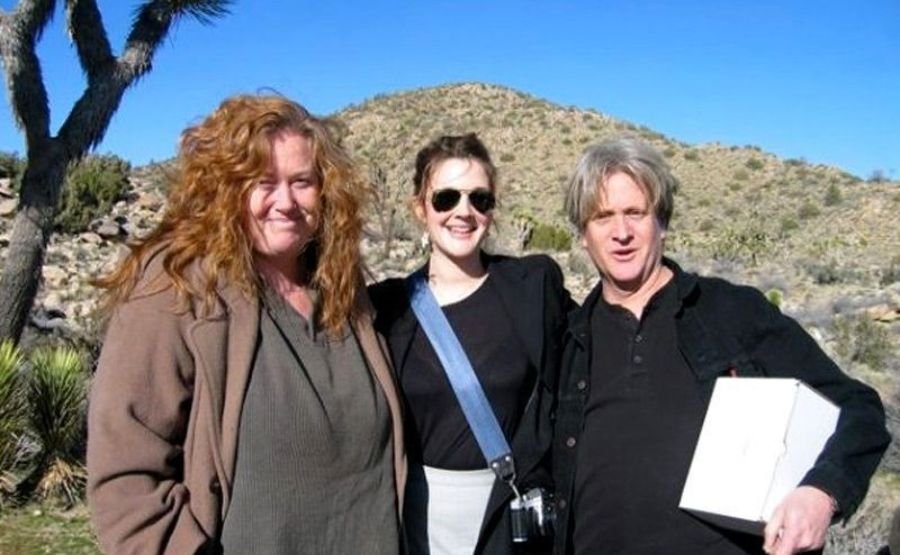
Born in Los Angeles, Raised by Her Mother’s Choices
Jessica Blyth Barrymore arrived on July 31, 1966, in Los Angeles — the city that had made and broken Barrymores for two generations. She was given an unusual first name at birth — Brahma, a name she set aside in favor of Jessica as she grew into her own identity. The nickname stuck and the original name faded, a quiet signal early in her life that she was going to define herself on her own terms where she could.
Growing up, Jessica was primarily raised by her mother Nina. Her father’s absence — emotional and practical — was baked into the reality of being his child. John Drew Barrymore’s relationship with stability was always fractured. He wasn’t the kind of father who showed up for school events or maintained consistent contact. The Barrymore children, each born of a different mother and scattered across different arrangements, largely grew up apart from each other and largely without him.
Nina Wayne, for whatever the limitations of her own life and career, gave Jessica a foundation. They lived in California, and when Jessica was old enough to pursue her own interests, she ended up in San Diego — a city that would become her home and, ultimately, the place where her story ended.
San Diego and the School That Shaped Her
One of the clearest documented facts about Jessica Barrymore’s life is that she attended the San Diego School of Creative and Performing Arts — a specialized public school in San Diego with a real reputation for nurturing students with artistic inclinations. The choice of that school says something meaningful about who Jessica was and what drew her.
The San Diego School of Creative and Performing Arts isn’t a casual arts elective program. It’s a dedicated institution that takes young people seriously as artists — in theater, in music, in dance, in visual arts. Students there train with real discipline. They perform. They develop craft. The fact that Jessica attended this school suggests she had her own relationship with the arts that wasn’t purely inherited from her famous name — she was actively seeking it out and working within it.
The Barrymore blood ran toward performance. Her grandfather had electrified Broadway. Her half-sister Drew would become one of Hollywood’s most beloved figures. Her father, despite his failures, had genuine talent on screen. And Jessica, quietly, walked into a performing arts school in San Diego and worked at what she cared about.
We don’t have detailed records of what she pursued there, what roles she played, what her teachers said about her, what she dreamed of doing. The private life she chose — or that circumstances pushed her toward — left those details undocumented. But the school attendance itself is a window into who she was underneath the famous surname.
Growing Up Between Two Worlds
Jessica Barrymore occupied a genuinely unusual space in the cultural landscape of late twentieth century America. She was a Barrymore — that name meant something, opened doors, invited comparisons, carried both glamour and shadow. But she was not Drew Barrymore. She was not a household name. She was the daughter of a father whose career had faded and whose personal life was a cautionary tale, and she carried all of that without the engine of fame that her half-sister had to process the weight of it.
Drew Barrymore’s path was explosive and public from her earliest years — a child star at seven with E.T., a teenage tabloid figure battling alcohol and substance abuse by the early 1990s, then a remarkable reinvention as an adult that produced a genuinely celebrated career. Drew’s Barrymore inheritance played out in full public view.
Jessica’s played out quietly. She was not in the spotlight. She didn’t appear in films that people remember. She doesn’t have an IMDB filmography that fans follow. She lived the life of a private person who happened to share a famous name and a complicated father with someone who became world-famous.
The two women — half-sisters through John Drew Barrymore — were connected by blood and family history but separated by circumstance and public profile in every practical way. Whether they maintained a close personal relationship is not clearly documented. What’s known is that after Jessica’s death, Drew released a statement expressing her condolences and asking for privacy during a difficult time for the family.
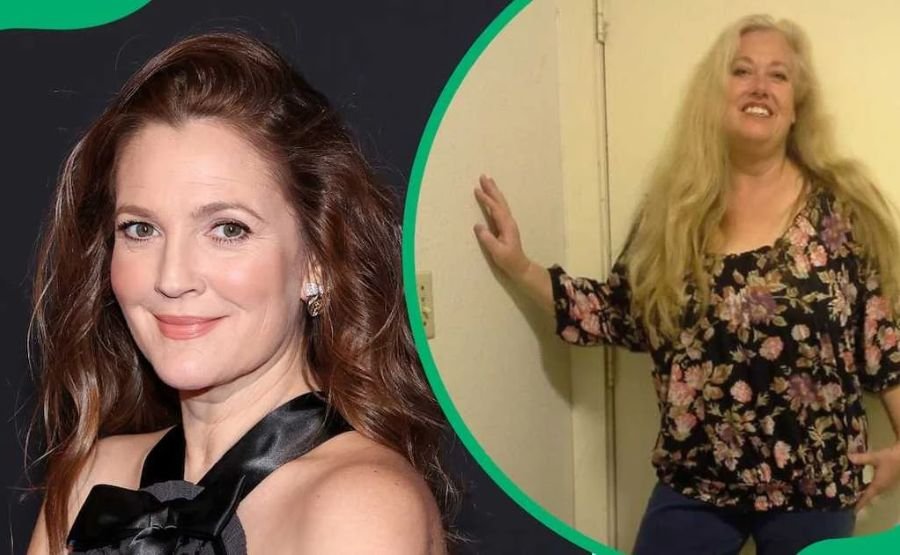
The Shadows That Followed the Barrymore Name
There’s a pattern in the Barrymore family that is genuinely hard to look away from, even as it’s painful to discuss. Addiction. Instability. Brilliant talent combined with self-destructive impulses. It started with the Great Profile himself — John Barrymore Sr., whose genius was matched and eventually consumed by his drinking. His son John Drew Barrymore carried the same combination of talent and alcoholism into the next generation, leaving a trail of broken marriages and absent fatherhood.
Drew Barrymore has spoken openly about her own battles with substance abuse as a child and teenager — a history so alarming that she was in rehab at thirteen. She has also spoken, with extraordinary grace and hard-won clarity, about rebuilding herself and building a life she could be proud of.
Jessica, by the accounts that exist, struggled too. The exact contours of her personal battles aren’t fully documented because she lived privately and didn’t write memoirs or give interviews. But the circumstances of her death tell their own story. The San Diego County Medical Examiner determined that she died of acute drug and alcohol intoxication. The manner of death was ruled accidental.
She was 47 years old. She would have turned 48 two days later.
The neighbors on Hoover Avenue in National City noticed the car parked strangely. One woman found it blocking her driveway early in the morning. When police arrived around 6 a.m. on July 29, 2014, Jessica was gone. Dozens of white pills were reportedly scattered on the passenger seat. An energy drink was found nearby.
It was a lonely ending for someone who had lived largely unseen, and it carries the particular sadness of a life that never fully found its footing despite starting with so much history behind it.
The Family She Was Part Of — From the Outside Looking In
One of the quiet complexities of Jessica Barrymore’s life was that she was a member of one of the most storied acting families in American history — and yet that membership was largely nominal in terms of day-to-day connection.
Her grandfather John Barrymore had died in 1942, twenty-four years before she was born. Her grandmother on the Barrymore side was Dolores Costello — a silent film actress of real beauty and talent who had married into the family and outlived its most famous member. Dolores Costello was, technically, Jessica’s grandmother, which means Jessica’s family tree connects back not just to the Barrymores but to another Hollywood dynasty entirely.
Her father John Drew lived long enough — he died in November 2004 — that Jessica would have been 38 when she lost him. In his final years, reportedly, it was Drew Barrymore who helped cover the costs of his assisted living facility. The poignancy of that detail — the famous daughter paying for the failing father who had mostly failed all his children — is one of the more human corners of this very dramatic family history.
Jessica’s half-siblings each had their own relationship with the Barrymore inheritance. John Blyth Barrymore III, her oldest half-sibling, also became an actor. Blyth Dolores Barrymore, another half-sister, also spent time in entertainment. And Drew became, of course, Drew Barrymore — a pop culture institution, a talk show host, a beauty entrepreneur, a woman who turned her impossible beginning into something remarkable.
Jessica watched all of this from the outside. Or perhaps she watched it from close by, in ways we simply don’t have documentation of. What we know is that she lived quietly, in San Diego, and that the world mostly didn’t know her name until it appeared in headlines about her death.
The Money Side of a Famous but Distant Legacy
Jessica Barrymore’s personal financial situation is not documented in any meaningful public record. She was not a working actress with box office receipts. She was not a celebrity with brand endorsements. She was a private individual who, as far as public records indicate, lived a modest life in the San Diego area.
The Barrymore family fortune, such as it had ever been, did not flow to Jessica in any documented way. Her father John Drew Barrymore spent his later years in an assisted living facility, suggesting that whatever the family wealth had once been, it wasn’t pooling around him or his children in any reliable way. The famous name was worth more culturally than financially by that generation.
Jessica’s death, and the circumstances surrounding it, suggest someone who was not living in comfort or privilege. National City, where she was found, is a working-class city south of San Diego. The picture that emerges is of someone who had fallen away from whatever the Barrymore name might theoretically have offered, and who was managing her life with whatever resources she had — and struggling.
What Her Life Tells Us Now
Looking back at Jessica Barrymore’s story from the distance of more than a decade after her death, what stands out is the quietness of it. She wasn’t famous. She wasn’t infamous, until the very end. She was a woman with an extraordinary surname who lived an ordinary and difficult life in Southern California, who went to an arts school and probably had interests and friendships and moments of joy that we’ll never know about, and who struggled with addiction in ways that eventually took everything.
Drew Barrymore’s public statement after Jessica’s death was brief and measured — an expression of sympathy and a request for the family’s privacy to be respected. It was the right response. Jessica’s death was not a Hollywood story. It was a human story, wrapped in a Hollywood name.
Final Words
Brahma Jessica Blyth Barrymore was born into one of America’s most mythologized family legacies, and she spent most of her life trying to find her own shape inside it or outside of it — it’s hard to know which. She attended an arts school. She lived in San Diego. She carried the Barrymore name as a private person rather than a public figure. And she died too soon, two days before a birthday that would have made her 48, in circumstances that reflected a struggle that the Barrymore bloodline seems to have passed down alongside the talent.
What makes her story worth telling is exactly its ordinariness. Not every child of a famous family becomes a star. Not every person born with a storied name knows what to do with the inheritance. Some people live on the margins of dynasties, not because they weren’t capable of something, but because the circumstances of their lives — absent fathers, complicated mothers, the particular ache of addiction, the specific loneliness of living in a famous family’s shadow without the famous family’s support — made the path narrow.
Jessica Barrymore deserves to be remembered as a person, not just as a footnote to someone else’s story.
FAQs
1. Who was Brahma Jessica Blyth Barrymore?
She was an American woman born on July 31, 1966 in Los Angeles, California, the daughter of actor John Drew Barrymore and television actress Nina Wayne. She is best known publicly as the half-sister of actress Drew Barrymore, though she lived a largely private life away from the entertainment industry.
2. Why was she given the name Brahma?
Her birth name was Brahma Jessica Blyth Barrymore. She went by Jessica in her everyday life. The name Brahma — unusual in Western naming conventions — was her formal birth name, which she set aside in favor of her middle name.
3. Who were her parents?
Her father was John Drew Barrymore — an American film actor and the son of the legendary John Barrymore and actress Dolores Costello. Her mother was Nina Wayne, an actress who appeared in 1960s television programs, most notably Camp Runamuck, and who was the sister of comedian and TV personality Carol Wayne.
4. What was her relationship to Drew Barrymore?
Jessica and Drew were half-sisters through their shared father, John Drew Barrymore. Drew’s mother was Jaid Barrymore, while Jessica’s mother was Nina Wayne. The two women shared a father but came from different marriages and grew up in separate households.
5. Did Jessica Barrymore have other siblings?
Yes. She had two other half-siblings through John Drew Barrymore: John Blyth Barrymore III — the oldest, born to John Drew and his first wife Cara Williams — and Blyth Dolores Barrymore, born to John Drew and Gabriella Palazzoli.
6. Did Jessica Barrymore work in entertainment?
There is no documented professional acting career for Jessica Barrymore. She attended the San Diego School of Creative and Performing Arts, which suggests genuine interest in the arts, but she did not pursue a public career in entertainment the way other family members did.
7. When and how did Jessica Barrymore die?
She was found dead in her car on the morning of July 29, 2014, on Hoover Avenue in National City, California — a city located just south of San Diego. She was 47 years old and would have turned 48 two days later, on July 31. Neighbors noticed the car parked unusually and called police.
8. What was the official cause of death?
The San Diego County Medical Examiner ruled that her cause of death was acute drug and alcohol intoxication. The manner of death was classified as an accident, not a suicide.
9. How did Drew Barrymore respond to Jessica’s death?
Drew released a short public statement expressing sympathy and asking for the family’s privacy to be respected during a difficult time. She did not make extensive public comments beyond that.
10. What was John Drew Barrymore like as a father?
By most accounts — including Drew Barrymore’s own memoir — John Drew Barrymore was a largely absent and troubled father to all his children. He battled severe alcoholism and substance abuse throughout his life, which severely damaged his career and his relationships. He died in November 2004 of cancer, with Drew having reportedly helped cover his assisted living costs in his final years.
11. Where did Jessica Barrymore spend most of her life?
Based on available information, she spent much of her adult life in the San Diego area of California. She attended school there and was found there at the time of her death.
12. What is the broader Barrymore family legacy?
The Barrymores are considered one of America’s great theatrical dynasties. John Barrymore — Jessica’s grandfather — was among the most celebrated stage and screen actors of the early twentieth century. His children John Drew Barrymore and Ethel Barrymore also performed professionally. Drew Barrymore represents the fourth generation of performing Barrymores and has built one of the most successful careers in the family’s history. The family legacy is intertwined with both extraordinary artistic talent and recurring patterns of personal struggle.
Read stories that climb higher than expectation with The Madrid Magazine.


One Comment