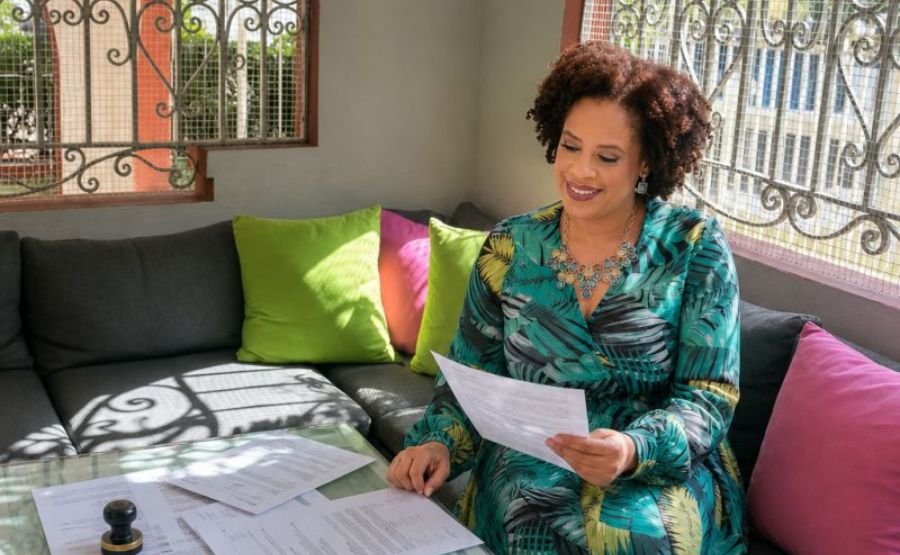
Francine Lucas Sinclair: Biography, Family Background, Career, and Personal Life
Quick Bio
| Detail | Info |
| Full Name | Francine Lucas-Sinclair |
| Born | Approximately 1971–1972, in Teaneck, New Jersey |
| Nationality | American |
| Main Profession | Nonprofit founder; advocate; author; mortgage broker; public speaker |
| Biggest Achievements | Founding Yellow Brick Roads, a national nonprofit for children of incarcerated parents; bringing her story public to spark national conversation about those children’s experiences |
| Key Fact 1 | Daughter of Frank Lucas — the Harlem heroin kingpin whose life inspired the 2007 film American Gangster starring Denzel Washington |
| Key Fact 2 | She hid her family history from almost everyone in her life for over three decades before going public |
| Key Fact 3 | She was three years old when federal agents arrested her father in their kitchen in January 1975 |
Why Her Story Still Hits Hard
There are roughly 2.7 million children in the United States with a parent behind bars at any given time. That number sits in the background of a lot of criminal justice conversations, but it rarely takes center stage. Francine Lucas-Sinclair is one of the people who decided to push it there.
She didn’t start out as an activist or a public figure. For most of her adult life she was a mortgage broker in Atlanta, quietly raising her kids, keeping a secret that would have changed how everyone around her saw her. Then a Hollywood blockbuster put her father’s name on movie posters everywhere, and her carefully maintained private life became impossible to keep.
What she did with that moment — the choice she made when the story came out anyway — is what makes her worth knowing about. She turned it into something. And the something she turned it into has real meaning for a population of kids that most people never think about.
See also “Dorýs Madden: The Woman Who Chose Quiet Over the Spotlight“
A Childhood That Started in Luxury
Francine grew up in Teaneck, New Jersey, in a household that most kids would have envied if they’d seen it from the outside. Her father, Frank Lucas, was making roughly a million dollars a day at the height of his operation — importing high-purity heroin directly from Southeast Asia and distributing it through a network that dominated Harlem’s drug market in the late 1960s and early 1970s. He trusted only family and close friends from North Carolina. He was meticulous, careful, and extraordinarily successful at what he did.
To little Francine, none of that was visible. What she knew was a tall, handsome father who came home in the mornings with bags of cash, who would lift her into the air and call her his baby, who would then cook breakfast while she played near his feet in the kitchen. She remembered a $10,000 toy train set from FAO Schwarz. She remembered comfort, presence, the feeling of being cared for.
Her mother, Julianna Farrait — a Puerto Rican woman Frank had married in 1967 — was part of the operation too, in ways that would eventually catch up with her. The family’s wealth was real, its origins invisible to a small child who had no framework yet for understanding what her father actually did for a living. He told her he worked in “the candy business.” She believed him.
The Morning Everything Broke Open
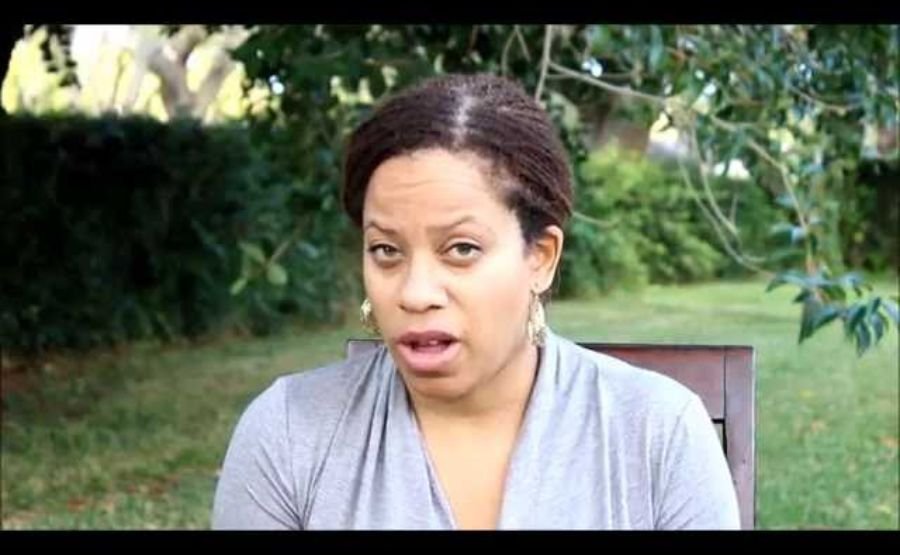
On a January morning in 1975, Francine was three years old, playing near her father in the kitchen as he made eggs and bacon. Federal agents came through the door. Frank Lucas was arrested on drug charges. He was subsequently convicted and sentenced to seventy years in federal prison.
Julianna Farrait was also arrested and convicted, receiving a six-month sentence. Within what felt like moments — though it took months to unfold — both of Francine’s parents were gone.
The family was placed in a witness protection program, which is not the kind of thing most three-year-olds understand and not particularly easy for a family of Frank Lucas’s notoriety to navigate. They relocated to Albuquerque, New Mexico, where they spent about a year trying to adjust to a life that was nothing like the one they’d known. The wealth was gone. The house was gone. The security was gone. The father was gone.
It didn’t work out in New Mexico, and eventually the family left the witness protection program and went to San Juan, Puerto Rico, where Francine’s maternal grandparents lived. That’s where she spent a significant portion of her childhood — raised partly by grandparents while her parents dealt with the legal and practical consequences of a world that had collapsed around them.
Growing Up in Puerto Rico With Grandparents Who Got It Right
Francine has spoken about her grandparents with real warmth. They were the people who held her childhood together during the years when her parents couldn’t. They gave her structure, love, and — critically — a message that her parents’ choices didn’t have to define her choices.
That idea sounds simple. For a child growing up with a father in federal prison and a mother serving her own time, it’s actually a complicated thing to internalize. The world tends to look at the children of criminals through a particular lens. Schools, communities, peers — the assumptions people make can be crushing.
The grandparents apparently pushed back against all of that. What they gave Francine was agency: the idea that her path was hers to determine. That whatever her parents had done, she was not her parents.
Eventually Julianna was released, and she enrolled Francine in Girl Scouts. That detail — the deliberate choice to put a daughter in something wholesome, structured, community-oriented — speaks to what her mother was trying to build back after everything fell apart. Francine absorbed it. She describes being unable to act up, not because anyone was threatening her but because she understood what was at stake.
Frank Lucas was released from prison significantly earlier than his sentence suggested — he cooperated with federal authorities and that cooperation reduced his time considerably. He served roughly five or six years. Coming out of prison, he had enormous difficulty finding work. The name Frank Lucas meant something very specific, and legitimate employers weren’t interested.
The Education and the Secret She Kept
Francine eventually pursued higher education and earned a degree in Public Communications from the University of Puerto Rico. It’s the right degree for someone who would later spend years giving public speeches about her family history — even if she couldn’t have known that at the time.
She built a career. She became a mortgage broker. She settled in Atlanta, Georgia. She got married — her husband is Mark Sinclair, a computer programmer — and they had two children, a daughter named Julianna Celine and a son named Jonah.
By every external measure, Francine Lucas-Sinclair was an Atlanta professional with a family. That was true. What was also true was that she was the daughter of the most famous drug kingpin in Harlem’s history, and she had told almost nobody.
She described carrying the secret for over three decades. Close friends didn’t know. Colleagues didn’t know. Her husband knew, obviously — you can’t build a marriage without that kind of honesty — but beyond that, the wall was up. She’d learned early that revealing who her father was changed how people looked at her. So she didn’t reveal it.

The Movie That Changed Everything
In November 2007, Universal Pictures released American Gangster, directed by Ridley Scott and starring Denzel Washington as Frank Lucas alongside Russell Crowe as the DEA agent who eventually brought him down. It was a major Hollywood production, a commercial success, and it put Frank Lucas’s story in front of millions of people who’d never heard of him.
There was no longer any hiding. The name on the movie poster was her father’s name.
What Francine chose to do with that forced exposure was remarkable. Rather than retreating further or framing herself as a victim of the story’s resurfacing, she stepped forward. She gave interviews. She went on television. She spoke at universities. She appeared on documentary programs like Mobsters and Narco Wars to offer a perspective that the films and true-crime narratives almost never include: what it looks like from inside the family.
And she launched Yellow Brick Roads.
Yellow Brick Roads: Turning the Pain Into Policy
Yellow Brick Roads is a national nonprofit organization that Francine formally incorporated in January 2008, using the momentum of the film’s attention to get it off the ground. The mission is specific and personal: to provide support, resources, and a sense of community to children who have parents in prison.
The name carries obvious reference — the yellow brick road is the path to something better, and the organization’s work is about helping kids find that path even when their home situation has been disrupted by incarceration. The idea draws directly from Francine’s own experience: a child whose parents were arrested, who spent years raised by grandparents, who navigated shame and instability and uncertainty about identity — and who came out the other side having built something real.
She also wrote a children’s book to accompany the foundation’s work. The book is aimed at helping young children understand why a parent is away — in simple, accessible language — and opening dialogue within families that might otherwise not know how to talk about incarceration. The gap she identified is real: there are almost no children’s materials designed to address parental imprisonment in a way that is compassionate, honest, and age-appropriate. Her book fills part of that gap.
The Weight of Being a Drug Lord’s Daughter
It would be unfair to write about Francine Lucas-Sinclair’s life without acknowledging the specific complexity of what she carries. Frank Lucas caused real, documented harm. The heroin that he moved through Harlem destroyed lives, families, communities. He was not a victimless criminal. He was someone who built a fortune on addiction and human suffering, and he did it deliberately, skilfully, and without apparent remorse during the years he was at the height of his operation.
Francine didn’t choose any of that. She was three years old. But she grew up with it as the defining context of her family, and she has had to find a way to hold both things at once: loving a father while understanding what he did, drawing on a painful childhood to do meaningful work while knowing that childhood’s painful elements were caused by the choices of people she loves.
That’s not a simple emotional or ethical position. It requires a particular kind of maturity and honesty. The fact that she’s managed to speak publicly about all of it — the love for her father, the shame about his crimes, the lasting impact on her childhood, the work she’s trying to do as a result — without pretending it’s cleaner than it is, makes her credible and human.
Frank Lucas died on May 30, 2019, at the age of eighty-eight.
The Money Side
Francine’s professional income from her mortgage brokerage work is not publicly documented. Her nonprofit work at Yellow Brick Roads is not the kind of operation that generates personal wealth — it’s a service organization, funded by donations and dedicated to children who have almost no resources. Her personal net worth has been estimated modestly across various sources, reflecting a comfortable professional life rather than anything like the wealth she was born into.
The irony is noticeable: her father made millions at the peak of his operation, and she is running a nonprofit for children of incarcerated parents. The entire narrative is contained in the arc that connects them.
Life Right Now
As of November 2026, Francine Lucas-Sinclair is in her mid-fifties, still living in the Atlanta area, still married to Mark Sinclair, still running Yellow Brick Roads. She speaks publicly about her life and her work, which means she is still actively processing her history in real time and offering it as something useful to others rather than keeping it tucked away.
She has appeared on television documentaries. She gives lectures. She continues to build on the organization she founded. And she continues to do the ongoing work of being a person whose family history is enormously complicated and entirely public.
Final Words
There’s a version of Francine Lucas-Sinclair’s life where she stays invisible — the mortgage broker in Atlanta who keeps her secret and builds a quiet life away from all of it. She chose something harder. She looked at the story she’d been given and decided to use it for something.
What she built, Yellow Brick Roads, isn’t perfect. No single nonprofit can fix the structural damage that mass incarceration has done to American families. But for the children it reaches — kids who are where she was at three years old, wondering where their parents went and when they’re coming home — it offers something real: the knowledge that someone has been there before them, that someone came out of it, and that their story doesn’t end with their parents’ choices.
That’s not a small thing to offer. And it’s the most honest version of what it means to do something good with a hard beginning.
FAQs
1. Who is Francine Lucas-Sinclair?
The 2007 movie American Gangster was inspired by the biography of Frank Lucas, a drug lord from Harlem. She is a nonprofit founder, public speaker, author, and mortgage broker based in Atlanta.
2. When was she born?
Approximately 1971 or 1972 in Teaneck, New Jersey. She was three years old when her father was arrested in January 1975.
3. Who are her parents?
Her father is Frank Lucas (1930–2019), and her mother is Julianna Farrait, a Puerto Rican woman Frank married in 1967.
4. What is Yellow Brick Roads?
Francine started a nationwide charity organization to help kids whose parents are in prison. It was incorporated in January 2008 and provides resources, community, and advocacy for children navigating parental imprisonment.
5. How old was she when her father was arrested?
Three years old. The arrest happened in January 1975, with agents coming through the door while Frank was cooking breakfast.
6. Where did she grow up after her father’s arrest?
The family spent time in Albuquerque, New Mexico, in a witness protection program, before moving to San Juan, Puerto Rico, where her maternal grandparents raised her significantly.
7. What is her educational background?
She earned a degree in Public Communications from the University of Puerto Rico.
8. What was her career before becoming an advocate?
She worked as a mortgage broker in Atlanta, Georgia.
9. Who is her husband?
Mark Sinclair, a computer programmer. They have two children: Julianna Celine and Jonah Sinclair.
10. How did the film American Gangster affect her life?
It forced her hidden identity into the open. She had kept her family history secret from most people for over three decades. When the film came out in 2007, she chose to step forward publicly and launch Yellow Brick Roads.
11. Has she written anything?
Yes — she wrote a children’s book aimed at helping young children understand and process why a parent is in prison, designed to open dialogue within families affected by incarceration.
12. When did Frank Lucas die?
At the age of 88, Frank Lucas passed away on May 30, 2019.
Read stories that climb higher than expectation with The Madrid Magazine.

One Comment