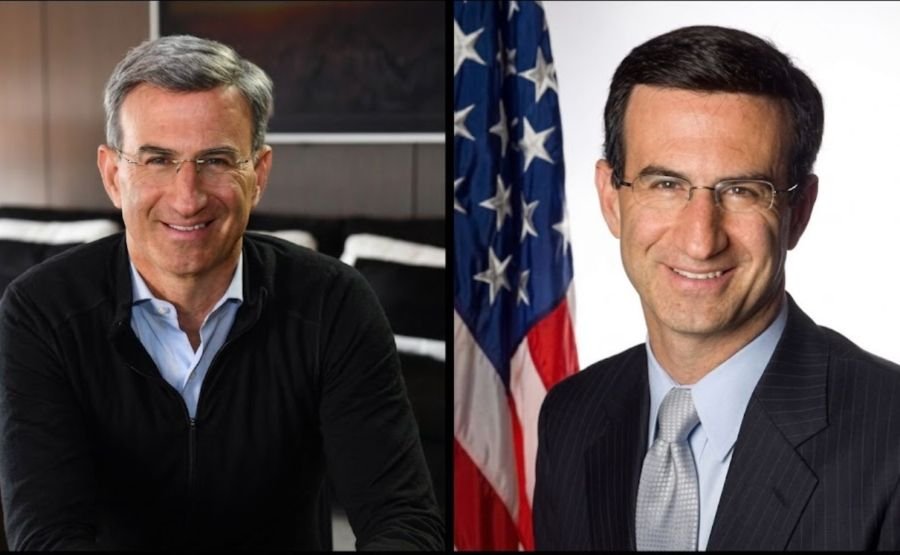
Peter Orszag Bald: What to Know About His Hair, Career, and Life
Quick Bio
| Detail | Info |
| Full Name | Peter Richard Orszag |
| Born | December 16, 1968, Boston, Massachusetts |
| Nationality | American |
| Main Profession | Economist, Banker, Financial Executive |
| Biggest Achievements | Directed the Congressional Budget Office (2007–2008); served as President Obama’s Budget Director (OMB, 2009–2010); played a key role in shaping the Affordable Care Act; currently CEO and Chairman of Lazard, one of the world’s most respected financial advisory firms |
| Extra Key Facts | Graduated summa cum laude from Princeton; earned a PhD from the London School of Economics as a Marshall Scholar; has five children; married to CNN journalist Bianna Golodryga |
Why This Guy Still Matters
Here’s something most people don’t fully appreciate about Peter Orszag: he’s one of those rare people who has actually moved the needle on things that affect millions of lives — healthcare costs, government budgets, fiscal policy — and then kept going, shifting seamlessly from the corridors of the White House to the glass towers of Wall Street without losing his credibility in either place.
In an era where economists are often dismissed as people who talk in circles and say nothing useful, Orszag built a reputation for being genuinely readable and surprisingly blunt. He had the ability to take a topic like federal healthcare spending — which sounds about as exciting as watching paint dry — and explain why it was actually the single most important factor determining whether the United States would go financially off the rails in the coming decades. And people listened.
Today, he’s running Lazard, one of Wall Street’s most storied advisory firms, which means he’s advising governments, corporations, and some of the biggest deals happening around the world. He went from helping design America’s healthcare reform to helping structure multi-billion-dollar mergers. It’s a pretty extraordinary arc.
Growing Up in Lexington
Peter Orszag was born in Boston in December 1968, but he grew up in Lexington, Massachusetts — a town that carries its own kind of historic weight as the place where the first shots of the American Revolution were fired. Whether or not that history seeped into him, he definitely grew up with the sense that ideas and principles actually matter.
His home environment was not your typical American household. His father, Steven Orszag, was a deeply respected mathematician who eventually became a professor at Yale — the kind of person who thought rigorously about problems for a living. Growing up in that kind of household probably wires you differently. Numbers, precision, and intellectual seriousness were just part of the air he breathed.
He has a brother, Jonathan Orszag, who also went on to a career in economics, which tells you something about the household they shared. There’s something almost comically on-brand about the Orszag family producing not one but two prominent economists.
School Years That Shaped Everything
Before Princeton and London, there was Phillips Exeter Academy — one of the most competitive and academically intense prep schools in the country. Exeter is the kind of place where people take ideas seriously in a way that can feel almost overwhelming. Orszag thrived there, graduating with high honors in 1987. If you want to understand where his comfort level with serious intellectual discourse came from, Exeter is a big piece of that puzzle.
From there, he headed to Princeton, which is already an intimidating choice. He didn’t just survive it — he graduated summa cum laude in economics in 1991. That’s the kind of distinction that means you didn’t just show up and get a degree; you were genuinely among the best in your class at one of the hardest schools in the world.
Then came the Marshall Scholarship, which took him to the London School of Economics. The Marshall is one of those awards that smart American students quietly dream about — it’s highly competitive, it’s prestigious, and it takes you somewhere completely different, academically and geographically. At the LSE, he earned both a master’s degree and eventually his PhD in economics. The fact that he completed his doctorate there speaks to a particular kind of intellectual grit. A PhD in economics is grueling under any circumstances, and doing it in a foreign country while building the foundations of a career is no small thing.
Starting Out: Clinton, Consulting, and Finding His Footing
After completing his graduate work, Orszag didn’t go straight for the big stage. He started as a staff economist on President Clinton’s Council of Economic Advisers in the mid-1990s, working his way up to Senior Economist and Senior Adviser. It was solid, important work, but not headline-grabbing. He was learning how Washington actually functions — how policy gets made, where the leverage points are, and how to translate economic analysis into something that people in power can actually act on.
Around 1997 and 1998, he moved into an even more prominent White House role as Special Assistant to the President for Economic Policy. That put him directly in the orbit of the people making big calls about the American economy during the Clinton boom years.
In between government stints, he also showed an entrepreneurial streak that people sometimes forget about. He founded a consulting firm called Sebago Associates, which eventually merged into another firm and was bought by FTI Consulting. It was a small episode in a career full of larger ones, but it showed that he wasn’t just a creature of academia or government — he was comfortable in the messier, more results-driven world of business.
He also spent time as a fellow and deputy director of economic studies at the Brookings Institution, one of Washington’s most influential think tanks. While there, he helped launch the Hamilton Project, an initiative focused on economic growth and policy that brought together economists, business leaders, and policy wonks. The Hamilton Project became a genuinely significant venue for serious policy conversations, and Orszag’s fingerprints were all over it.
The Big Moments: CBO, OMB, and the Healthcare Fight
The years between 2007 and 2010 were, without question, the peak of Orszag’s public service career — and they were dramatic.
In January 2007, he was appointed Director of the Congressional Budget Office. The CBO is one of those institutions that doesn’t get a lot of press coverage but carries enormous weight in Washington. It’s the nonpartisan scorekeeper for federal legislation — the place lawmakers go to find out what bills will actually cost. Under Orszag, the CBO significantly deepened its analysis of healthcare costs and climate change, which turned out to be a strategic move that would matter enormously in the years ahead.
He was, by all accounts, unusually good at the job. He understood that the CBO’s value lay in its reputation for impartiality, and he protected that fiercely. He was also willing to explain complex budget math in plain language, which is rarer than it sounds.
When Barack Obama won the presidency in November 2008, Orszag was tapped to lead the Office of Management and Budget — a cabinet-level position that effectively makes you the president’s chief budget architect. It was announced before Obama even took office, a signal of how central the administration wanted budget and fiscal policy to be.
What followed was one of the most intense periods in American economic policy in decades. The worst financial catastrophe the nation had experienced since the Great Depression was underway. Orszag was in the room when the administration was figuring out stimulus packages, trying to stabilize a free-falling economy, and simultaneously attempting to push through the most significant healthcare legislation in nearly half a century.
His role in the Affordable Care Act is one his most enduring legacies. He was a steadfast and outspoken supporter of the claim that healthcare reform was both financially and morally necessary. The trajectory of federal spending was simply unsustainable without bending the healthcare cost curve, and he kept hammering that point. His background at the CBO meant he could walk into any meeting and speak with authority about the numbers behind that argument.
He left the OMB in July 2010, roughly 18 months into the job. The departure was earlier than many expected, and it became tabloid fodder for personal reasons (more on that in a moment). But his policy legacy from that period was significant. The ACA passed. The analytical framework he helped establish — linking healthcare reform to long-term fiscal stability — fundamentally shaped how the debate was framed.
The Private Side: A Complicated Personal Life
Peter Orszag’s personal life has been, to put it gently, eventful — and unlike a lot of Washington figures, it played out quite publicly.
His first marriage was to Cameron Rachel Hamill. The couple had two children together, and the marriage ended in divorce in 2006. That would’ve been a fairly unremarkable footnote if not for what followed.
In 2009, while he was still serving as OMB director, it emerged that he had fathered a child with another woman — a former girlfriend — who was not his girlfriend at the time. The child support case that followed was drawn out, contentious, and very much in the public eye. He ultimately prevailed in the legal battle in 2014, but the episode was genuinely messy and followed him for years.
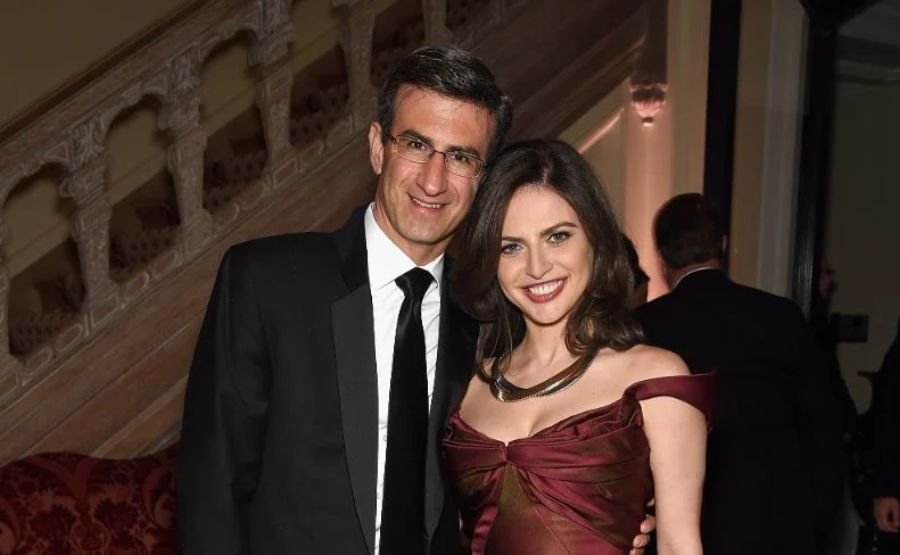
In September 2010, he married Bianna Golodryga, marking the beginning of a happier chapter. Golodryga is a well-known journalist who has worked for ABC, Yahoo News, and CNN, where she has served as a global affairs analyst. They’ve been together since, and have a son and a daughter together. By all appearances, it’s a genuine partnership between two people who operate at a very high level in their respective fields.
In total, Orszag has five children across his two marriages and his earlier relationship — a fact that has occasionally become fodder for commentary, but that he’s handled with a notable degree of privacy when it comes to the kids themselves.
Setbacks and Harder Moments
Beyond the personal turbulence, Orszag faced professional headwinds that are easy to overlook when you look at the polished resume.
Leaving the Obama administration after only 18 months was seen by some observers as a departure that was partially forced by the personal revelations. Whether or not that’s accurate, stepping away from a high-profile cabinet role at that moment did carry a certain awkwardness.
His move to Citigroup in 2011 also drew criticism from some quarters. To critics, it looked like the revolving door between government and Wall Street in action — a public servant who had spent years shaping financial and economic policy taking a lucrative post at one of the very institutions those policies were meant to regulate. He pushed back on that framing, arguing that he could do meaningful work in the private sector, but the criticism lingered. It’s the kind of tension that never fully goes away for someone who lives between Washington and Wall Street.
The Money Picture
Orszag has done well financially — that much is clear. Estimates of his net worth have ranged around $25 million, though figures like these are always approximate. Between a senior position at Citigroup spanning five years, and a series of increasingly senior roles at Lazard, it would be surprising if the number were much lower.
To put it in plain terms: he’s not in the league of hedge fund billionaires or Silicon Valley titans, but he’s comfortably wealthy in a way that reflects a career spent at the intersection of high-level government service, top-tier consulting, and Wall Street finance. He didn’t get there by inheriting it or by a lucky startup bet — he built it steadily over three decades of serious work.
Where He Is Now
Peter Orszag today sits at the very top of Lazard — one of the oldest and most respected names in global finance. He was named CEO of the entire firm in October 2023, and his role expanded further to CEO and Chairman of the Board effective January 2025.
Lazard is a particular kind of Wall Street institution — it’s not a massive commercial bank, but rather an independent advisory firm that governments and major corporations turn to when they need serious, strategic counsel. Under Orszag, the firm has been pushing an ambitious growth agenda, including a plan he’s called “Lazard 2030” that aims to double the firm’s revenues by the end of the decade.
He’s also stayed genuinely engaged in the intellectual space. He still writes for major outlets, contributes to policy discussions, and maintains connections to institutions like Brookings and the Peterson Institute for International Economics. He’s a member of the National Academy of Medicine — a distinction that reflects just how seriously the academic and medical community took his contributions to healthcare policy. In 2024, he received the Foreign Policy Association Medal, recognizing his contributions to global economic affairs.
He’s not someone who coasted on his Obama-era reputation. He kept building.
Final Words
There’s a particular type of person Washington produces occasionally — someone who is genuinely brilliant, genuinely practical, and genuinely willing to do the unglamorous work of building real policy rather than just talking about it. Peter Orszag is that person.
He’s not flashy. He doesn’t have the celebrity magnetism of some public figures, and his baldness — which is sometimes the first thing people mention when describing him, as if it’s somehow relevant — has nothing to do with why he matters. What makes him interesting is that he found a way to be important in multiple different arenas across a career of more than three decades.
From a young economist crunching numbers at the Clinton White House to a key architect of the Affordable Care Act to the CEO of a global financial firm, his path is genuinely unusual. He moved between worlds that don’t typically overlap, and he earned credibility in each one. That’s a harder thing to pull off than it looks.
FAQs
1. What exactly does the Director of the Office of Management and Budget do?
The OMB director is essentially the president’s chief budget officer. They oversee the federal government’s entire budget process, coordinate policy implementation across agencies, and play a central role in the economic priorities of the administration. It’s a cabinet-level post with real power over how money flows through the government.
2. What is Lazard, and why does leading it matter?
Lazard is one of the world’s most prestigious independent financial advisory and asset management firms. It advises corporations and governments on mergers, restructurings, and major financial decisions. Being CEO and Chairman means Orszag is at the top of a firm that operates in virtually every major economy on earth.
3. Did Orszag actually write parts of the Affordable Care Act?
He wasn’t the bill’s author in a legislative sense, but his fingerprints are all over its healthcare cost-containment provisions. The law’s framework was formed by his persuasive defense of the notion that the nation’s long-term financial stability depended on bending the healthcare expense curve.
4. What is a Marshall Scholarship?
It’s a highly competitive British scholarship that funds exceptional American graduates to study at UK universities. It’s named after Secretary of State George Marshall, the architect of the Marshall Plan. Only a small number are awarded each year, making it one of the most prestigious academic honors an American student can receive.
5. How did he get involved with the Hamilton Project?
While he was a senior fellow at the Brookings Institution, Orszag co-founded the Hamilton Project — an economic policy initiative aimed at promoting growth and opportunity. It brought together economists, former government officials, and business leaders and became a genuinely influential forum for policy ideas.
6. What was the Sebago Associates consulting firm?
It was an economics consulting firm Orszag founded himself. It later merged with Competition Policy Associates and was ultimately acquired by FTI Consulting. It’s a small chapter in a long career, but it shows he had entrepreneurial instincts alongside his academic and government work.
7. Is Bianna Golodryga still working in journalism?
Yes. Bianna Golodryga is a well-known journalist and media personality who has worked for CNBC, ABC’s Good Morning America, Yahoo News, and CNN. She and Orszag married in September 2010.
8. What is the CBO and why does it matter so much?
The Congressional Budget Office is the independent, nonpartisan office that analyzes the financial impact of proposed legislation. When Congress debates a bill, the CBO’s “score” — its estimate of what the bill will cost — can determine whether it lives or dies politically. Heading the CBO means being the arbiter of fiscal reality in Washington.
9. What is “Lazard 2030”?
It’s Orszag’s strategic growth plan for the firm, which aims to roughly double Lazard’s revenues by the year 2030. It involves expanding the number of managing directors and broadening the firm’s reach in key sectors and geographies.
10. How does someone move from government to Wall Street without losing credibility?
Honestly, many people think Orszag’s move was controversial precisely because it raised questions about the revolving door. But he’s maintained intellectual credibility by continuing to write, contribute to think tanks, and engage in genuine policy work — rather than just collecting a paycheck and going quiet.
11. What’s the National Academy of Medicine, and why is his membership notable?
The National Academy of Medicine is one of the most prestigious honorific institutions in the United States — it recognizes individuals who have made outstanding contributions to health and medicine. For an economist (rather than a physician or medical researcher) to earn membership is quite unusual and reflects how seriously his work on healthcare financing was taken by the medical establishment.
12. Where can you read his writing today?
Orszag has contributed to publications including the New York Times, Bloomberg View, the Washington Post, and Foreign Affairs, among others. He’s also a regular presence at conferences and events focused on economic policy and global finance.
Read stories that climb higher than expectation with The Madrid Magazine.
One Comment